



12-day Uzbekistan Zoroastrianism and Buddhism Tour
Overview
Discover the fascinating spiritual history of Uzbekistan on a 12-day journey through ancient cities, archaeological sites, and sacred places connected with Zoroastrianism and Buddhism. Located at the crossroads of civilizations, Uzbekistan has been home to diverse religious traditions that flourished along the Great Silk Road for centuries.
Your journey begins in Tashkent, where museums and archaeological remains reveal traces of the region’s ancient past. Continue to Termez, one of Central Asia’s most important historical centers of Buddhism, where you will explore ancient monasteries, stupas, and archaeological sites that reflect the influence of Buddhist civilization.
Travel through Samarkand and Bukhara, two legendary Silk Road cities renowned for their architectural treasures and rich cultural heritage. Continue to Khiva and the ancient fortresses of Khorezm, where the remains of early settlements reveal the history of powerful kingdoms and religious traditions. In Karakalpakstan, discover Chilpyk, an ancient Zoroastrian funerary monument, before concluding your journey in Nukus and returning to Tashkent.
This itinerary offers a unique opportunity to explore Uzbekistan beyond its famous Islamic monuments, uncovering the ancient beliefs, archaeological discoveries, and cultural exchanges that shaped the region.
Tour Itinerary
Day 1: Arrival in Tashkent
Upon arrival at Tashkent International Airport, you will be met by your driver and transferred to your hotel. Check-in is available from noon, subject to hotel availability.
Begin exploring the capital with a visit to the State Museum of History of Uzbekistan, where archaeological collections provide insights into the region’s ancient civilizations, including the periods when Zoroastrianism and Buddhism influenced local culture.
Continue to the archaeological site of Ming Urik, the remains of an ancient settlement that offers a glimpse into the early history of Tashkent.
Explore the historic Old Town and visit Chorsu Bazaar, one of the city’s oldest traditional markets. Continue to Independence Square and Amir Timur Square, where you can experience the contrast between modern Tashkent and its historical heritage.
Overnight in Tashkent.
Duration of sightseeing: approximately 5 hours.
Day 2: Tashkent – Termez
After breakfast, transfer to the airport for your domestic flight to Termez, an ancient city in southern Uzbekistan known for its significant Buddhist heritage.
Upon arrival, meet your local guide and begin exploring the historical monuments of this remarkable region.
Visit Kokildor-Ota Khanaka and the mysterious Kyrk-Kyz Fortress, traditionally associated with the residences of regional rulers. Continue to the Sultan Saodat Ensemble, a historic complex of mausoleums connected with the influential Termez Sayyid dynasty.
See Zurmala Tower, an ancient Buddhist stupa that provides evidence of the region’s Buddhist past. Continue to the archaeological sites of Kara-Tepe and Fayaz-Tepe, where the remains of Buddhist monasteries and religious structures reveal the importance of Termez as a center of Buddhist learning.
Conclude the day with a visit to the Mausoleum of Al-Hakim at-Termezi, an important spiritual complex associated with the renowned Islamic scholar and mystic.
Enjoy free time in the evening.
Overnight in Termez.
Duration of sightseeing: approximately 4–5 hours.
Day 3: Exploring Ancient Termez
Continue discovering the archaeological heritage of southern Uzbekistan.
Travel northeast to Kampyr-Tepe, an ancient fortified settlement associated with the Greco-Bactrian and later historical periods. Located near the Amu Darya River, this archaeological site offers insight into the political and commercial connections that linked Central Asia with neighboring civilizations.
Continue to the Jarkurgan Minaret, an unusual medieval monument known for its distinctive brickwork and decorative design.
On the return journey, enjoy views of the Surkhan oasis and the Friendship Bridge, which connects Uzbekistan with Afghanistan.
Visit the Termez Archaeological Museum to explore artifacts discovered in the surrounding region, including objects that illustrate the development of ancient settlements, religious traditions, and trade networks.
Overnight in Termez.
Duration of sightseeing: approximately 6–7 hours.
Day 4: Termez – Samarkand
After breakfast, depart Termez and travel to Samarkand, one of the most celebrated cities of the Great Silk Road.
The journey takes you through the landscapes of southern and central Uzbekistan, offering views of rural settlements and the countryside.
Arrive in Samarkand in the late afternoon and check in to your hotel. The remainder of the day is free to relax or explore the city independently.
Overnight in Samarkand.
Driving distance: approximately 375 km.
Day 5: Samarkand and the Ancient Settlement of Afrasiab
Begin the day exploring Samarkand’s most famous historical landmarks.
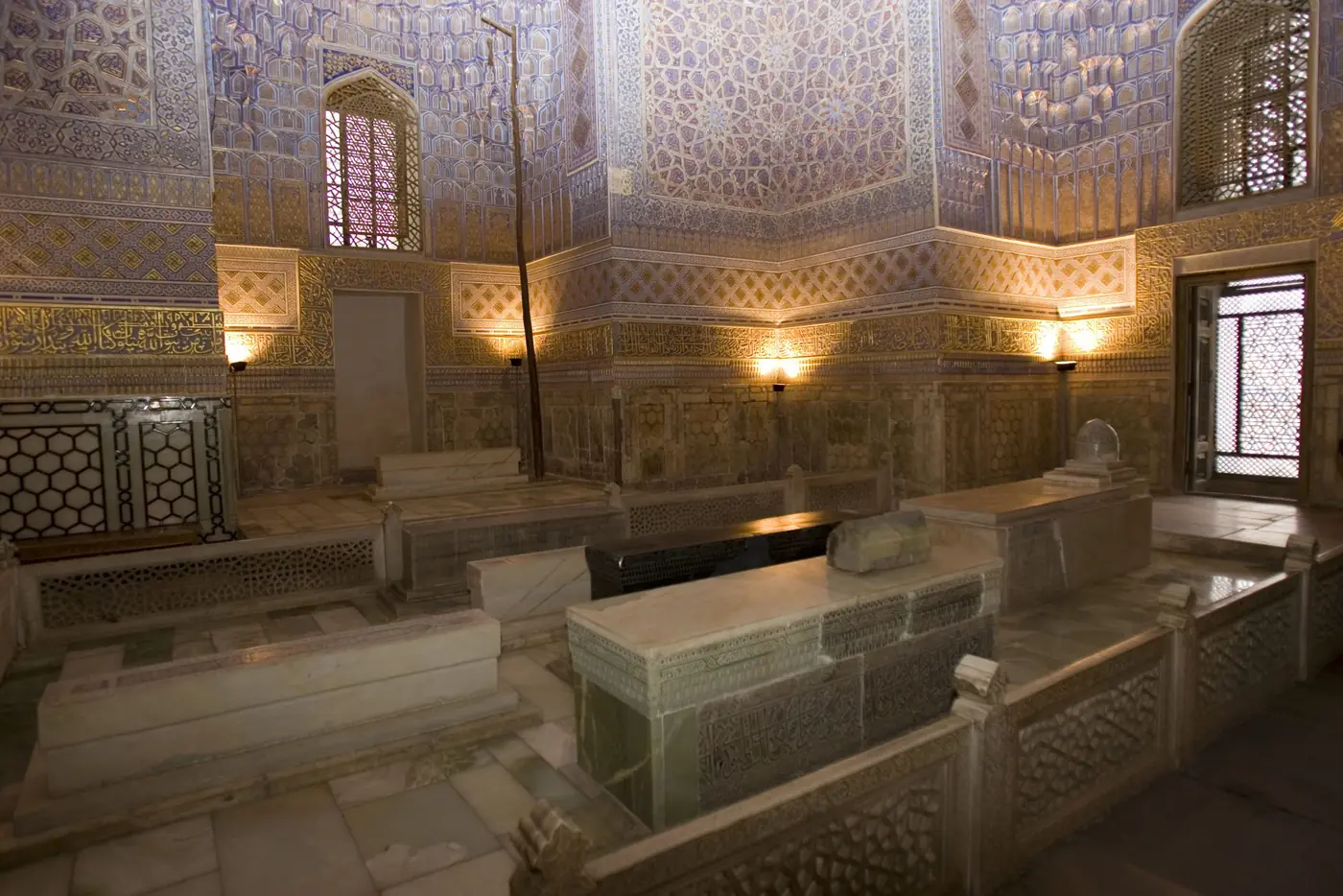
Visit the Gur-Emir Mausoleum, the burial place of Amir Timur and members of the Timurid dynasty. Continue to Registan Square, the city’s magnificent architectural ensemble, renowned for its monumental madrasahs and elaborate mosaics.
Explore Bibi-Khanum Mosque, one of the most impressive monuments of the Timurid period, reflecting the city’s historical importance as a major center of architecture and culture.
Continue to the Afrasiab archaeological site and museum, dedicated to the ancient settlement that preceded modern Samarkand. The extensive archaeological area preserves traces of the city’s early development, while the museum displays pottery, coins, weapons, and remarkable seventh-century mural paintings.
These discoveries help illustrate the cultural diversity of ancient Sogdiana and its connections with neighboring civilizations along the Silk Road.
Overnight in Samarkand.
Duration of sightseeing: approximately 5–6 hours.
Day 6: Samarkand – Rabat-i-Malik – Bukhara
After breakfast, depart for Bukhara, traveling through the historic landscapes of central Uzbekistan.
Along the way, stop at Rabat-i-Malik Caravanserai, the remains of an eleventh-century roadside complex that once provided shelter for merchants and travelers crossing the Silk Road.
Continue to Bukhara, arriving in the afternoon.
Visit Sitorai Mokhi-Khosa, the former summer residence of Bukhara’s last emir, known for its combination of Oriental decorative traditions and European architectural influences.
Continue to the Mausoleum of Bakhouddin Naqshbandi, an important pilgrimage destination associated with the founder of the Naqshbandi Sufi order.
Overnight in Bukhara.
Driving distance: approximately 280 km.
Duration of sightseeing: approximately 2–3 hours, depending on arrival time.
Day 7: Bukhara – Historic Monuments and Cultural Heritage
Spend the day exploring the historic center of Bukhara, a UNESCO World Heritage Site that preserves centuries of architectural and cultural history.
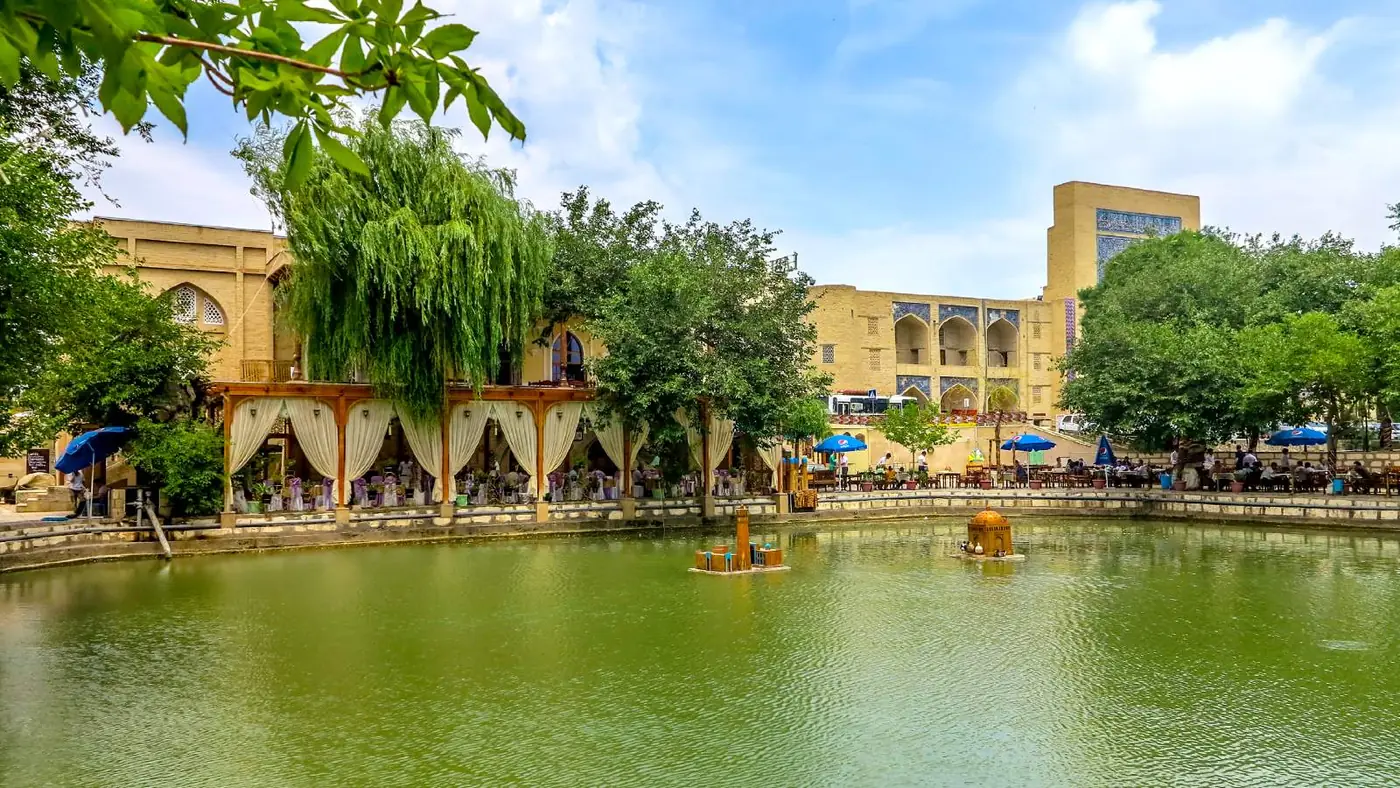
Begin at Lyabi-Hauz Ensemble, a picturesque square surrounded by historic buildings and traditional tea houses. Continue to Magoki-Attori Mosque, one of the city’s oldest religious monuments, and Chor-Minor Madrasah, famous for its four distinctive towers.
Explore the ancient trading domes, which once served merchants traveling across Central Asia. Visit the magnificent Kalyan Minaret, Kalyan Mosque, and Miri-Arab Madrasah, among Bukhara’s most recognizable landmarks.
Continue to the Ulugbek and Abdulazizkhan Madrasahs, known for their decorative façades and historical significance.
Discover Ark Fortress, the former residence of Bukhara’s rulers, followed by Bolo-Khauz Mosque, Ismail Samani Mausoleum, and Chashma-Ayub Mausoleum.
Throughout the day, learn about the different historical periods that shaped Bukhara, from its early urban development to its role as a major center of Islamic scholarship and Silk Road commerce.
Overnight in Bukhara.
Duration of sightseeing: approximately 6–7 hours.
Day 8: Bukhara – Khiva
After breakfast, depart Bukhara for Khiva, crossing the vast Kyzylkum Desert.
This route follows the historic corridor between two important Silk Road cities, where caravans once traveled across arid landscapes connecting commercial centers throughout Central Asia.
Enjoy stops along the way to appreciate the desert scenery and take photographs. As the journey is relatively long and some sections of the road may be uneven, a packed lunch is recommended.
Arrive in Khiva in the late afternoon and check in to your hotel.
The evening is free for relaxation.
Overnight in Khiva.
Driving distance: approximately 480 km.
Estimated driving time: 7–8 hours, depending on road conditions and stops.
Day 9: Khiva – The Historic City of Ichan-Kala
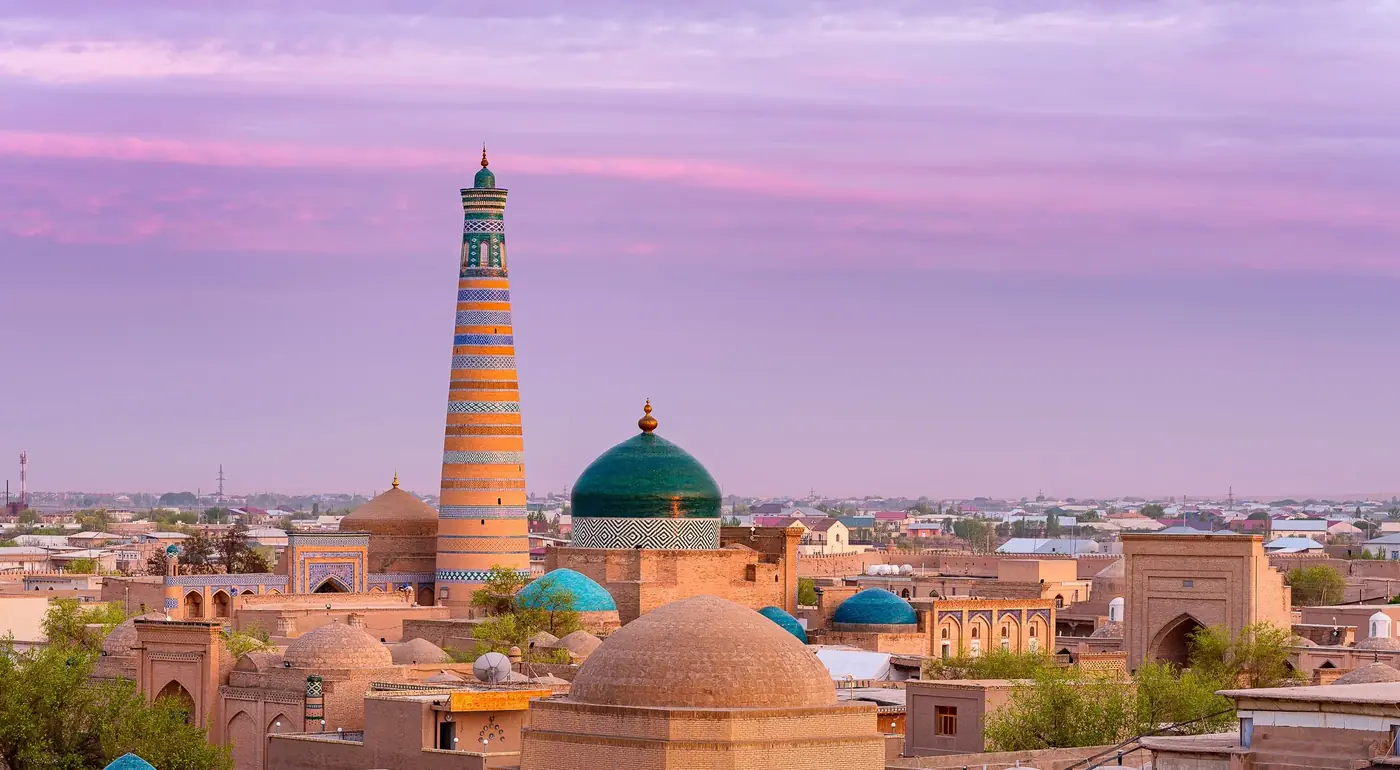
Explore Ichan-Kala, the walled inner city of Khiva and a UNESCO World Heritage Site. Its preserved streets, monumental gates, minarets, and historic buildings offer a remarkable impression of a medieval Central Asian city.
Visit Muhammad Amin Khan Madrasah and Muhammad Rahim Khan Madrasah, two important examples of Khiva’s architectural heritage.
Admire Kalta-Minor, the striking turquoise-tiled minaret that has become one of the city’s most recognizable symbols.
Continue to Juma Mosque, famous for its forest of carved wooden columns, and Tash-Khovli Palace, known for its decorated courtyards and traditional Khorezmian architecture.
Visit the Pakhlavan Makhmud Mausoleum, an important spiritual monument, and see the elegant Islam-Khoja Minaret and Madrasah.
Enjoy free time in the afternoon to explore the atmospheric streets, browse local handicraft shops, or discover the city at your own pace.
Overnight in Khiva.
Duration of sightseeing: approximately 5 hours.
Day 10: Khiva – Ancient Fortresses of Khorezm – Ayaz-Kala
Today, travel into the historical region of ancient Khorezm, where desert landscapes conceal the remains of fortified settlements and early civilizations.
Visit Toprak-Kala, an ancient fortified settlement believed to have served as a royal center of Khorezm. Explore the remains of its defensive walls and settlement structures, which provide insight into the political and cultural life of the region.
Continue to Koykirilgan-Kala, an unusual circular archaeological complex whose original purpose remains a subject of scholarly discussion.
Visit Gyaur-Kala, another ancient fortified site associated with the history of Khorezm.
The journey continues to Ayaz-Kala, one of the region’s most impressive fortress complexes. Rising above the surrounding desert, its monumental walls offer a vivid impression of the defensive architecture developed in ancient Khorezm.
These archaeological sites reveal the strategic importance of the region and its connections with neighboring kingdoms, including the Kushan Empire and other Central Asian powers.
Enjoy dinner and an overnight stay at the yurt camp or accommodation arranged for the itinerary.
Meals: lunch and dinner.
Day 11: Ayaz-Kala – Chilpyk – Nukus – Tashkent
After breakfast, depart for Nukus, traveling through the landscapes of Karakalpakstan.
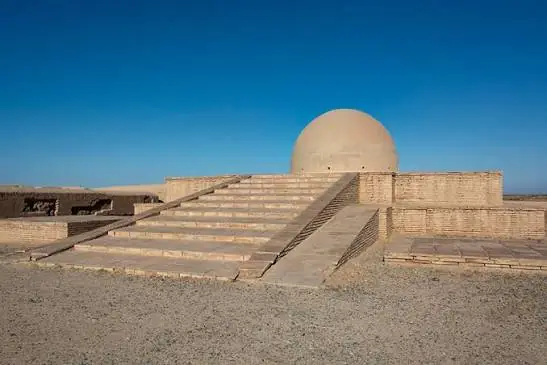
Along the way, stop at Chilpyk, an ancient circular monument traditionally identified as a Zoroastrian dakhma, or funerary tower. Its elevated position above the surrounding landscape makes it one of the most distinctive archaeological sites associated with the ancient religious traditions of the region.
Continue to Nukus and visit the Savitsky Karakalpakstan Art Museum, internationally known for its important collection of Russian avant-garde art and its displays of Karakalpak applied arts.
The museum offers a different perspective on Uzbekistan’s cultural diversity, complementing the archaeological and religious heritage explored throughout the journey.
Enjoy a short drive through the city center, with views of the Berdakh Monument, Nukus City Hall, and the Drama Theatre.
In the evening, transfer to the airport for your flight to Tashkent. Upon arrival, meet your driver and transfer to the hotel.
Overnight in Tashkent.
Note: The Savitsky Museum is generally closed on Mondays. Exhibition availability may vary due to renovation work.
Day 12: Departure from Tashkent
After breakfast, check out of the hotel and enjoy free time until your scheduled airport transfer.
Transfer to Tashkent International Airport for your departure flight.
Your 12-day journey through Uzbekistan’s Zoroastrian, Buddhist, and Silk Road heritage concludes with a deeper understanding of the ancient civilizations and religious traditions that shaped this remarkable region.
Tour Price Includes
Private ground transfers by sedan for 1–2 travelers, minivan for 3–7 travelers, 30-seat bus for 8–13 travelers, and 40–50-seat bus for groups of 14 or more.
Hotel accommodation with breakfast in standard double or twin rooms, according to the selected category. Accommodation at the yurt camp is arranged according to the itinerary.
Local guides for sightseeing tours in each city, except for the Nukus city tour and the excursion to the ancient fortresses of Khorezm.
Entrance tickets to the attractions specified in the itinerary.
One dinner with a local family during the tour.
Arrival CIP lounge access at Tashkent International Airport for the Premium option.
Economy-class domestic flight tickets for the Tashkent–Termez and Nukus–Tashkent routes.
Visa support documentation for an Uzbekistan tourist visa, where applicable.
Tour Price Excludes
Tour leader accompanying travelers throughout the entire journey.
Lunches and dinners, except for the meals specifically included in the itinerary.
Additional hotel services and personal expenses.
Supplement for a comfort-class sedan: USD 890 per tour.
Consular fees for an Uzbekistan tourist visa, where applicable.
Tips for guides, drivers, and other service providers.
Travel insurance.
Tour Prices
The price per person depends on the number of travelers, accommodation category, and travel dates. A personalized quotation can be prepared according to your preferred travel arrangements.