



Samarkand
Welcome to Samarkand
A Thousand Years of History, Eastern Hospitality, and Timeless Architecture United in One Legendary City. Samarkand – The Historic Heart of Uzbekistan | Travel Guide Travel to Samarkand and discover the magnificent Registan Square, Shah-i-Zinda, Gur-e-Amir Mausoleum, Bibi-Khanym Mosque, Ulugh Beg Observatory, and many other remarkable historical landmarks. Your complete travel guide to Samarkand.
Located in the heart of Central Asia, Samarkand is one of the world's oldest and most renowned cities. With a history spanning more than 3,000 years, it has long been one of the most important centers of trade, science, and culture along the legendary Silk Road. Today, Samarkand captivates visitors from around the world with its magnificent blue domes, intricate tilework, grand madrasas, and charming ancient streets, offering an unforgettable journey through history.
A visit to Samarkand is far more than simply exploring historical monuments. Every building, every square, and every street tells its own unique story. The grandeur of Amir Timur's empire, the scientific legacy of Ulugh Beg, and the timeless beauty of Eastern architecture are all preserved within this extraordinary city. Today, Samarkand is a remarkable destination where ancient history blends seamlessly with modern infrastructure. Visitors can enjoy world-class hotels, authentic Uzbek restaurants, contemporary tourist facilities, and services that meet international standards. At the same time, a stroll through its historic neighborhoods offers the chance to experience the warmth of genuine Uzbek hospitality and immerse yourself in the city's rich cultural heritage.
Basic Information
Travel Information
Why Visit Samarkand?
Samarkand offers a unique and unforgettable experience for every traveler. History enthusiasts can explore some of the world's most celebrated architectural masterpieces, while culture lovers can meet local artisans and discover centuries-old traditions. Nature enthusiasts will enjoy the breathtaking landscapes of the Zarafshan Valley and the picturesque foothills surrounding the city.
Located in the heart of Central Asia, Samarkand is one of the world's oldest and most renowned cities. With a history spanning more than 3,000 years, it has long been one of the most important centers of trade, science, and culture along the legendary Silk Road. Today, Samarkand captivates visitors from around the world with its magnificent blue domes, intricate tilework, grand madrasas, and charming ancient streets, offering an unforgettable journey through history.
What makes Samarkand truly special
One of the most famous cities along the legendary Silk Road.
A historic center recognized as a UNESCO World Heritage Site.
The magnificent capital of Amir Timur's Empire.
Home to some of the finest masterpieces of Islamic and Eastern architecture.
A city with modern tourism infrastructure and world-class hospitality.
Renowned for its authentic Uzbek cuisine and warm, welcoming hospitality.
History of Samarkand
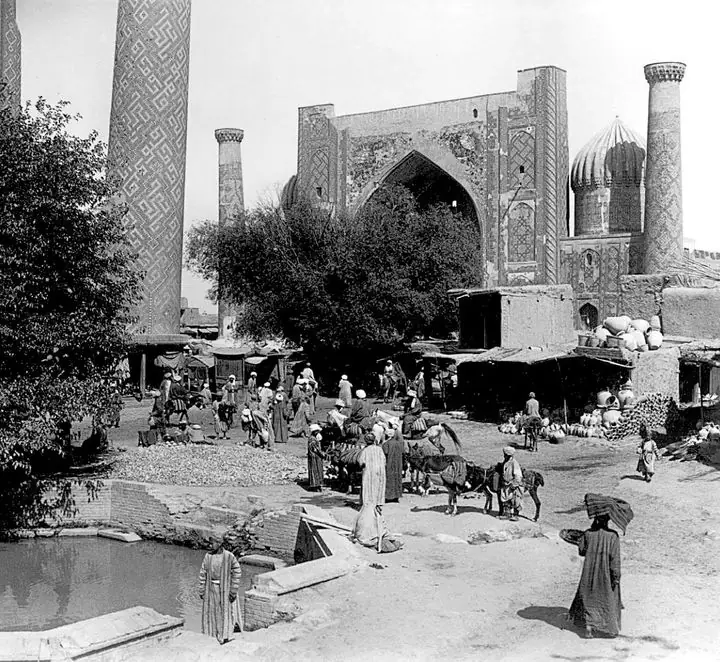
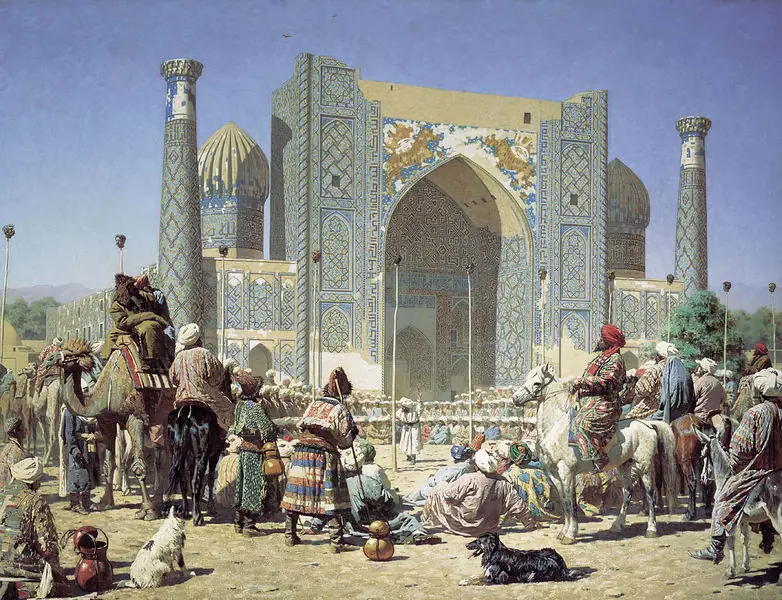
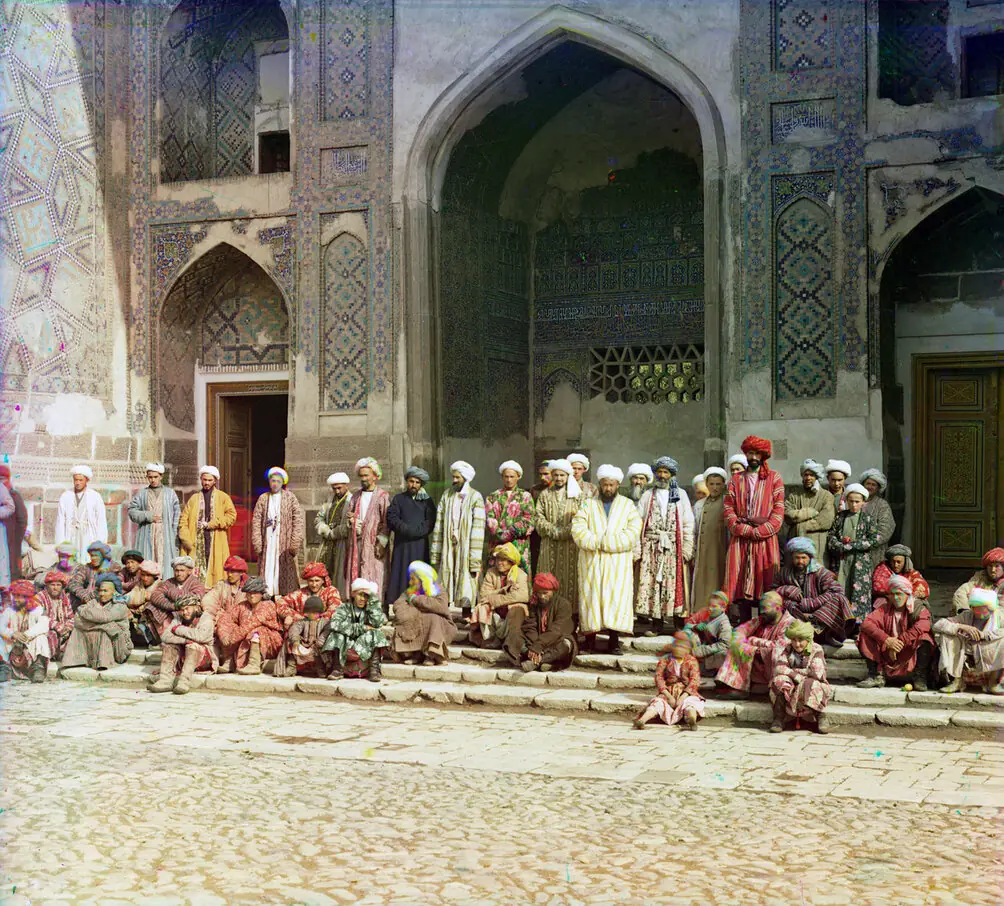
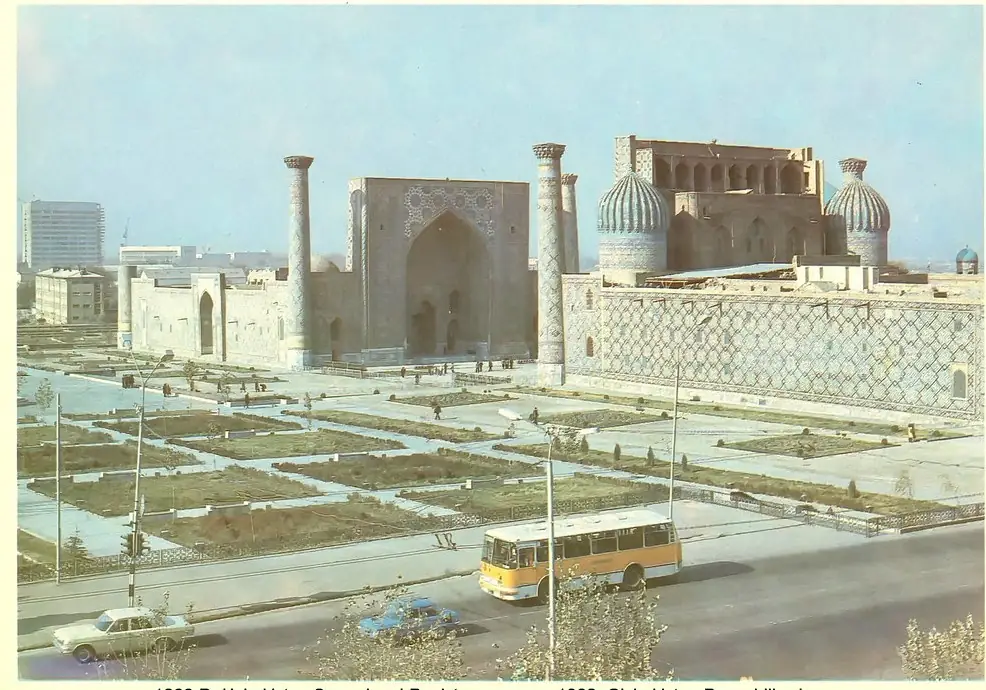
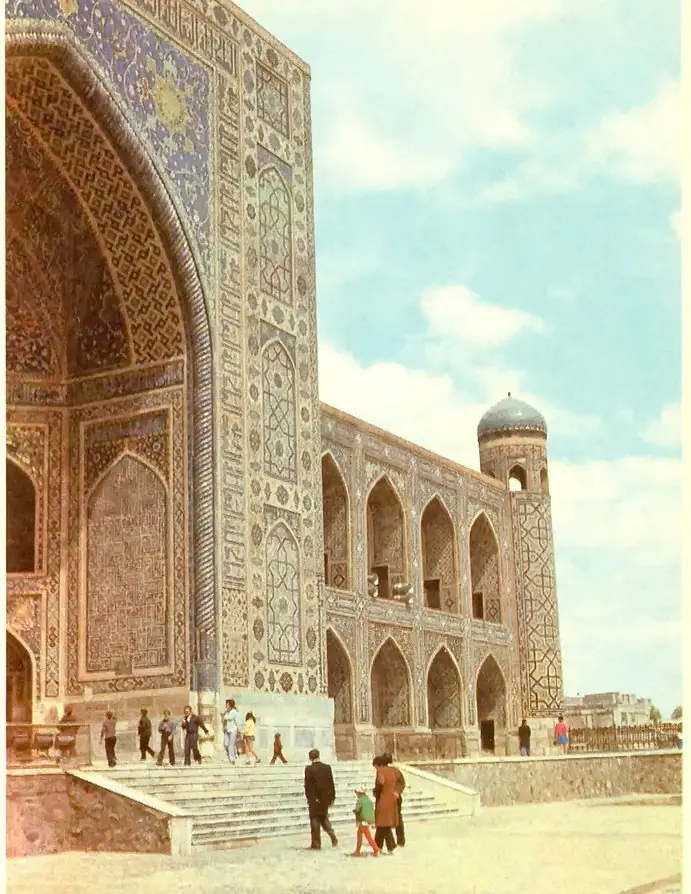
The history of Samarkand spans more than 3,000 years. Archaeological discoveries reveal that the city was already a major center of trade and culture in ancient times. With the rise of the legendary Silk Road, Samarkand became a vital crossroads connecting the East and the West.
In the 14th century, Amir Timur made Samarkand the capital of his vast empire. During this golden era, magnificent architectural complexes, grand madrasas, and impressive mosques were built throughout the city. Timur invited the finest architects, craftsmen, and scholars from across the world to Samarkand, transforming it into one of the greatest centers of science, art, and architecture. Later, during the reign of Mirzo Ulugh Beg, Samarkand became a leading center of astronomy and scientific discovery. His famous observatory was regarded as one of the most advanced scientific institutions of its time and played a significant role in the development of astronomical research.
Today, Samarkand has successfully preserved its rich historical heritage while evolving into one of Central Asia's premier tourist destinations, where ancient traditions and modern hospitality come together to create an unforgettable travel experience.
Geographical Location of Samarkand
Samarkand is located in the central part of Uzbekistan, in the picturesque Zarafshan Valley. Situated at an altitude of approximately 700 meters (2,300 feet) above sea level, the city enjoys a pleasant climate that makes it an ideal destination for travel throughout much of the year.
Samarkand is easily accessible from Tashkent via the modern high-speed train, with the journey taking just a few hours. The city is also served by an international airport, offering both direct and connecting flights from numerous countries around the world.
Traditional Cuisine/Foods
Samarkand is renowned for its distinctive Samarkand Plov, succulent tandoor-cooked meat, flavorful shashlik, crispy samsa, and the world-famous Samarkand bread. Dining at the city's traditional restaurants offers not only an opportunity to savor authentic Uzbek cuisine but also to experience the warmth and hospitality for which Uzbekistan is celebrated.






Best Time to Visit
The best time to visit Samarkand is during the spring (March–May) and autumn (September–November). During these seasons, the weather is mild and pleasant, providing ideal conditions for exploring the city's magnificent historical landmarks and enjoying leisurely walks through its charming streets.
Samarkand International Airport welcomes visitors from many countries through both direct and connecting flights. The city is also easily accessible from Tashkent by modern high-speed train, allowing travelers to reach Samarkand comfortably in just a few hours. In addition, the city is well connected to other regions of Uzbekistan through an extensive network of highways and railway services, making travel convenient from across the country.
Samarkand Awaits You
Step into a city where history comes alive. From breathtaking architectural masterpieces and centuries-old streets to the unforgettable flavors of authentic Uzbek cuisine and the warmth of genuine hospitality, Samarkand offers an experience unlike any other. Discover the heart of the legendary Silk Road and let every step reveal a new story, a new wonder, and a journey you'll never forget.
Ready to explore Samarkand? Let Lapis Lazuli Tours make your journey seamless and unforgettable. Contact our travel experts today to start planning your perfect trip.
📞 Phone: +998 97 397 37 73
📧 Email: lapislazulitours@gmail.com
REGISTON - The Heart of the Great Silk Road and the Symbol of Samarkand
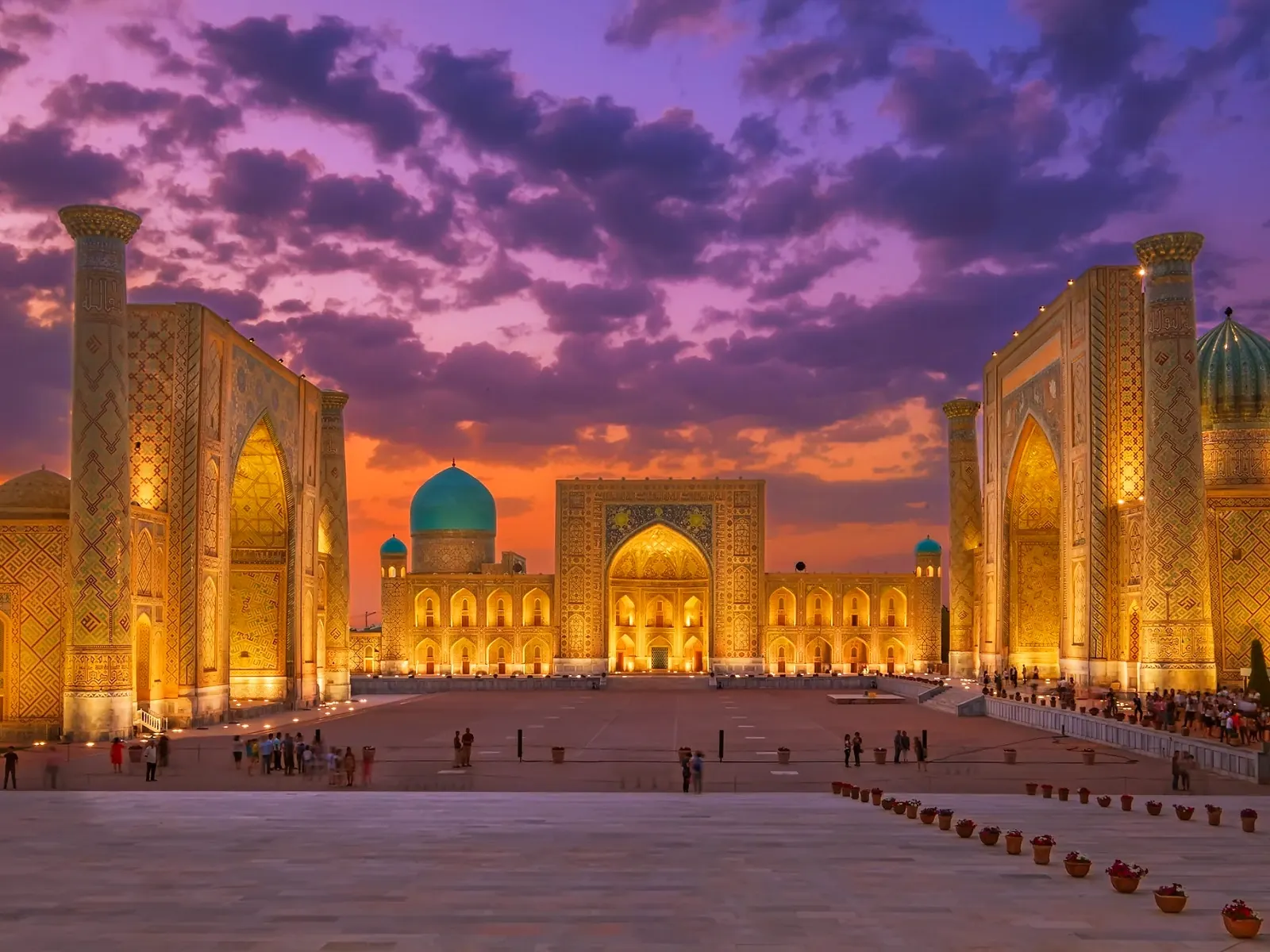
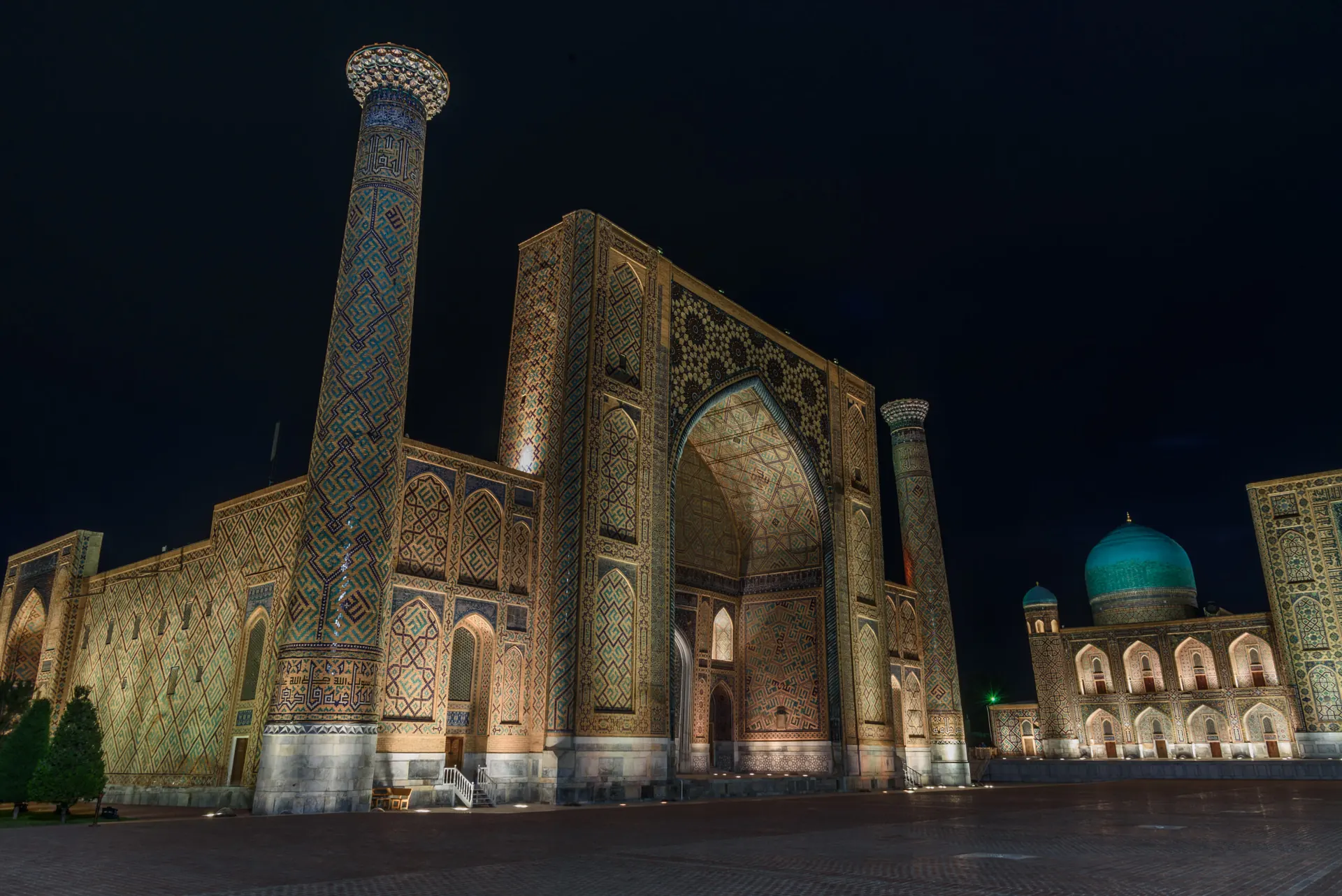
Registan Square is the most famous historical and architectural monument not only of Samarkand, but also of all of Uzbekistan. For centuries, it served as a center of science, trade, culture and art of Eastern civilization. Today, Registan amazes millions of tourists from all over the world with its magnificent architecture, rich history and unique atmosphere.
The word "Registan" translated from Persian means "sandy place" or "sand-covered square". In the Middle Ages, this square was the heart of Samarkand, where decrees of rulers were announced, public gatherings were held, solemn ceremonies were organized, and merchants who came along the Great Silk Road exhibited their goods. Today, Registan Square is recognized as one of the most perfect examples of Eastern architecture and has become one of the first destinations for almost every tourist visiting Uzbekistan.
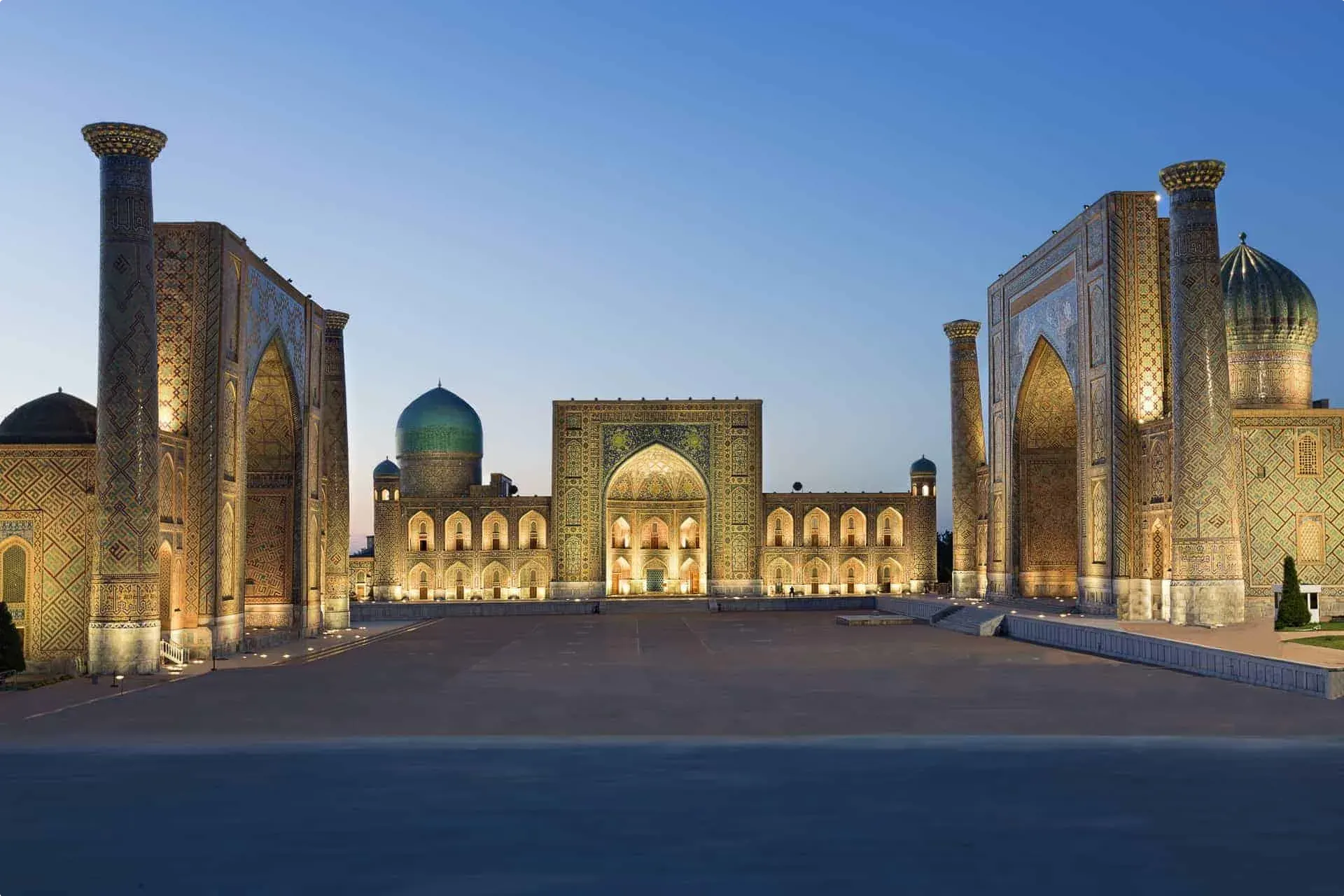
The History of Registan Square
The history of Registan Square spans the 14th–17th centuries and it played an important role in the political, scientific, and cultural life of Samarkand. Located in the heart of the Great Silk Road, this square served for centuries as one of the important crossroads connecting East and West. It was here that merchants, scholars, travelers, and ambassadors from different countries met, traded, and exchanged scientific and cultural experiences.
At the end of the 14th century, after the great conqueror Amir Timur made Samarkand the capital of his empire, the city entered an era of extraordinary growth and prosperity. Under his leadership, magnificent palaces, lush gardens, grand mosques, and impressive madrasa complexes were built throughout the city. Registan Square became the political and cultural heart of the empire. It served as the venue where royal decrees were proclaimed, while magnificent ceremonies, military parades, public gatherings, and festive celebrations brought the square to life.
In the early 15th century, Amir Timur's grandson, the renowned astronomer and enlightened ruler Mirzo Ulugh Beg, commissioned the construction of the famous madrasa that now bears his name on the western side of Registan Square. Built between 1417 and 1420, the Ulugh Beg Madrasa became one of the most prestigious centers of learning in the Islamic world. Students studied mathematics, astronomy, geometry, philosophy, theology, and many other sciences under the guidance of distinguished scholars. Mirzo Ulugh Beg himself was an outstanding scientist whose groundbreaking astronomical observations and star catalog earned worldwide recognition, securing his place among history's greatest astronomers.
Registan Square was not only a center of education and scientific achievement but also the economic and social heart of Samarkand. Merchants gathered here to display and trade their goods, skilled craftsmen showcased their remarkable artistry, and travelers along the legendary Silk Road paused in the square to rest before continuing their journeys across Asia and beyond. Despite centuries of wars, natural disasters, and the passage of time, Registan Square has preserved its magnificent beauty and historical significance. Following Uzbekistan's independence, extensive restoration and conservation projects were carried out to revive its original architectural splendor. Today, Registan Square forms part of the UNESCO World Heritage Site **"Samarkand – Crossroads of Cultures"** and is recognized as one of the world's most iconic and breathtaking historic squares.
Every year, hundreds of thousands of visitors from around the globe come to admire Registan's dazzling turquoise domes, exquisite glazed mosaics, monumental portals, and rich centuries-old history. Today, Registan Square remains the enduring symbol of Samarkand, a source of pride for Uzbekistan, and one of the most treasured legacies of the Great Silk Road, continuing to inspire travelers from every corner of the world.
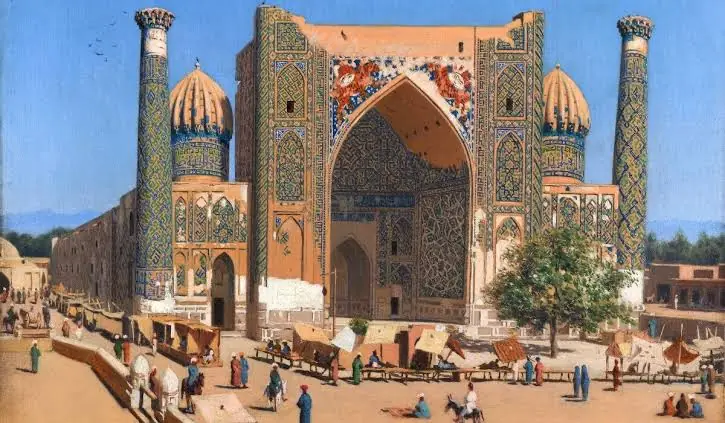
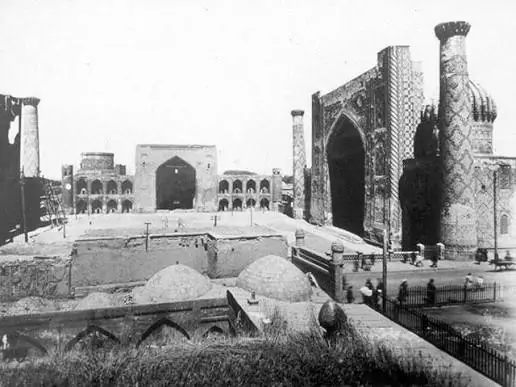
The Three Architectural Gems of Registan Square
Ulugh Beg Madrasa
The Ulugh Beg Madrasa is the oldest monument within the Registan ensemble. Built in the 15th century, it became one of the most prestigious centers of learning in the Islamic world. Hundreds of students studied here, and many renowned scholars who made significant contributions to science and culture received their education within its walls. The madrasa's magnificent entrance portal is adorned with intricate geometric patterns, brilliant turquoise mosaics, and elegant Quranic inscriptions, making it a masterpiece of Islamic architecture and one of the finest examples of Timurid craftsmanship.
Sher-Dor Madrasa
Built in the 17th century, the Sher-Dor Madrasa is renowned for its extraordinary decorative artwork. Its magnificent entrance portal features images of tiger-like lions carrying the rising sun on their backs, one of the rarest and most distinctive artistic motifs in Islamic architecture. Today, the madrasa continues to captivate visitors with its impressive scale, elegant proportions, and richly decorated facade, making it one of the most recognizable landmarks of Registan Square.
Tilya-Kori Madrasa
The Tilya-Kori Madrasa is the youngest monument of the Registan ensemble, constructed in the 17th century. Its name, "Tilya-Kori," means "Gilded" or "Decorated with Gold." The interior of its mosque is lavishly adorned with intricate gilded ornaments, elaborate floral patterns, and a magnificent golden dome, creating one of the most breathtaking sacred spaces in Central Asia. Today, it is regarded as one of the region's finest masterpieces of Islamic architecture and decorative art.
Why Visit Registan Square?
Registan Square is far more than a historic monument—it is a place where history comes to life. A visit here allows you to experience the atmosphere of the legendary Silk Road and immerse yourself in the rich cultural heritage of Central Asia.
Admire some of the finest masterpieces of Islamic and Timurid architecture.
Travel back in time to the era of Amir Timur and Mirzo Ulugh Beg.
Shop for authentic Uzbek handicrafts, traditional artwork, and unique souvenirs.
Discover the fascinating history of Samarkand with the help of knowledgeable local guides.
Experience the ever-changing beauty of Registan Square, from the soft morning light to its spectacular evening illumination.
UNESCO World Heritage Site
Registan Square is part of the UNESCO World Heritage Site "Samarkand – Crossroads of Cultures." This prestigious designation recognizes Registan as a site of outstanding universal value, highlighting its significance not only to Uzbekistan but also to the cultural heritage of all humanity. Today, Registan Square is celebrated as one of the world's most iconic historic squares, attracting visitors from across the globe with its extraordinary architecture, rich history, and timeless beauty.
Best Time to Visit
Registan Square can be visited and enjoyed throughout the year, with each season offering its own unique charm. Early morning is the perfect time to enjoy the peaceful atmosphere and capture stunning photographs with soft natural light. In the evening, Registan is beautifully illuminated, transforming the square into a magical spectacle where its magnificent domes, mosaics, and grand facades shine under the night sky.
Spring (March–May): Pleasant temperatures, blooming gardens, and vibrant greenery create the perfect atmosphere for sightseeing.
Autumn (September–November): Cool, comfortable weather makes it an ideal season for exploring the square and the historic city of Samarkand.
Interesting Facts About Registan
Registan Square has a history spanning more than 600 years.
It once served as the political, educational, and commercial heart of Samarkand.
The renowned astronomer Mirzo Ulugh Beg taught and promoted scientific learning here, making the square a center of intellectual excellence.
Today, Registan Square hosts numerous international festivals, cultural events, concerts, and traditional celebrations, keeping its historic legacy alive for new generations.
Every year, hundreds of thousands of international visitors come to admire its remarkable architecture and rich cultural heritage.
We are looking for you to visit Registan Square
Registan Square is far more than a historic monument—it is a timeless symbol of the Great Silk Road and a living testament to the rich cultural heritage of Central Asia. Its magnificent turquoise domes, exquisite mosaic decorations, and majestic madrasas tell the remarkable story of Samarkand's glorious past without saying a single word. Every visitor who steps into Registan experiences the unmatched beauty of Timurid architecture, the city's centuries-old traditions, and the genuine hospitality of the Uzbek people. Whether you are passionate about history, architecture, photography, or cultural exploration, Registan offers an unforgettable journey through one of the world's greatest historical treasures.
If you are planning a trip to Uzbekistan, Registan Square is an essential destination that deserves a place at the very top of your travel itinerary.
📞 Phone: +998 97 397 37 73📧 Email: lapislazulitours@gmail.com
The Eternal Resting Place of the Great Conqueror Amir Timur
The Gur-e-Amir Mausoleum is one of the most magnificent historical landmarks in Samarkand and a masterpiece of not only Uzbekistan but also the architectural heritage of Central Asia. The mausoleum is renowned worldwide as the final resting place of the great conqueror, military commander, and statesman Amir Timur (Tamerlane).
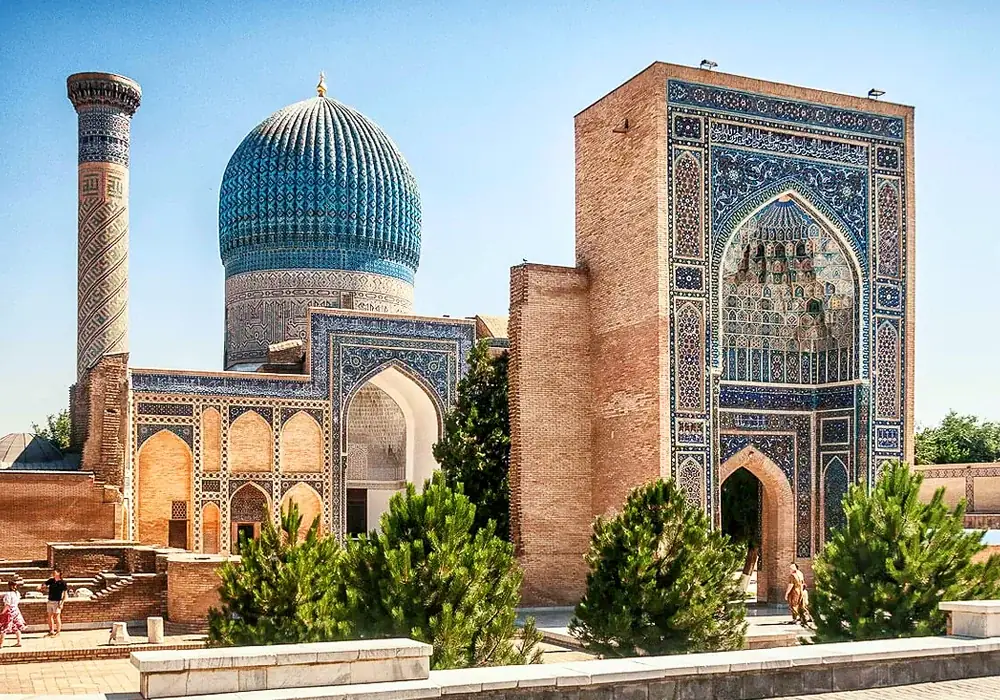
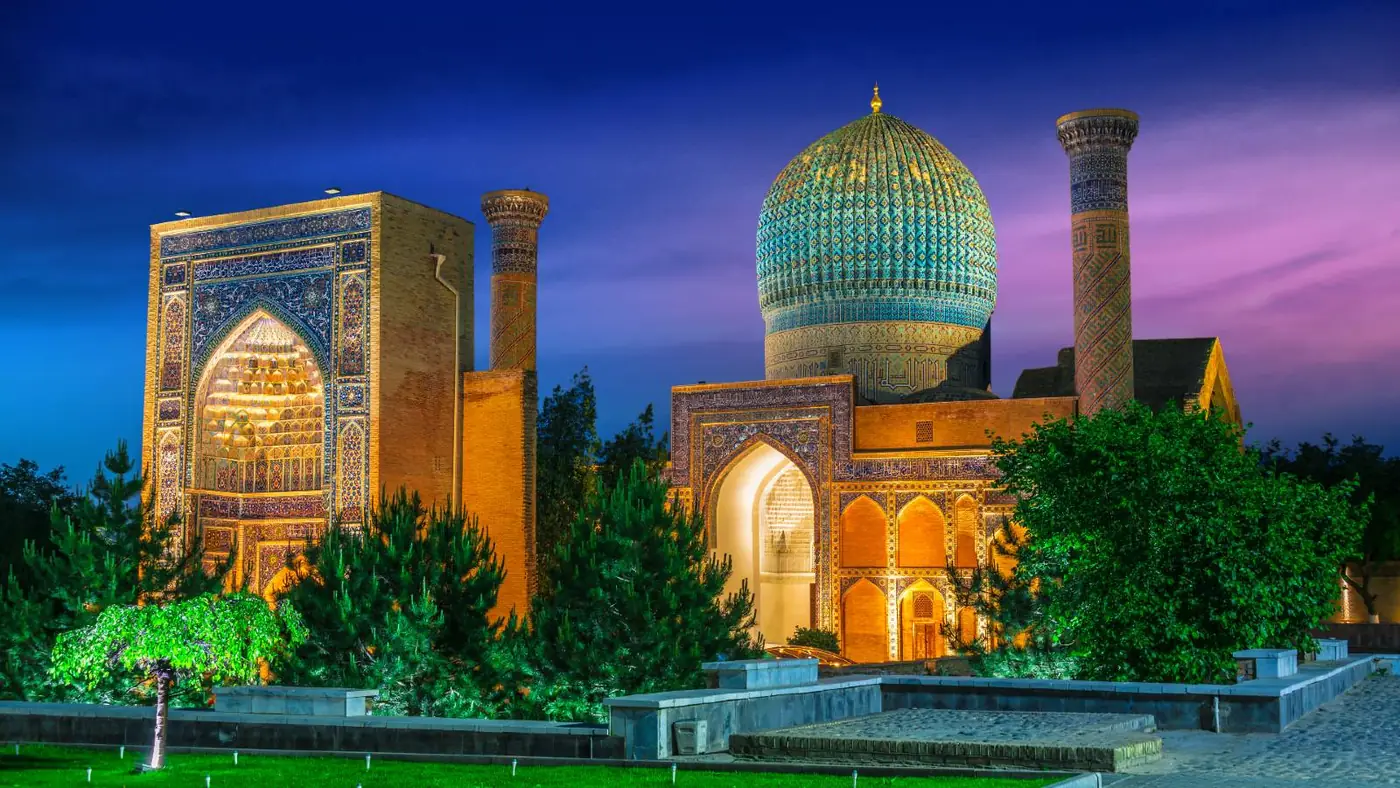
With its iconic turquoise dome, exquisite glazed tilework, and remarkable architectural design, Gur-e-Amir has captivated millions of visitors for centuries. It is an unforgettable destination not only for history enthusiasts but also for those who appreciate architecture, art, and cultural heritage. Today, Gur-e-Amir stands as one of Samarkand's most significant historical monuments, symbolizing the power, grandeur, and enduring legacy of Amir Timur's empire. It remains one of Uzbekistan's most treasured cultural landmarks and an essential stop for travelers exploring the legendary Silk Road.
A Journey Through History
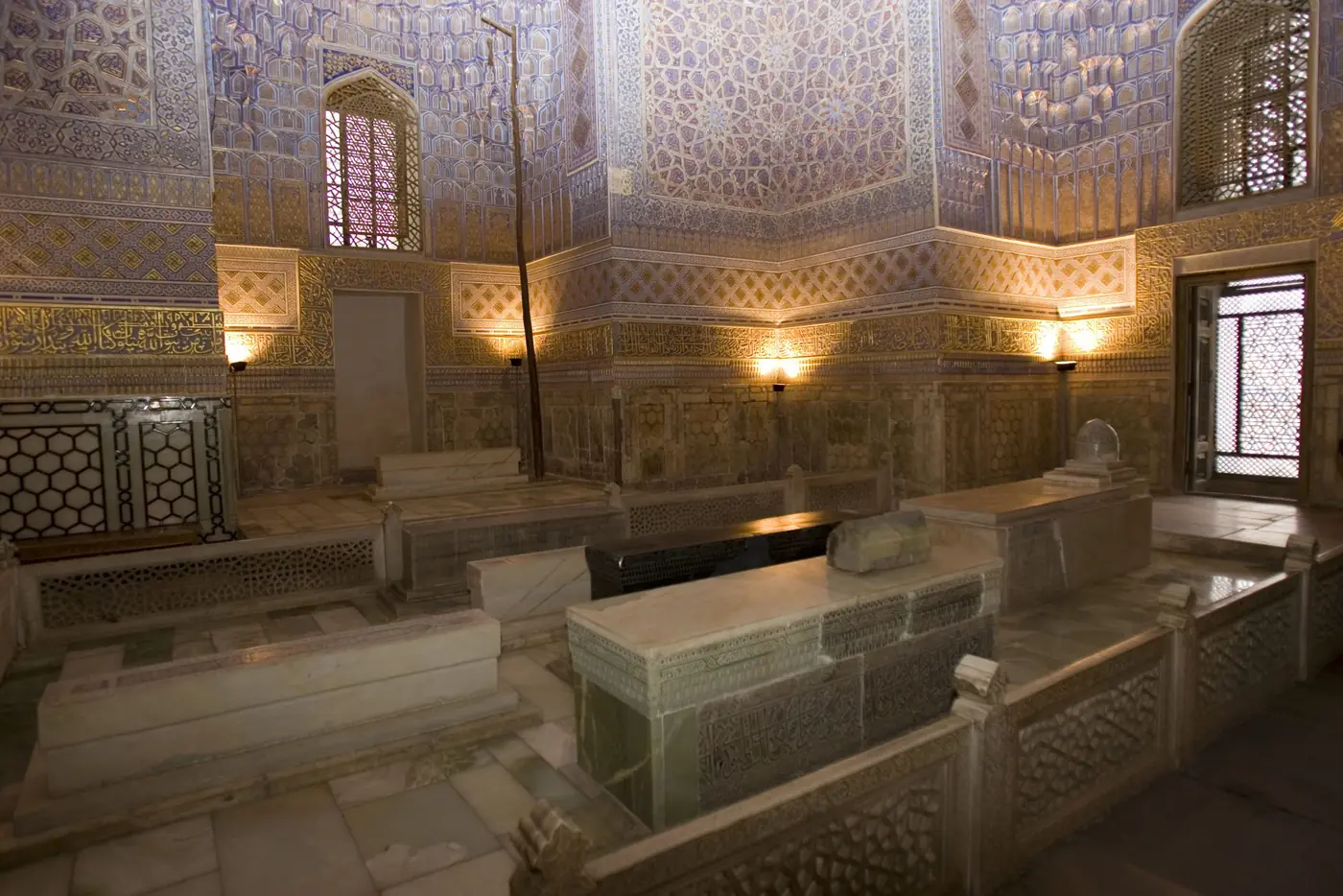
The history of the Gur-e-Amir Mausoleum dates back to the late 14th and early 15th centuries. The monument was originally commissioned as a mausoleum for Muhammad Sultan, Amir Timur's beloved grandson and chosen heir to the throne. After Muhammad Sultan's unexpected death in 1403, construction continued in his honor as his final resting place. In 1405, while leading a military campaign to China, Amir Timur died in the city of Otrar. Although he had intended to be buried in his hometown of Shahrisabz, severe winter conditions made the journey impossible. As a result, his body was brought to Samarkand and laid to rest in the mausoleum that had been built for Muhammad Sultan.
Following Amir Timur's burial, Gur-e-Amir became the principal mausoleum of the Timurid dynasty. Over time, several members of the royal family—including Timur's sons, grandsons, and the celebrated astronomer and ruler Mirzo Ulugh Beg—were also interred here. Mirzo Ulugh Beg later expanded and enhanced the mausoleum, playing a significant role in creating the magnificent architectural masterpiece that has survived to the present day.
An Architectural Masterpiece
The Gur-e-Amir Mausoleum is widely regarded as one of the finest achievements of Timurid architecture and a masterpiece of Islamic art in Central Asia. Its harmonious proportions, exceptional craftsmanship, and elegant decorative details have inspired architects and historians for centuries. In fact, many scholars believe that the architectural style developed at Gur-e-Amir later influenced the design of several famous monuments, including the world-renowned Taj Mahal in India.
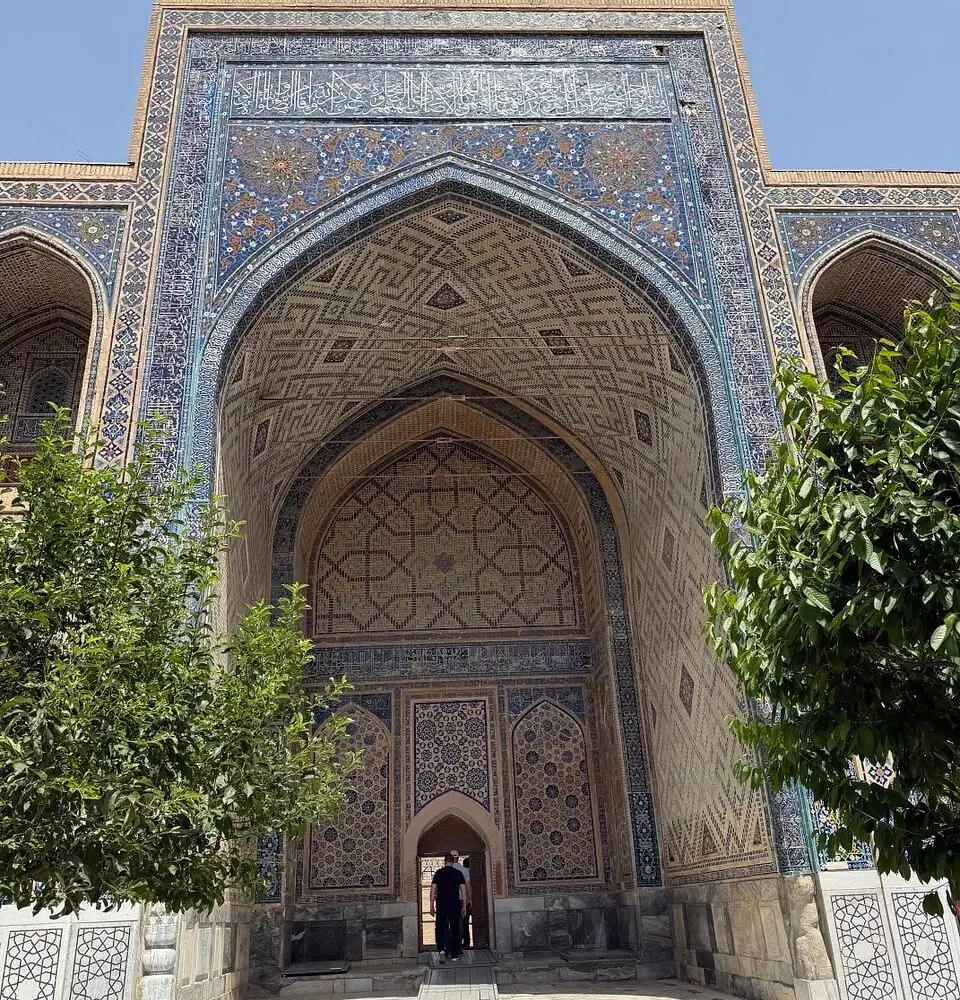
The mausoleum's most striking feature is its magnificent fluted turquoise dome, which rises gracefully above the skyline of Samarkand. Standing over 30 meters high, the dome is covered with brilliant glazed blue tiles that shimmer in different shades under the changing sunlight. From sunrise to sunset, its colors transform from soft turquoise to deep sapphire, creating a breathtaking spectacle that has become one of the city's most recognizable symbols. The grand entrance portal is equally impressive. Decorated with intricate geometric patterns, floral arabesques, elegant Arabic calligraphy, and colorful mosaic tilework, every surface reflects the extraordinary artistic vision of Timurid craftsmen. Each ornament was carefully designed to symbolize harmony, spirituality, and the pursuit of perfection, demonstrating the remarkable level of architectural sophistication achieved during the Timurid era.
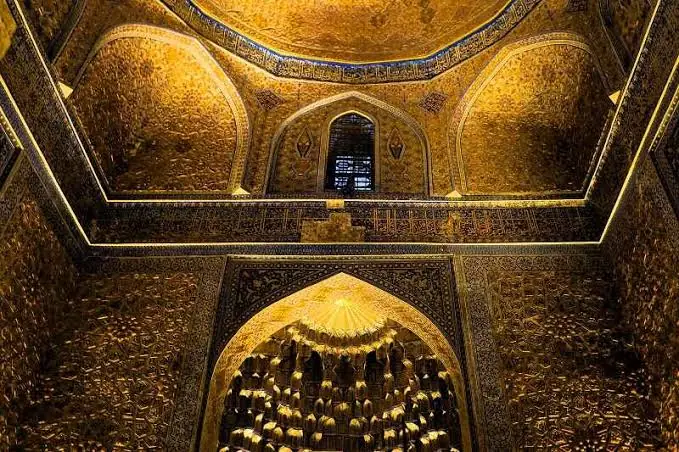
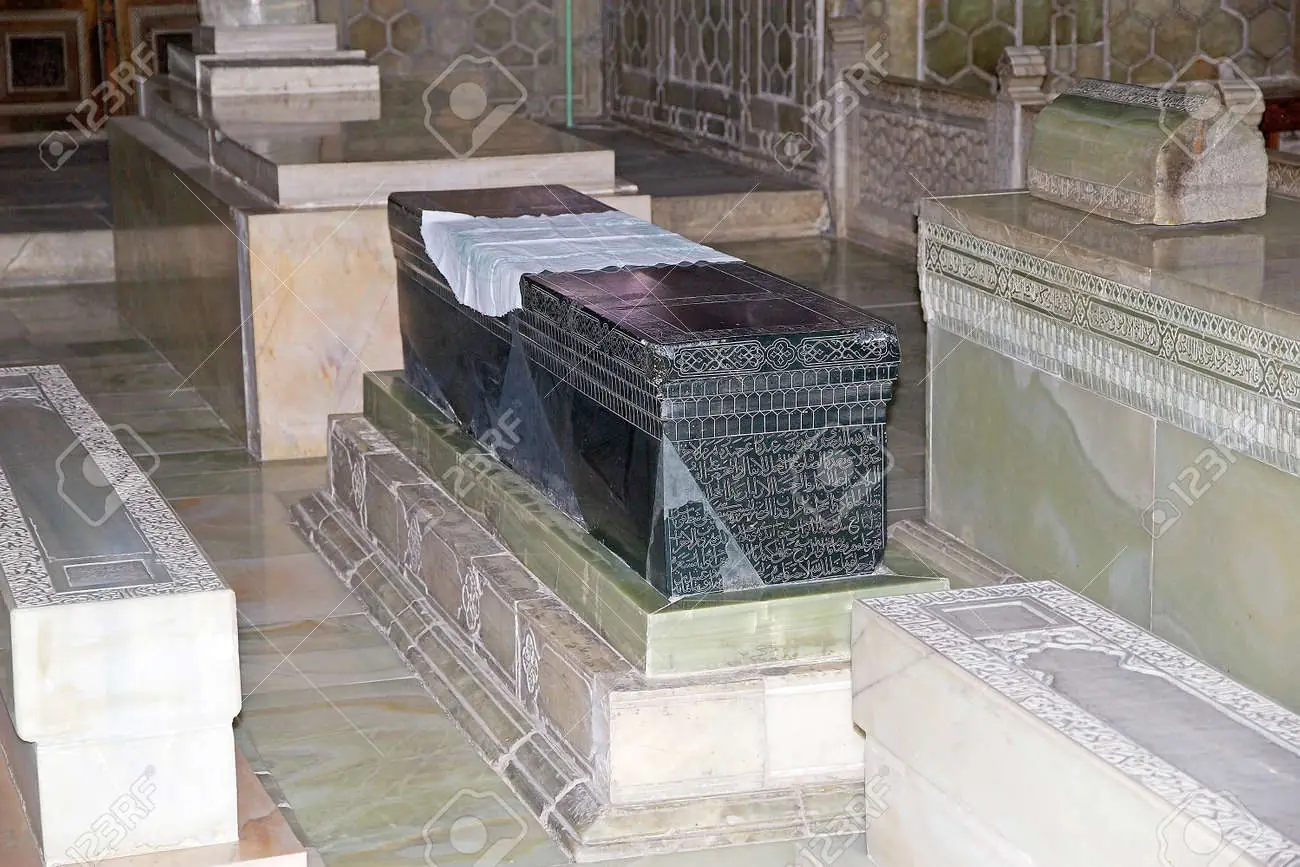
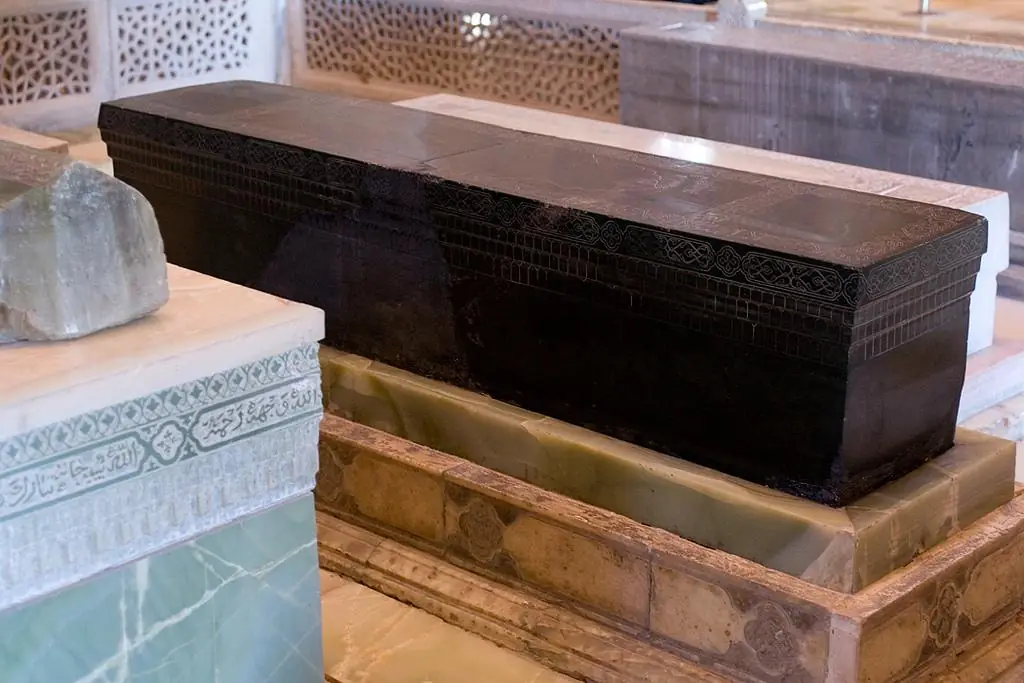
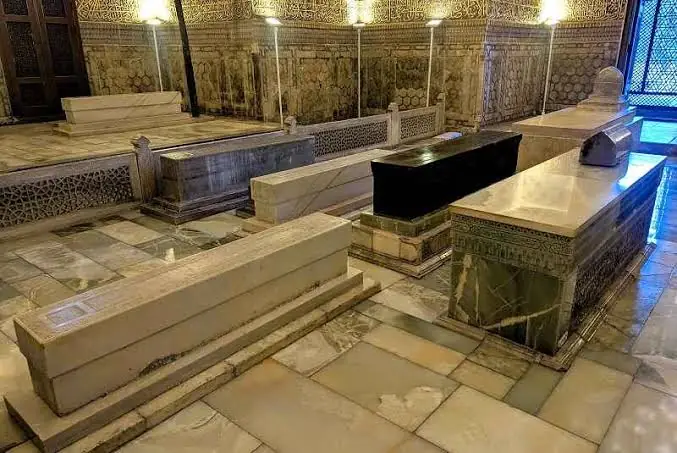
Stepping inside the mausoleum reveals an even more spectacular interior. The walls and soaring dome are richly adorned with gilded decorations, delicate muqarnas (stalactite-style vaulting), finely carved marble panels, and exquisite ornamental patterns. The combination of gold leaf, deep blue accents, and intricate craftsmanship creates an atmosphere of serenity, grandeur, and timeless beauty that leaves a lasting impression on every visitor. At the center of the chamber stands the symbolic tombstones of the Timurid rulers, while the actual burial crypt lies in a lower chamber beneath the mausoleum. The most famous marker is the dark green jade stone placed above the tomb of Amir Timur, one of the largest and most remarkable pieces of jade ever used in Islamic funerary architecture. This stone has become one of the mausoleum's most treasured historical artifacts and a symbol of the enduring legacy of the Timurid Empire.
Today, Gur-e-Amir remains one of the greatest architectural treasures of Uzbekistan and the Islamic world. Its extraordinary beauty, historical importance, and masterful design continue to captivate visitors, historians, architects, and photographers from across the globe, making it an essential destination for anyone exploring the rich cultural heritage of Samarkand.
Who Is Buried in the Mausoleum?
Gur-e-Amir is not only the final resting place of Amir Timur, but also the burial site of several of the most prominent members of the Timurid dynasty.
Those buried here include:
Amir Timur – the great conqueror and founder of the Timurid Empire.
Shah Rukh Mirza – Amir Timur's son and one of his most influential successors.
Muhammad Sultan – Amir Timur's beloved grandson and designated heir to the throne.
Mirzo Ulugh Beg – the renowned astronomer, mathematician, and ruler.
Sayyid Baraka – Amir Timur's spiritual mentor and respected religious leader.
Several other distinguished members of the Timurid royal family.
For this reason, Gur-e-Amir is far more than a mausoleum—it is one of the most significant historical monuments preserving the legacy and history of the Timurid dynasty.
Why Visit Gur-e-Amir Mausoleum?
A visit to Gur-e-Amir Mausoleum offers far more than the opportunity to see a historic monument. It allows visitors to explore the remarkable life and legacy of Amir Timur while experiencing one of the greatest masterpieces of Timurid architecture.
During your visit, you can:
Learn fascinating stories about the life, achievements, and legacy of Amir Timur.
Admire one of the finest examples of Timurid architecture and Islamic artistic craftsmanship.
Discover exquisite glazed tilework, intricate mosaics, and magnificent gilded decorations up close.
Gain deeper insights into Samarkand's rich history through knowledgeable professional guides.
Capture unforgettable photographs at one of Samarkand's most iconic and picturesque landmarks.
Legends of Gur-e-Amir
The Gur-e-Amir Mausoleum is not only admired for its remarkable architecture but is also surrounded by fascinating legends that have been passed down through generations. The most famous of these is the legend surrounding the opening of Amir Timur's tomb. According to popular folklore, an inscription beneath his tombstone warned:
"Whoever opens my tomb shall unleash an invader more terrible than I."
In 1941, Soviet archaeologists opened the mausoleum as part of a scientific expedition. Shortly afterward, World War II reached the Soviet Union with the German invasion, a coincidence that greatly contributed to the legend's worldwide fame. Although historians regard this connection as a coincidence rather than historical fact, the story continues to captivate visitors and remains one of the most intriguing legends associated with Gur-e-Amir, adding an air of mystery to this extraordinary monument.
Best Time to Visit
The Gur-e-Amir Mausoleum is open to visitors throughout the year, and each season offers a unique perspective on this magnificent monument.
Spring (March–May): Pleasant temperatures, blooming gardens, and vibrant greenery create the perfect atmosphere for sightseeing.
Autumn (September–November): Cool, comfortable weather makes it an ideal season for exploring the square and the historic city of Samarkand.
Early morning and the hours just before sunset are the best times to admire and photograph the mausoleum, as the iconic turquoise dome glows beautifully under the changing light.
In the evening, carefully designed illumination transforms Gur-e-Amir into an even more majestic and mysterious sight, highlighting its elegant architecture and creating an unforgettable atmosphere.
Travel Tips for Visitors
Allow 1 to 1.5 hours to fully explore the Gur-e-Amir Mausoleum and appreciate its remarkable architecture and history.
Visit early in the morning or shortly before sunset to enjoy the best natural lighting for photography and a more peaceful atmosphere.
Hire a knowledgeable local guide to gain deeper insights into the life of Amir Timur and the history of the Timurid dynasty.
Take your time exploring the interior, where every intricate pattern, calligraphic inscription, and decorative element tells a unique story.
Combine your visit with Registan Square and the Bibi-Khanym Mosque to enjoy a perfect one-day tour of Samarkand's most iconic historical landmarks.
The Eternal Legacy of Gur-e-Amir
The Gur-e-Amir Mausoleum is far more than the final resting place of Amir Timur. It is a timeless symbol of the power, intellectual achievements, and architectural brilliance of the Timurid Empire. Its magnificent turquoise dome, exquisite mosaic tilework, and centuries-old atmosphere transport every visitor back to one of the most remarkable periods in Central Asian history.
📞 Phone: +998 97 397 37 73📧 Email: lapislazulitours@gmail.com
Where a Thousand Years of History and Sacred Architecture Come Together
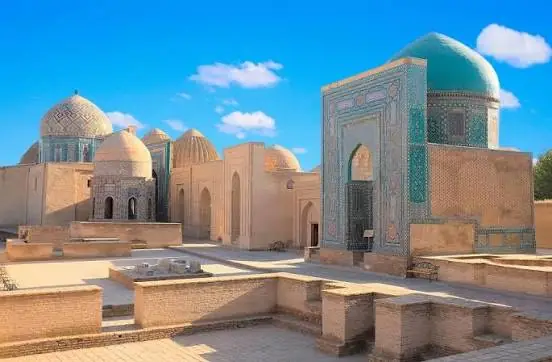
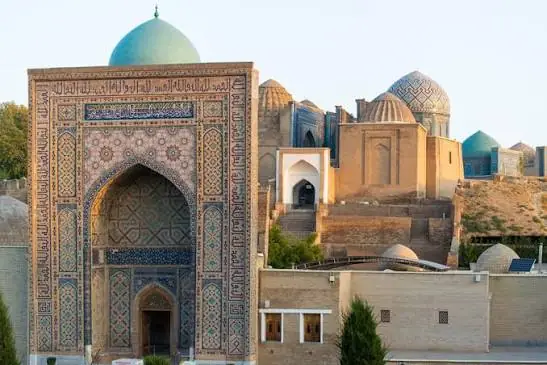
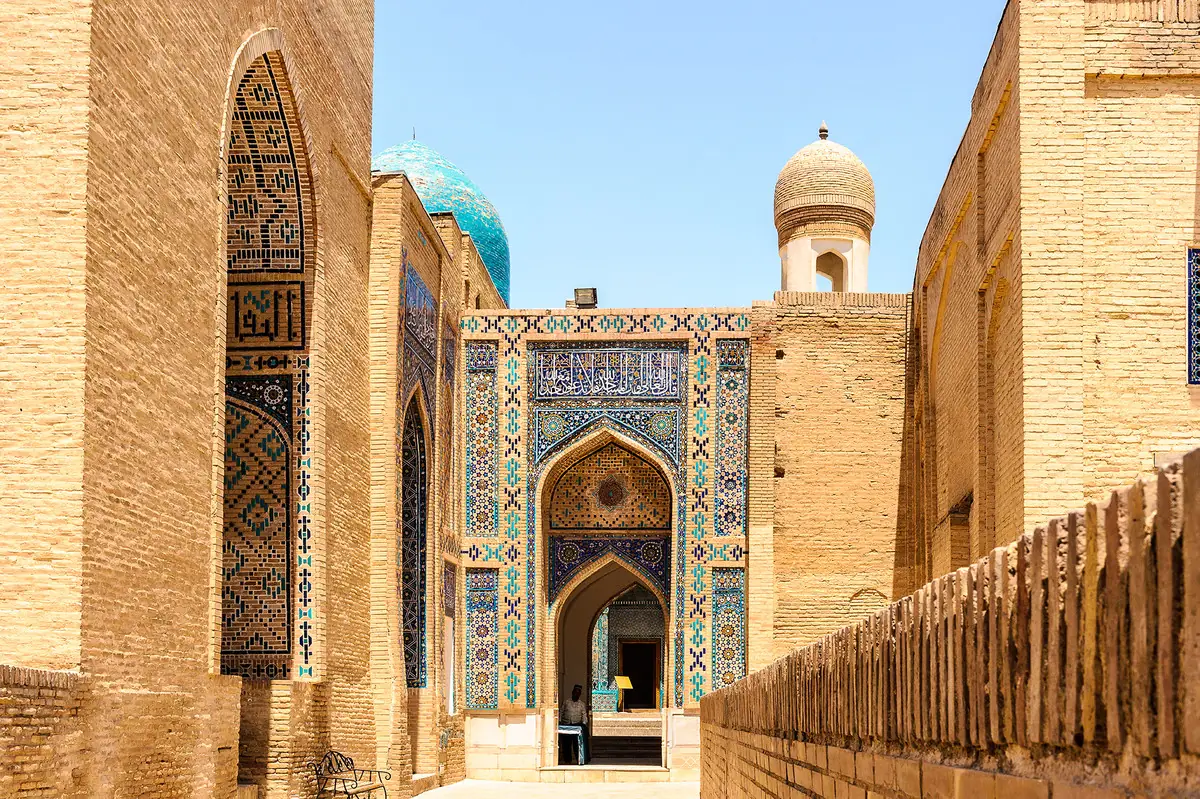
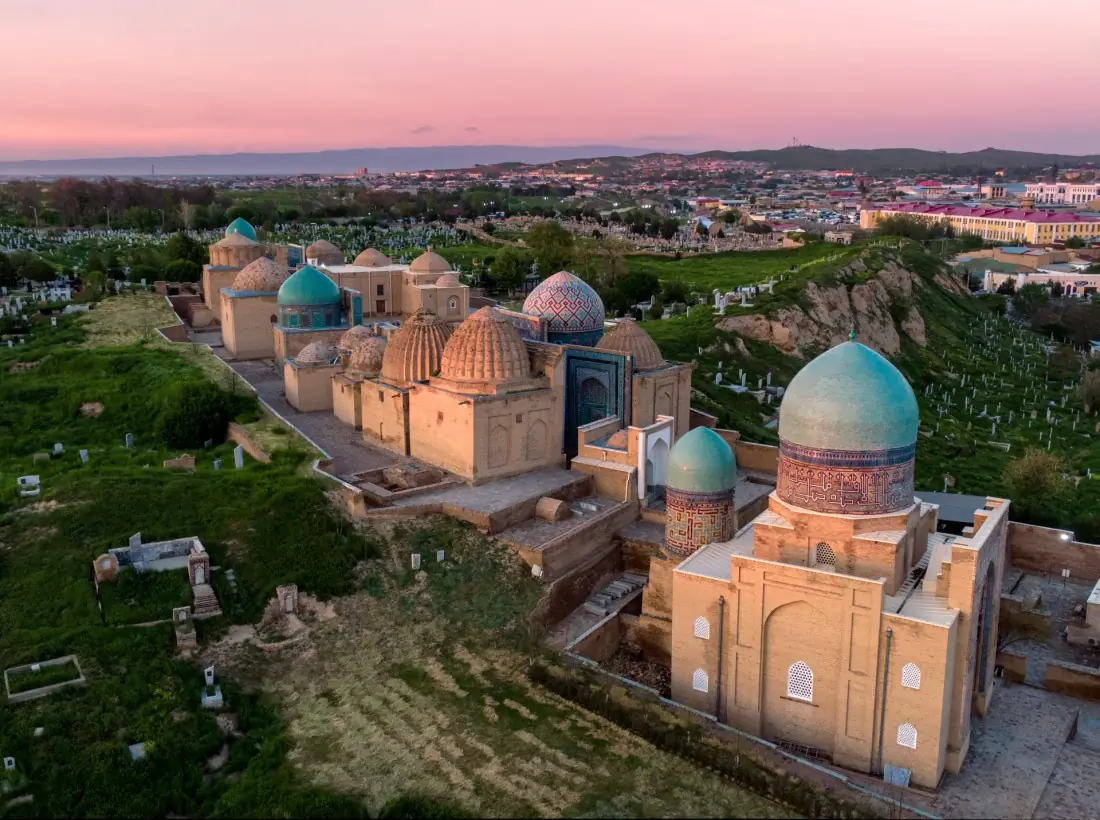
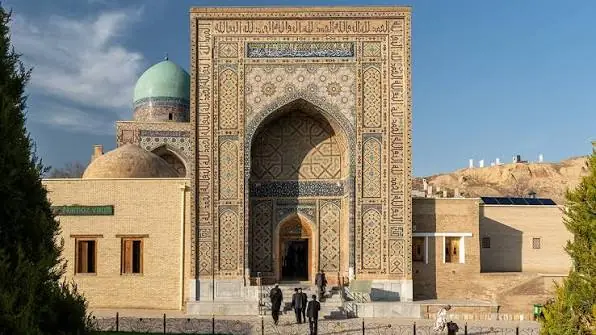
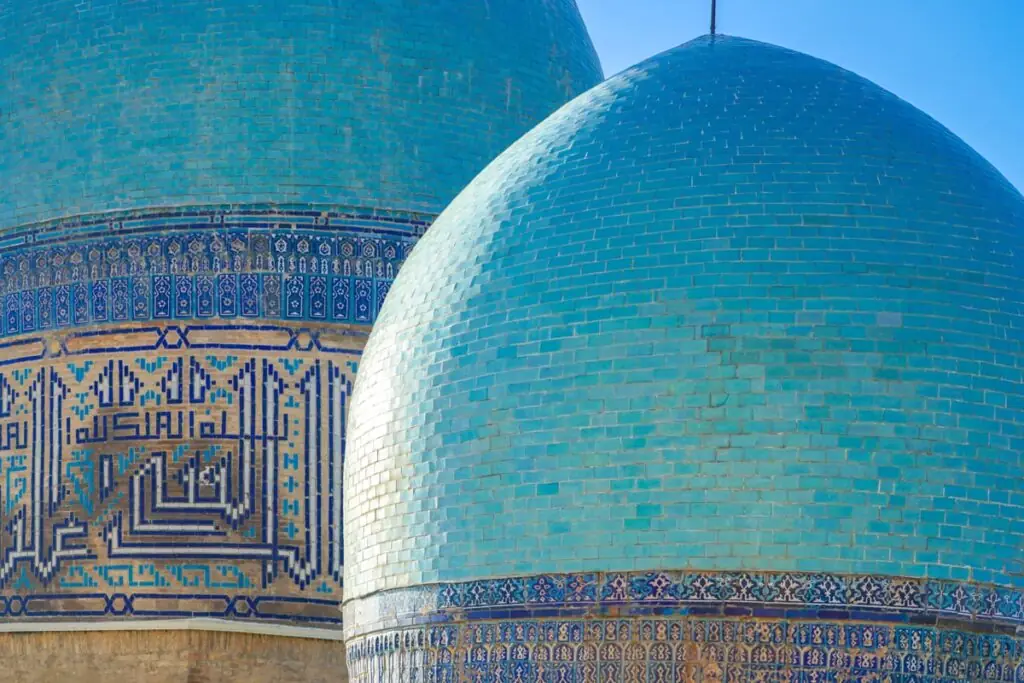
The Shah-i-Zinda Complex is one of Samarkand's most sacred and breathtaking historical landmarks. Renowned for its extraordinary architecture, deep historical roots, and profound spiritual significance, it continues to captivate visitors from around the world. The complex is famous for its magnificent mausoleums, adorned with brilliant turquoise and cobalt-blue glazed tiles, making it one of the finest masterpieces of Islamic architecture in Central Asia.
The name "Shah-i-Zinda" comes from Persian and means "The Living King" or "The Eternal King." It is associated with Qutham ibn Abbas, a cousin of the Prophet Muhammad (peace be upon him), who is believed to have played a significant role in introducing Islam to the region of Transoxiana. According to local tradition, he was martyred but continues to live spiritually, giving rise to the name "The Living King."
Today, Shah-i-Zinda is not only an extraordinary historical monument but also one of the most important pilgrimage sites in the Muslim world. It remains one of Samarkand's most treasured attractions, welcoming countless pilgrims, historians, photographers, and travelers who come to admire its spiritual atmosphere, remarkable architecture, and centuries-old cultural heritage.
A Journey Through History
The history of the Shah-i-Zinda Complex dates back to the 11th century, although most of the magnificent monuments seen today were constructed during the 14th and 15th centuries under the rule of Amir Timur and the Timurid dynasty.
According to local tradition, in the 7th century, Qutham ibn Abbas, a cousin of the Prophet Muhammad (peace be upon him), came to Samarkand to spread the teachings of Islam. It is believed that he was martyred during an attack while carrying out his mission. Legend tells that, by the will of God, he entered the earth alive and attained eternal life. This inspiring story gave the complex its name, "Shah-i-Zinda," meaning "The Living King." Over the centuries, the sacred site became an honored burial place for members of the Timurid royal family, high-ranking officials, military commanders, and influential nobles. During the reign of Amir Timur, Shah-i-Zinda received special attention and was transformed into one of the most magnificent architectural ensembles in Samarkand, reflecting the empire's artistic excellence and spiritual devotion.
Today, the complex preserves nearly nine centuries of history, with each mausoleum representing a unique masterpiece of architecture, craftsmanship, and historical significance. Walking through its narrow passageways is like taking a journey through the rich cultural heritage of the Timurid era, where every monument tells a remarkable story from the past.
An Architectural Masterpiece
The Shah-i-Zinda Complex is widely regarded as one of the world's most exquisite masterpieces of Islamic architecture, celebrated for its breathtaking ceramic artistry and exceptional craftsmanship. Often described as an open-air museum of Timurid architecture, the complex showcases centuries of artistic excellence in every detail.
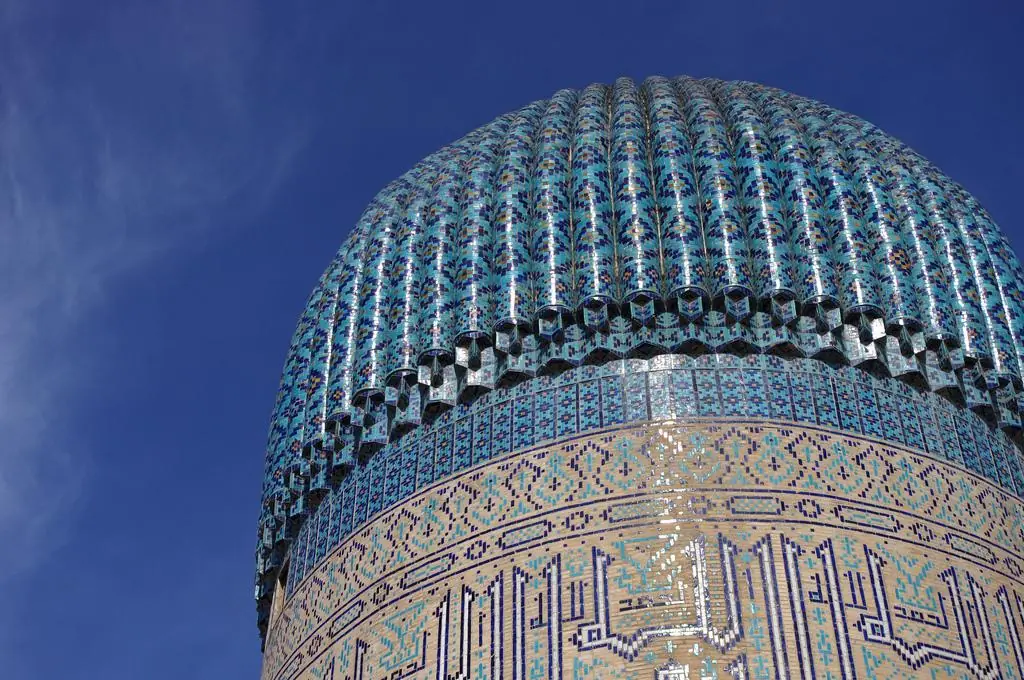
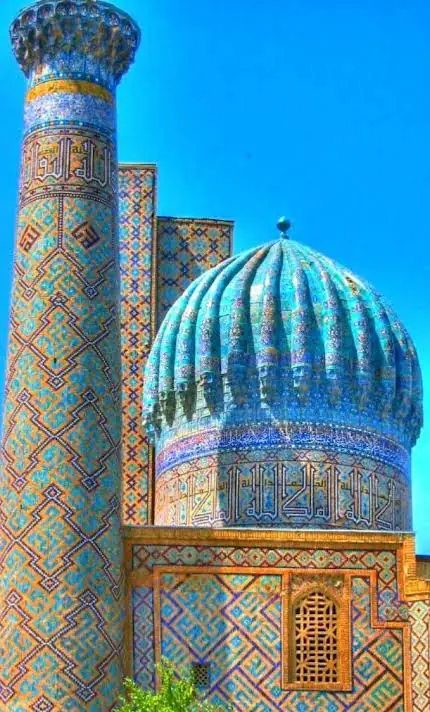
The complex consists of a series of beautifully designed mausoleums arranged along a narrow, ascending avenue, each built during different periods between the 11th and 15th centuries. Every monument possesses its own unique architectural style while together forming a harmonious ensemble that reflects the artistic brilliance of the Timurid era. Its façades are richly decorated with dazzling turquoise, cobalt-blue, and white glazed tiles, intricate geometric mosaics, elegant floral arabesques, and finely crafted Arabic calligraphy. Every ornament was created by master artisans using advanced techniques that have preserved their remarkable beauty for more than six centuries.
One of the most captivating features of Shah-i-Zinda is the extraordinary way its glazed ceramics interact with sunlight. As the light changes throughout the day, the vibrant blue and turquoise tiles shimmer in different shades, creating an almost magical atmosphere that makes every visit unique. The interiors of many mausoleums are equally impressive, featuring delicately carved marble, finely detailed decorative plasterwork, and beautifully painted ceilings that reflect the sophistication of Timurid artistic traditions. Every chamber tells a story of faith, craftsmanship, and royal patronage.
Today, Shah-i-Zinda is recognized as one of the most photogenic historical sites in Uzbekistan. Its spectacular architecture, vibrant colors, and peaceful spiritual atmosphere make it a favorite destination not only for historians and pilgrims but also for architects, photographers, artists, and travelers from around the world.
Highlights of the Shah-i-Zinda Complex
Qutham ibn Abbas Mausoleum
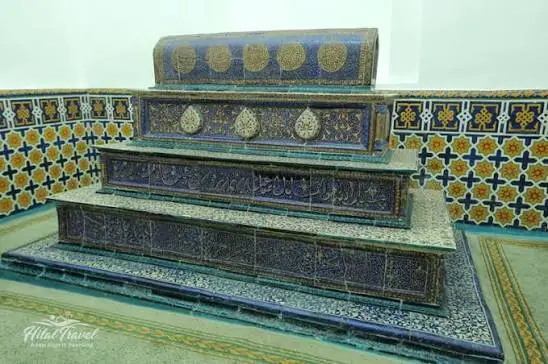
The Qutham ibn Abbas Mausoleum is the holiest part of the Shah-i-Zinda Complex. According to tradition, it is the burial place of Qutham ibn Abbas, a cousin of the Prophet Muhammad (peace be upon him), who played an important role in introducing Islam to the region. Every year, thousands of pilgrims and visitors come here to pay their respects and experience the site's peaceful spiritual atmosphere.
Timurid Mausoleums
The complex is home to numerous mausoleums belonging to members of the Timurid royal family, including Amir Timur's close relatives, sisters, nieces, and prominent members of the royal court. Each mausoleum is unique in its architectural style, decorative artistry, and historical significance, together forming one of the finest collections of Timurid funerary architecture in Central Asia.
Exquisite Tilework
Shah-i-Zinda is world-famous for its stunning turquoise and cobalt-blue glazed tilework. The walls are adorned with intricate geometric patterns, elegant floral motifs, and beautifully crafted Arabic calligraphy, representing some of the most refined achievements of medieval Islamic art. The remarkable craftsmanship and vibrant colors continue to amaze visitors and make the complex one of Uzbekistan's most iconic architectural treasures.
Why Visit the Shah-i-Zinda Complex?
The Shah-i-Zinda Complex is one of Samarkand's most peaceful and spiritually significant historical landmarks. A visit here offers more than the chance to admire magnificent architecture—it provides an opportunity to experience centuries of history, culture, and religious heritage in a truly unique setting.
During your visit, you can:
Admire some of the finest masterpieces of Timurid architecture and decorative art.
Explore one of the most important Islamic pilgrimage sites in Central Asia.
Discover the extraordinary beauty of medieval glazed tilework, intricate mosaics, and elegant Arabic calligraphy.
Capture unforgettable photographs at one of Samarkand's most iconic and picturesque locations.
Learn fascinating legends and historical stories from experienced local guides, gaining a deeper understanding of the complex's rich cultural and spiritual significance.
Travel Tips for Visitors
Allow 1.5 to 2 hours to fully explore the Shah-i-Zinda Complex and appreciate its remarkable architecture and history.
Wear comfortable walking shoes, as the complex includes numerous steps and stairways.
As this is a sacred religious site, visitors are encouraged to dress modestly and behave respectfully.
Visit early in the morning to enjoy a quieter atmosphere and the best lighting for photography.
Combine your visit with Gur-e-Amir Mausoleum and Registan Square for the perfect one-day tour of Samarkand's most iconic landmarks.
A Timeless Legacy
The Shah-i-Zinda Complex is far more than a collection of historic mausoleums—it is a priceless treasure that embodies the rich history of Samarkand, the architectural brilliance of the Timurid era, and the enduring legacy of Islamic culture. Its magnificent turquoise-tiled mausoleums, sacred shrines, and serene spiritual atmosphere leave a lasting impression on every visitor. A visit to Shah-i-Zinda is an unforgettable journey through centuries of history, art, and faith. Whether you are drawn by its extraordinary architecture, deep religious significance, or fascinating historical heritage, the complex offers a unique glimpse into the soul of the Silk Road. For anyone exploring Samarkand, Shah-i-Zinda is not merely a historical landmark—it is one of the city's most inspiring and unforgettable destinations, where the beauty and spirit of the East continue to live on.
📞 Phone: +998 97 397 37 73📧 Email: lapislazulitours@gmail.com
The Majestic Symbol of Amir Timur's Empire
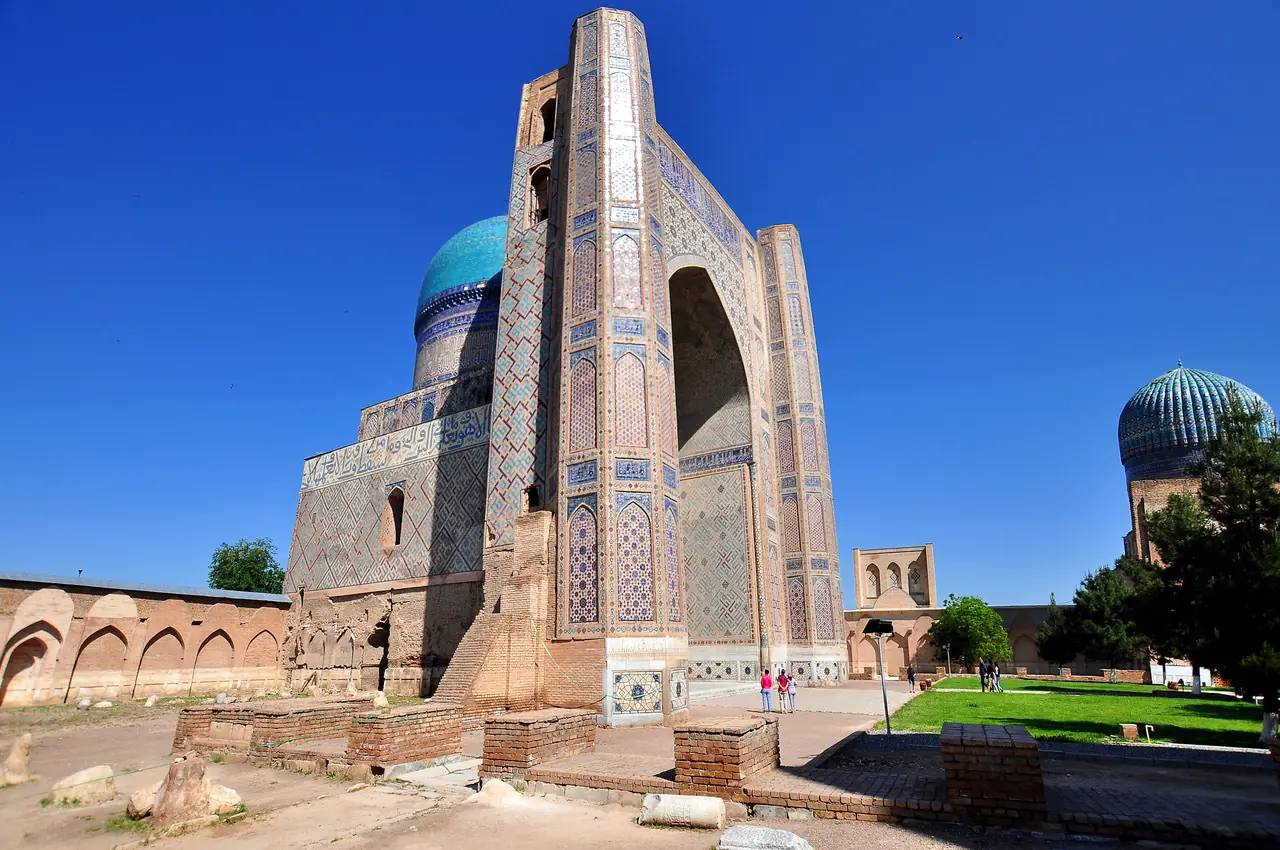
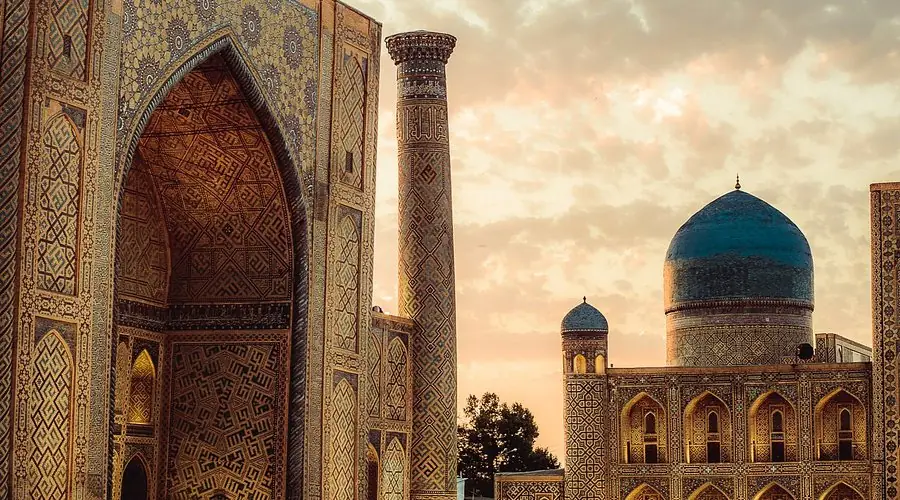
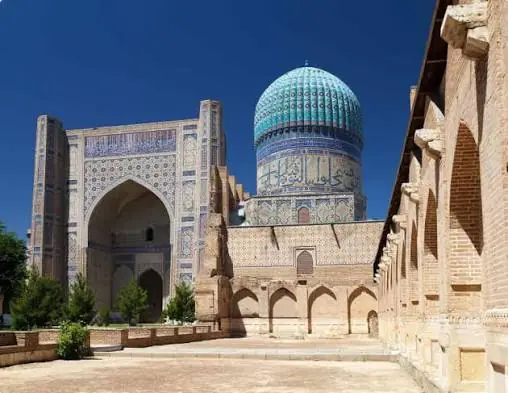
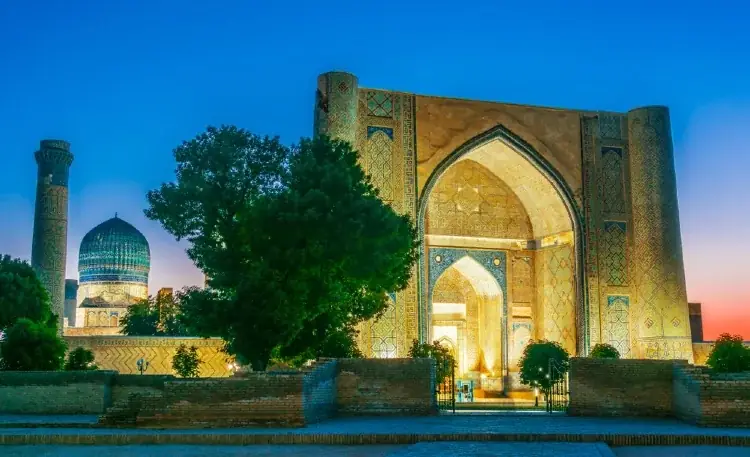
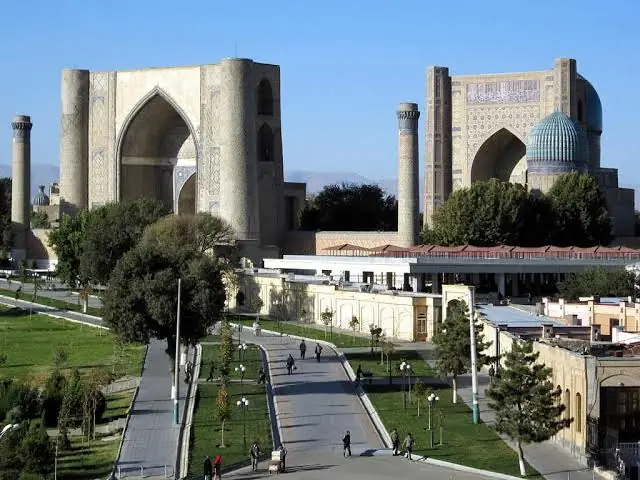
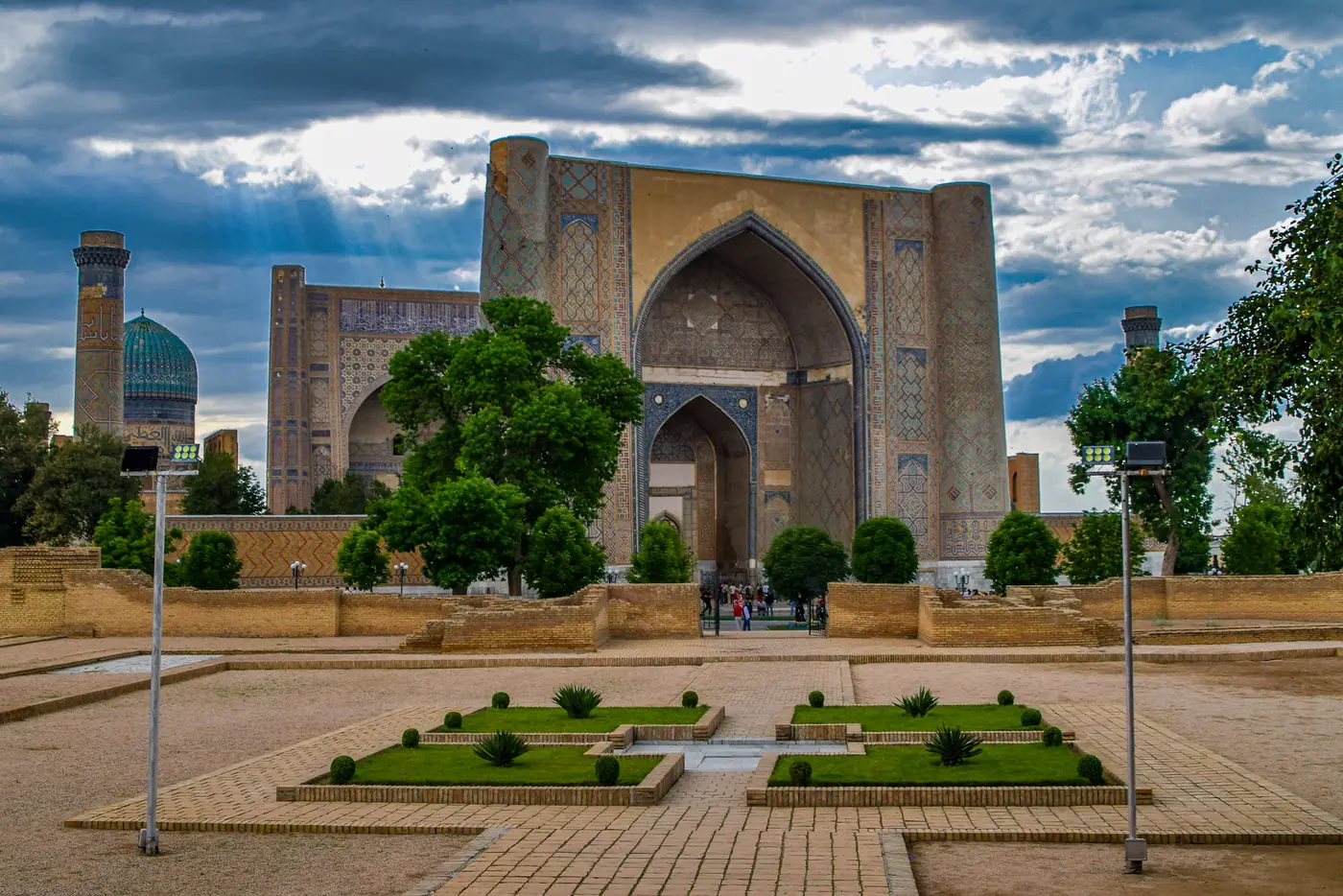
The Bibi-Khanym Mosque is one of Samarkand's most iconic historical landmarks and one of the greatest masterpieces of Timurid architecture. Commissioned by the great conqueror Amir Timur at the end of the 14th century, the mosque was once among the largest and most magnificent in the Islamic world, reflecting the wealth, power, and artistic vision of the Timurid Empire.
Its monumental entrance portal, soaring turquoise domes that seem to touch the sky, exquisite glazed tilework, and magnificent architectural design have made Bibi-Khanym one of Samarkand's most celebrated attractions. Every detail of the mosque showcases the extraordinary craftsmanship and engineering achievements of its time, leaving visitors in awe of its timeless beauty.
Today, the Bibi-Khanym Mosque stands as one of Uzbekistan's most treasured historical monuments and one of the country's most popular tourist destinations. Every year, thousands of visitors from around the world come to admire its remarkable architecture, explore its fascinating history, and experience the enduring legacy of one of the greatest empires of the Silk Road.
A Journey Through History
The construction of the Bibi-Khanym Mosque began in 1399, following Amir Timur's victorious campaign in India. Determined to transform Samarkand into the most magnificent and powerful capital of his empire, Timur commissioned the construction of a mosque unlike any the world had ever seen. To achieve this ambitious vision, he invited the finest architects, engineers, craftsmen, and artisans from Persia, India, Khorasan, Azerbaijan, and many other regions.
Thousands of skilled builders, master stone carvers, stucco artists, and ceramic craftsmen worked on the project. The construction lasted several years and incorporated revolutionary engineering techniques and architectural innovations that were extraordinary for their time. The mosque quickly became one of the largest and most impressive religious buildings in the Islamic world. Historical records suggest that after returning from his military campaigns, Amir Timur personally supervised the construction and insisted that every architectural detail meet the highest standards of excellence. His vision was to create a monument that would symbolize not only the spiritual importance of Islam but also the immense power, prosperity, and cultural achievements of the Timurid Empire.
Over the centuries, powerful earthquakes and the passage of time caused significant damage to parts of the mosque. However, following Uzbekistan's independence, extensive restoration and conservation efforts were undertaken to preserve this architectural masterpiece. Today, the Bibi-Khanym Mosque has regained much of its former grandeur and once again stands proudly as one of Samarkand's most iconic landmarks, welcoming visitors from around the world to experience its remarkable history and timeless beauty.
An Architectural Masterpiece
The Bibi-Khanym Mosque is regarded as one of the largest and most ambitious architectural achievements of the Timurid era. Designed to reflect the power and prestige of Amir Timur's empire, it was one of the grandest mosques in the Islamic world at the time of its construction and remains a remarkable symbol of medieval engineering and artistic excellence.
The mosque's monumental entrance portal, soaring turquoise domes, and vast central courtyard immediately captivate visitors with their impressive scale and elegance. The exterior is richly decorated with brilliant turquoise, cobalt-blue, and white glazed tiles, intricate geometric mosaics, floral arabesques, and beautifully crafted Arabic calligraphy. Every architectural element demonstrates the extraordinary skill of the master craftsmen who helped bring Amir Timur's vision to life.
The interior is equally magnificent. Beneath the enormous dome, visitors can admire spacious prayer halls, elegant marble columns, finely decorated walls, and intricate ornamental details that showcase the exceptional achievements of Timurid architecture and engineering. The harmony of light, color, and craftsmanship creates a breathtaking atmosphere that continues to inspire architects and travelers alike.
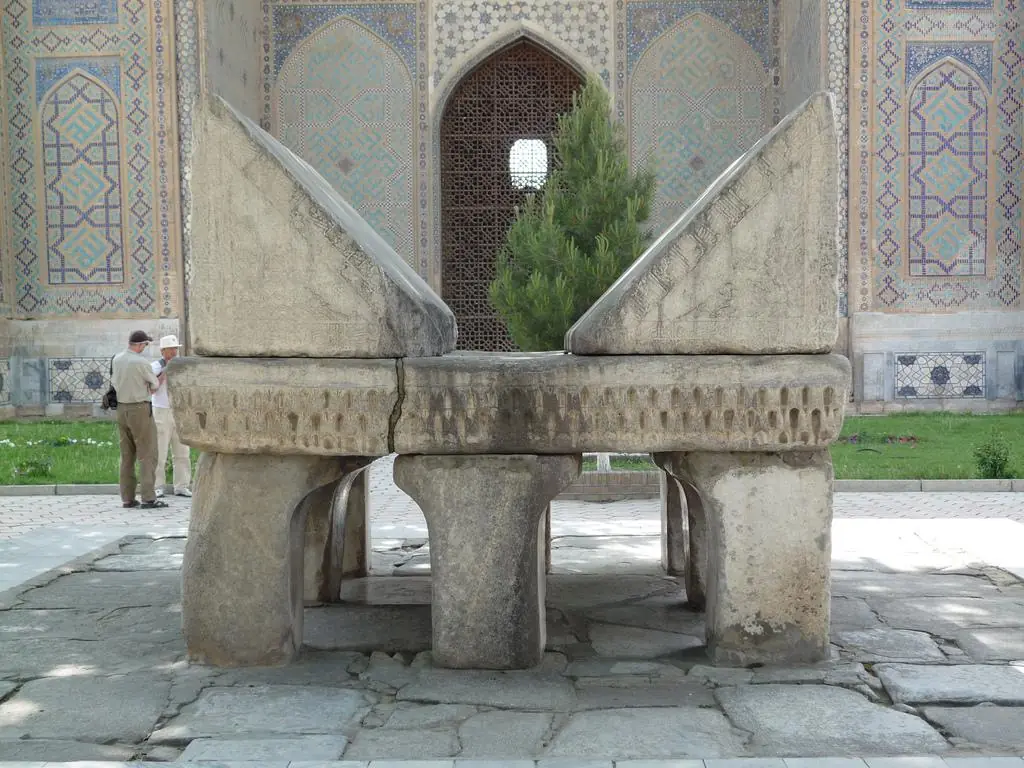
One of the mosque's most famous attractions is the giant marble Quran stand (rahl) located in the center of the courtyard. According to local tradition, passing beneath or around this historic marble stand is believed to bring good fortune, blessings, and prosperity. Whether viewed as a cultural legend or a cherished local belief, it remains one of the most photographed and admired features of the Bibi-Khanym Mosque. Today, the Bibi-Khanym Mosque stands as one of Uzbekistan's greatest architectural treasures, attracting visitors from around the world who come to admire its timeless beauty, rich history, and the enduring legacy of the Timurid Empire.
The Legend of Bibi-Khanym
The Bibi-Khanym Mosque is closely associated with Saray Mulk Khanum, the beloved wife of Amir Timur, who became widely known among the people as Bibi-Khanym. According to the most famous local legend, while Amir Timur was away on a long military campaign, Bibi-Khanym decided to build a magnificent mosque as a surprise gift in his honor. The architect entrusted with the project was so captivated by her beauty that, before completing the construction, he asked for a single kiss as his reward.
The legend says that this unexpected request eventually led to Amir Timur's great anger upon his return. Although historians consider this story to be a popular legend rather than a historical fact, it has been passed down through generations for centuries. Today, it remains one of Samarkand's most fascinating tales, adding an air of mystery and romance to the rich history of the Bibi-Khanym Mosque.
Why Visit Bibi-Khanym Mosque?
The Bibi-Khanym Mosque offers a unique opportunity to experience the rich history of Samarkand, the grandeur of the Timurid Empire, and the timeless beauty of Islamic architecture—all in one extraordinary destination.
During your visit, you can:
Admire one of the most magnificent architectural masterpieces of the Timurid era.
Marvel at the breathtaking beauty of its monumental entrance portal and iconic turquoise domes.
See the famous giant marble Quran stand (rahl), one of the mosque's most treasured landmarks.
Learn more about Amir Timur and the Timurid Empire with the guidance of experienced local experts.
Capture unforgettable photographs at one of Samarkand's most iconic and picturesque historical landmarks.
Interesting Facts
The Bibi-Khanym Mosque was commissioned by Amir Timur and constructed at the end of the 14th century.
At the time of its completion, it was considered one of the largest and most magnificent mosques in the Islamic world.
Thousands of skilled craftsmen from Central Asia, Persia, India, and other regions contributed to its construction.
The giant marble Quran stand (rahl) in the courtyard is one of Samarkand's most famous historical landmarks.
Bibi-Khanym is one of the most visited tourist attractions in Samarkand, welcoming thousands of visitors each year.
The mosque is conveniently located near Registan Square and Siab Bazaar, making it an ideal stop on a one-day tour of Samarkand.
A Timeless Legacy
The Bibi-Khanym Mosque is far more than a magnificent historical monument—it is a priceless symbol of the architectural brilliance of the Timurid era, the power of Amir Timur's empire, and the rich cultural heritage of Samarkand. Its monumental domes, exquisite glazed tilework, and centuries-old grandeur continue to inspire visitors from around the world. Every visit to Bibi-Khanym offers a unique opportunity to experience the splendor of one of Central Asia's greatest architectural masterpieces. Whether you are fascinated by history, architecture, photography, or cultural exploration, the mosque provides an unforgettable journey into the heart of the Silk Road. For anyone visiting Samarkand, Bibi-Khanym Mosque is an essential destination where the greatness of Eastern civilization and Uzbekistan's remarkable historical legacy can truly be appreciated.
📞 Phone: +998 97 397 37 73📧 Email: lapislazulitours@gmail.com
The Scientific Legacy of the Great Astronomer Who Studied the Stars
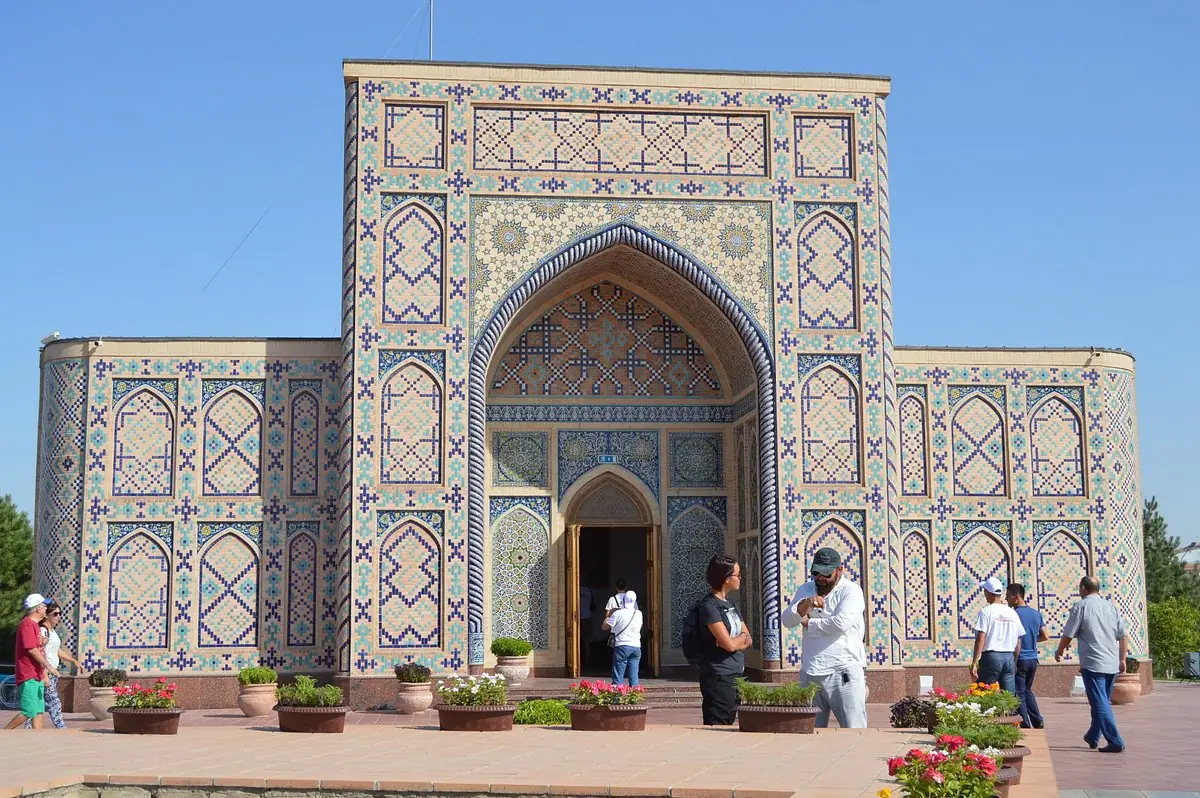
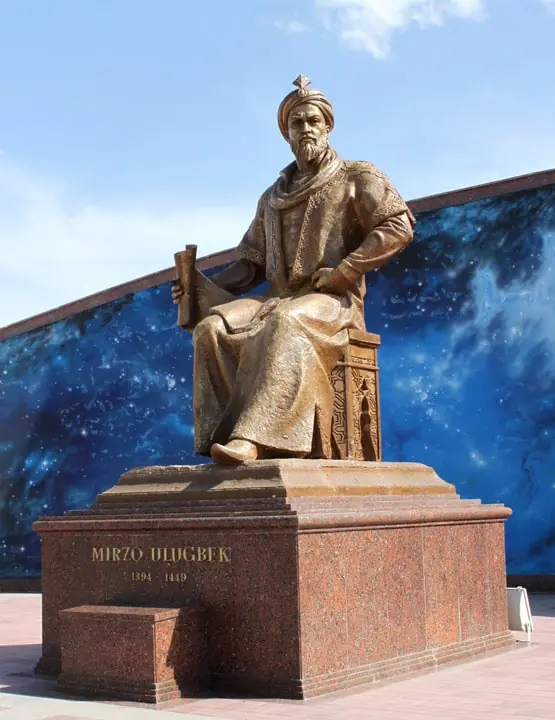
The Ulugh Beg Observatory is one of Samarkand's most remarkable historical and scientific landmarks and is regarded as one of the world's most significant astronomical centers of the 15th century. Commissioned by the renowned astronomer, mathematician, and ruler Mirzo Ulugh Beg, the observatory represented the pinnacle of scientific achievement during the Timurid era and became a leading center for astronomical research in the medieval world.
At a time when modern telescopes did not yet exist, Ulugh Beg and his team of distinguished scholars carried out remarkably precise observations of the stars and planets using sophisticated astronomical instruments. Their groundbreaking work led to some of the most accurate astronomical measurements of the pre-modern era, earning the observatory an enduring place in the history of world science.
Today, the Ulugh Beg Observatory stands as one of Uzbekistan's most treasured scientific monuments and an internationally recognized symbol of humanity's pursuit of knowledge. Visitors have the unique opportunity to explore the extraordinary achievements of 15th-century astronomy and discover how one of history's greatest scientists helped expand our understanding of the universe through observation, mathematics, and innovation.
A Journey Through History
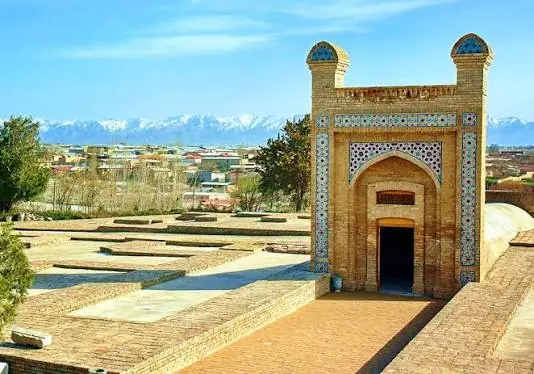
The Ulugh Beg Observatory was constructed between 1424 and 1429 on Kuhak Hill in Samarkand under the direction of Mirzo Ulugh Beg. More than a powerful ruler, Ulugh Beg was one of the greatest astronomers and mathematicians of his time. His vision was to transform Samarkand into the leading scientific center of the East, where knowledge and discovery would flourish.
The construction of the observatory brought together the finest architects, engineers, and scholars of the Timurid era. Distinguished scientists such as Qadi Zada al-Rumi, Ghiyath al-Din Jamshid al-Kashi, and Ali Qushji conducted groundbreaking research here, making the observatory one of the world's most advanced centers of astronomy during the 15th century.
For many years, Ulugh Beg and his team carefully observed the movements of the Sun, Moon, planets, and countless stars. Their work resulted in the creation of the famous Zij-i Sultani (also known as the Zij-i Jadid-i Guragani), one of the most accurate star catalogs of the pre-modern world. Its remarkable precision earned international recognition, and European astronomers continued to use it as an important scientific reference for centuries.
Following the death of Mirzo Ulugh Beg, the observatory gradually fell into decline and was eventually abandoned and destroyed. In the early 20th century, archaeological excavations uncovered its remarkable remains, including sections of its massive astronomical instruments. Today, the restored site and its museum preserve the legacy of one of history's greatest scientific achievements and continue to inspire visitors from around the world.
A Scientific Marvel
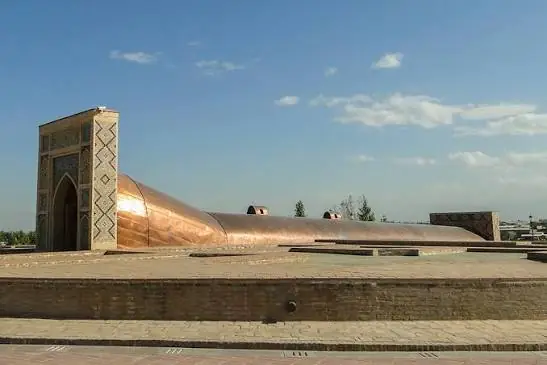
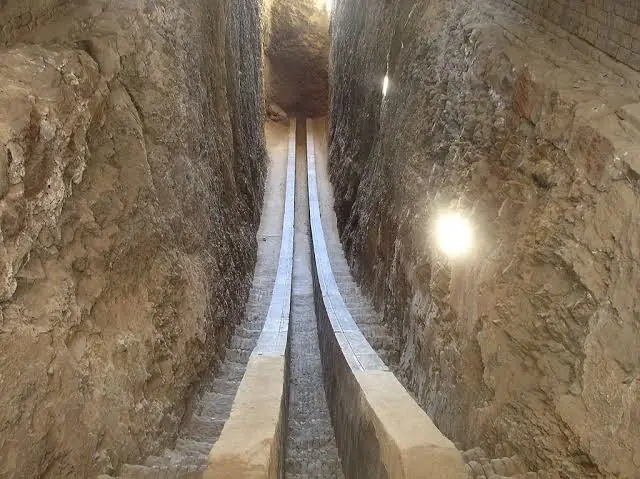
The most remarkable feature of the Ulugh Beg Observatory is its enormous sextant, one of the largest astronomical instruments ever built during the medieval period. With a radius of nearly 40 meters, a significant portion of the instrument was constructed below ground to ensure exceptional stability and precision. Using this remarkable device, astronomers were able to measure the positions of stars, planets, and other celestial bodies with extraordinary accuracy.
Building such a monumental scientific instrument in the 15th century was an extraordinary achievement in both engineering and human ingenuity. At a time when telescopes had not yet been invented, Ulugh Beg and his team relied on this giant sextant to conduct highly precise astronomical observations that contributed significantly to the advancement of world astronomy.
Today, the preserved underground section of the sextant remains the observatory's most valuable historical artifact. It stands as a remarkable testament to the scientific brilliance of the Timurid era and continues to fascinate historians, astronomers, and visitors from around the world who come to witness one of history's greatest achievements in observational astronomy.
Museum & Exhibits
The museum located within the Ulugh Beg Observatory complex offers visitors a fascinating insight into the scientific achievements of Mirzo Ulugh Beg and the remarkable progress of astronomy during the Timurid era. Through its carefully curated collections, guests can explore the history of one of the world's greatest medieval scientific centers and gain a deeper appreciation of the discoveries made here.
During your visit, you can explore:
Historical materials about the life, scientific achievements, and legacy of Mirzo Ulugh Beg.
Replicas of ancient astronomical instruments used for celestial observations.
A detailed scale model of the original Ulugh Beg Observatory.
Historic star charts and astronomical maps created by Timurid scholars.
Archaeological discoveries uncovered during excavations of the observatory.
Historical documents, manuscripts, and photographs related to the Timurid period.
Together, these exhibits provide a comprehensive understanding of how astronomy flourished in the 15th century and highlight the lasting influence of Ulugh Beg's scientific contributions on the history of world science.
Why Visit the Ulugh Beg Observatory?
The Ulugh Beg Observatory is a unique destination where history, science, and innovation come together. Visiting this remarkable site allows travelers to discover the extraordinary legacy of Mirzo Ulugh Beg and witness one of the greatest achievements in the history of medieval astronomy.
During your visit, you can:
Learn fascinating facts about 15th-century astronomy and scientific discoveries.
Explore one of the world's most famous historical observatories.
See the preserved remains of the enormous underground sextant up close.
Discover rare museum exhibits showcasing the achievements of Mirzo Ulugh Beg and the Timurid era.
Gain a deeper understanding of Samarkand's rich scientific and cultural heritage.
Enjoy beautiful panoramic views of Samarkand from one of the city's highest historic locations.
Interesting Facts
The Ulugh Beg Observatory was one of the most advanced astronomical centers in the world during the 15th century.
Ulugh Beg's star catalog, containing the positions of 1,018 stars, was among the most accurate astronomical works of its time.
The observatory's giant sextant had an impressive radius of approximately 40 meters.
Scientific observations conducted here later became valuable references for European astronomers.
The remains of the observatory were rediscovered by archaeologists in the early 20th century.
Today, the observatory and its museum are among Samarkand's most popular scientific and historical attractions.
A Timeless Legacy of Science
The Ulugh Beg Observatory is far more than a remarkable historical monument—it is a priceless symbol of humanity's pursuit of knowledge, scientific discovery, and intellectual achievement. It was here that Mirzo Ulugh Beg and his team of distinguished scholars unlocked the mysteries of the heavens, making groundbreaking contributions that shaped the history of astronomy for centuries to come. Today, the observatory stands as one of Samarkand's greatest scientific treasures and an enduring testament to Uzbekistan's rich cultural and intellectual heritage. Its fascinating history, extraordinary scientific significance, and inspiring atmosphere continue to captivate historians, astronomers, students, and travelers from around the world. A visit to the Ulugh Beg Observatory offers a unique opportunity to step into one of the greatest centers of medieval science and experience the timeless legacy of a scholar whose vision helped expand humanity's understanding of the universe.
📞 Phone: +998 97 397 37 73📧 Email: lapislazulitours@gmail.com