



Khorezm
Welcome to Khorezm
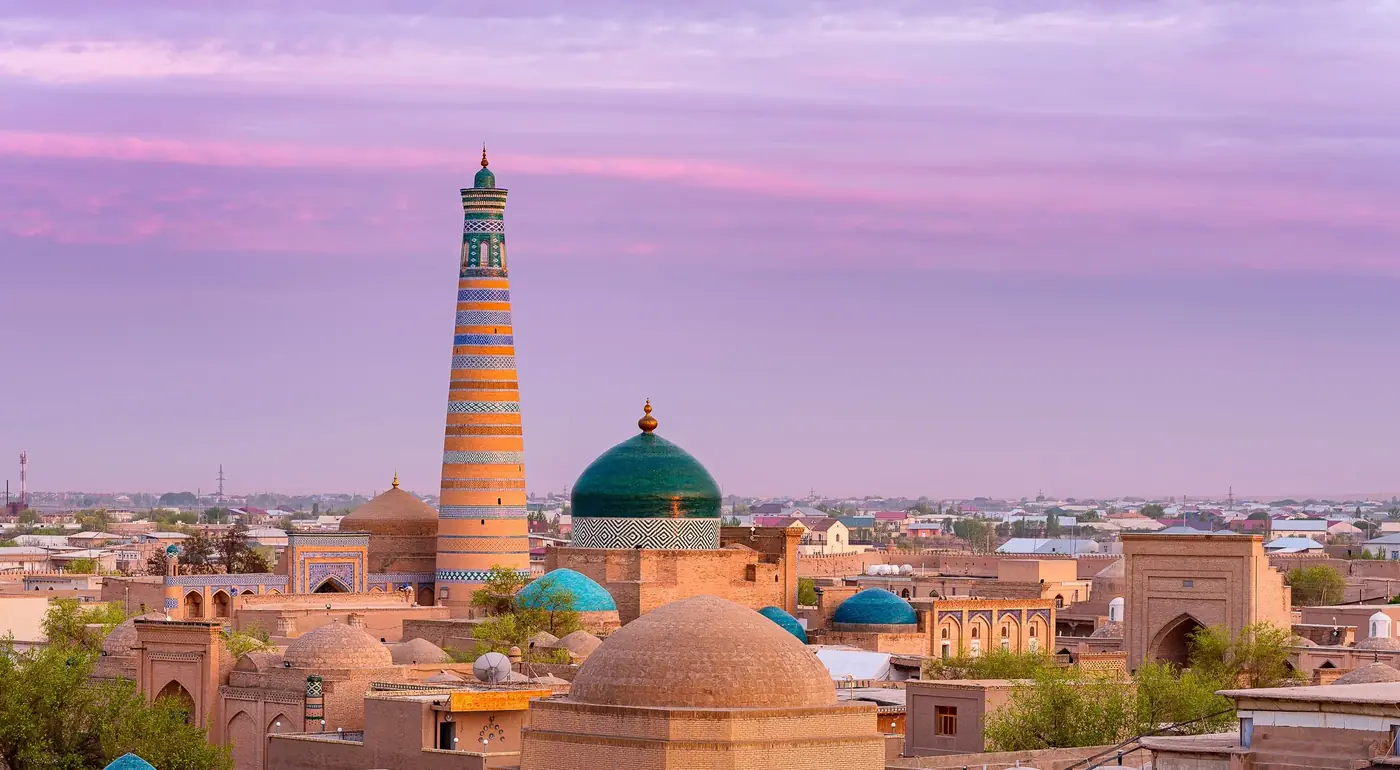
Step into an open-air museum on the edge of the Kyzylkum Desert, where mudbrick fortresses, turquoise-tiled minarets, and a walled inner city have stood watch over the Amu Darya oasis for centuries. Explore the legendary walled city of Itchan Kala, the Kunya-Ark citadel, the unfinished Kalta Minor minaret, Tash Khauli Palace, and the resting place of Pahlavon Mahmud, all gathered within one of the most complete medieval townscapes left anywhere in the Islamic world. Your complete travel guide to the Khorezm region and its capital, Khiva.
Situated in the far northwest of Uzbekistan along the lower reaches of the Amu Darya, Khorezm has been settled for well over two thousand years and once ruled its own powerful oasis kingdom, later becoming a prized possession of the Khanate of Khiva. Long before caravans reached Bukhara or Samarkand, they passed through Khorezmian lands, and the region grew wealthy on trade between the steppe, Persia, and the settled cities of Transoxiana. The walled old town of Khiva, known as Itchan Kala, has been protected as a UNESCO World Heritage Site since 1990, recognized as one of the most intact examples of Central Asian Islamic architecture and urban planning.
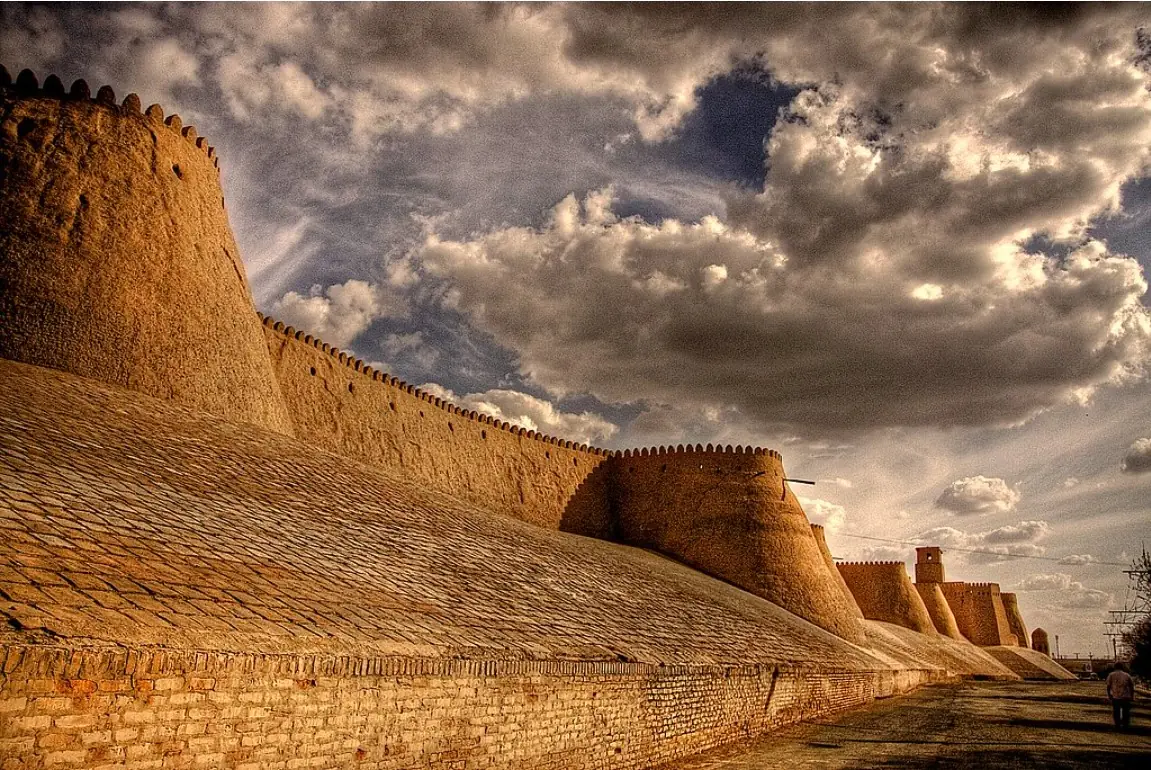
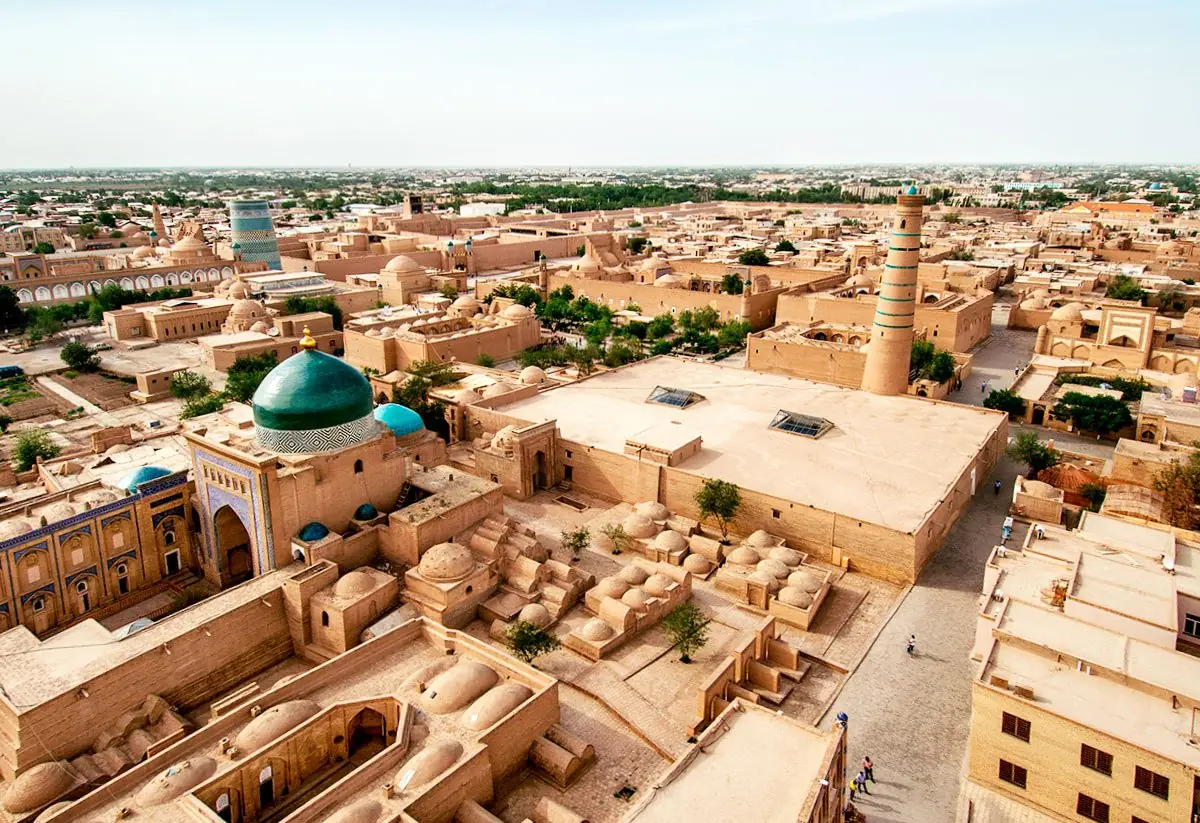
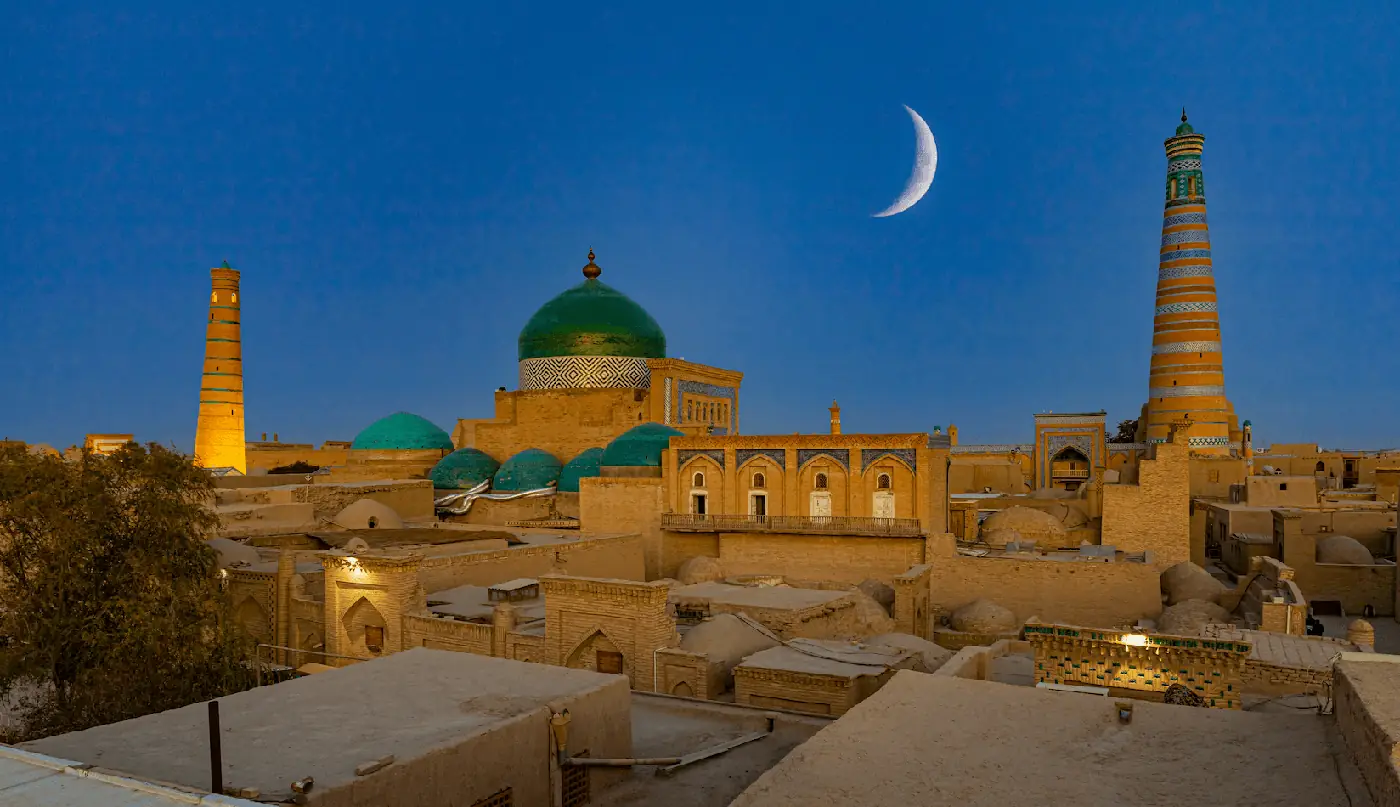
Unlike the sprawling old quarters of other Silk Road cities, Khiva's historic center can be crossed on foot in under twenty minutes, yet within that compact space stand dozens of minarets, madrasas, palaces, and mausoleums packed almost shoulder to shoulder. Walking its narrow lanes at dusk, when the desert light turns the sand-colored walls gold, feels less like sightseeing and more like stepping directly into the nineteenth century. Today, comfortable guesthouses, family-run restaurants, and knowledgeable local guides make it easy to combine that immersive atmosphere with modern travel comfort, whatever draws you here — history, architecture, photography, or simply the pull of a genuinely remote and unforgettable corner of Uzbekistan.
Basic Information
Travel Information
Why Visit Khorezm?
Few places in Central Asia let you experience an entire medieval city in a single glance the way Khiva does. Behind its earthen walls, travelers wander among dozens of minarets, madrasas, and palaces built almost entirely from local mudbrick, creating a sun-baked skyline unlike anywhere else along the old caravan routes. It's a destination for anyone who wants history to feel tangible rather than roped off behind glass.
Once the seat of an independent khanate that guarded the desert crossing between Persia, Russia, and the Uzbek oasis cities, Khorezm developed a distinct architectural and artistic identity shaped by relative isolation. Its wood-carved doors, majolica tilework, and fortress-like city walls set it apart from Bukhara and Samarkand, giving visitors a genuinely different chapter of Silk Road history to explore, along with a far quieter, less crowded atmosphere for those who prefer to wander without the tourist rush.
What Makes Khorezm Truly Special
Home to Itchan Kala, one of the best-preserved walled medieval cities in Central Asia.
A UNESCO World Heritage Site since 1990, recognized for its exceptional urban integrity.
Landmarks such as the Kunya-Ark citadel, the striking Kalta Minor minaret, and Tash Khauli Palace, all within walking distance of one another.
A distinctive desert-oasis architectural style built from mudbrick, carved wood, and majolica tile rather than the glazed brick seen elsewhere.
Rich woodcarving traditions, with Khiva's carved doors and columns among the finest surviving examples in Central Asia.
A remote, less-visited destination offering a quieter, more intimate encounter with Silk Road heritage.
History of Khorezm
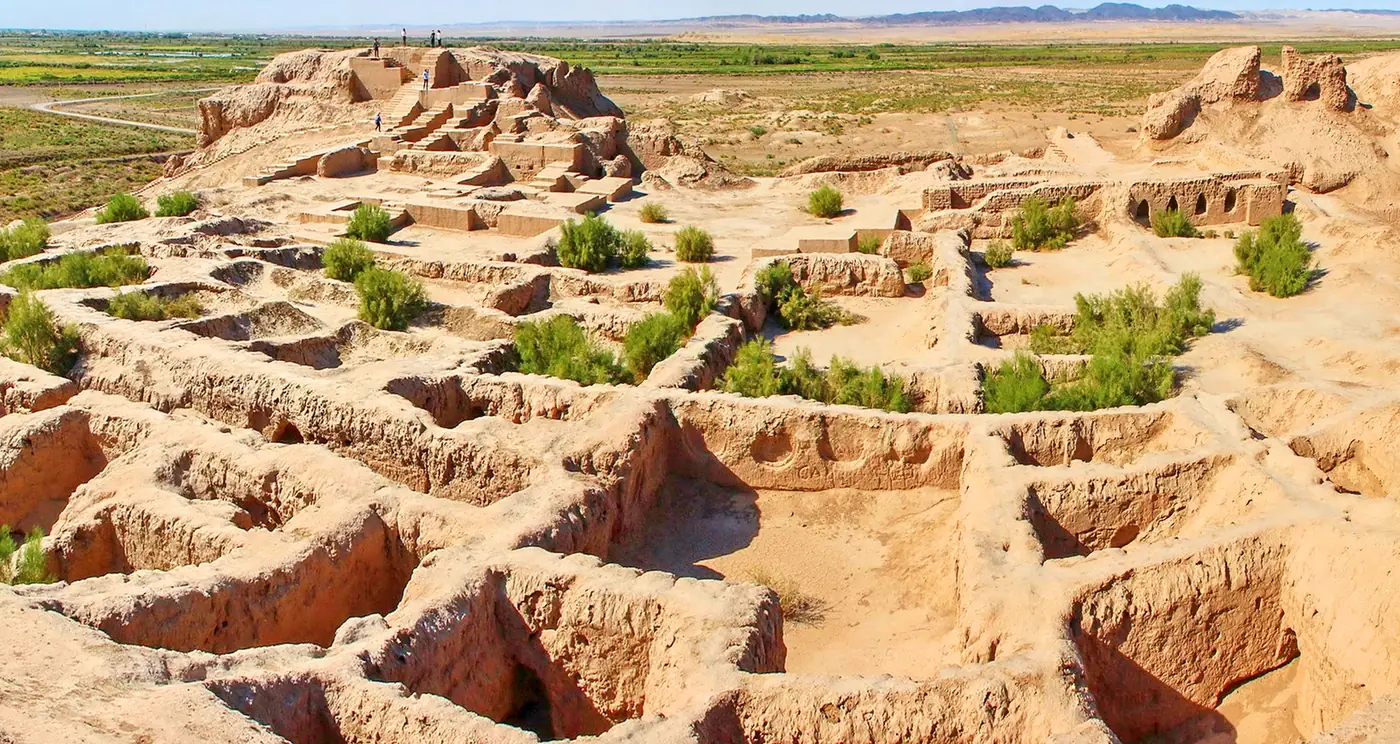
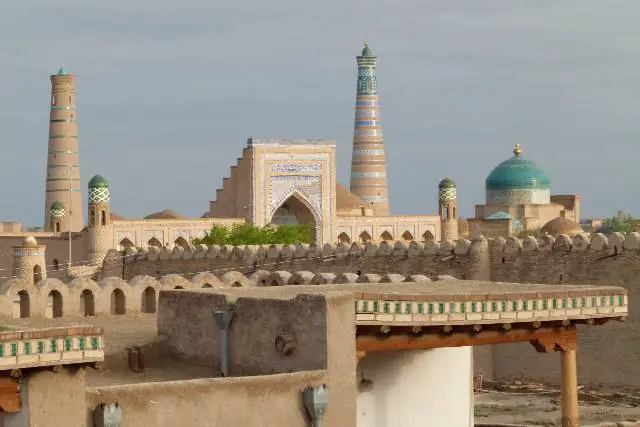
Khorezm's roots reach back to at least the first millennium BCE, when it emerged as an independent oasis civilization fed by the waters of the Amu Darya. Ancient Greek and Persian sources both mention Khorezm as a distinct land with its own rulers, and archaeologists have traced a chain of desert fortresses across the region that once guarded irrigated farmland and trade routes long before Khiva itself rose to prominence.
By the sixteenth century, Khiva had become the capital of its own khanate, ruling over the Khorezm oasis as an independent state for roughly three hundred years. Positioned between the Russian steppe, Persia, and the Bukharan emirate, the Khanate of Khiva built its wealth on caravan trade and, for a time, on a slave market that drew notoriety across the region. To defend this prosperity, its rulers ringed the inner city with the massive mudbrick walls that still enclose Itchan Kala today.
Most of what visitors see in Khiva's old town — its minarets, madrasas, and palace complexes — dates from the eighteenth and nineteenth centuries, a late but remarkably concentrated burst of construction under the Kungrat dynasty. After Khiva came under Russian imperial influence in the 1870s and later became a short-lived Soviet republic before absorption into Uzbekistan, the old walled city was gradually turned into a protected museum quarter rather than left to decay, which is a large part of why it survives so intact today.
Geographical Location of Khorezm
Khorezm lies in the far northwest of Uzbekistan, hemmed in by the Kyzylkum Desert to the east and the Karakum Desert to the south, with the Amu Darya delta providing the only significant water source in an otherwise arid landscape. The region sits at a relatively low elevation of around 100 meters (330 feet) above sea level, and its irrigated farmland forms a striking green ribbon against the surrounding sand.
Because of its remote position, Khorezm is most easily reached by air, with regular flights connecting Urgench International Airport to Tashkent and other major cities. Overland travelers can also reach the region by train or long-distance road from Bukhara, a journey of several hours across open desert that itself hints at how isolated — and how well protected — Khiva's old city has remained over the centuries.
Traditional Cuisine of Khorezm
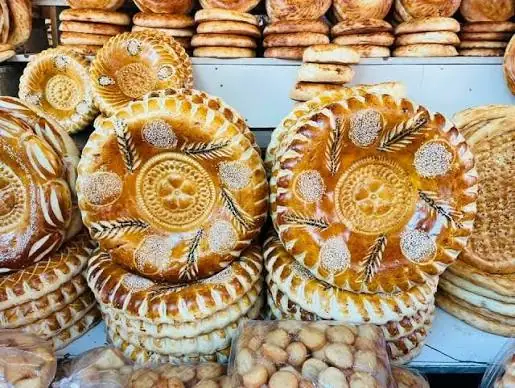
Khorezmian cooking has its own distinct character within Uzbek cuisine, shaped by the region's desert-oasis setting. Local specialties include Khorezm-style plov, prepared with a lighter hand than its Samarkand or Tashkent cousins, along with tukhum barak (small dumplings filled with egg and herbs), fried fish from the Amu Darya, hearty shivit oshi (green noodles with dill), and freshly baked non bread from clay tandoor ovens. Sampling these dishes in one of Khiva's courtyard restaurants, often set within a restored historic house, is one of the simple pleasures of visiting the region.





Best Time to Visit
Khorezm has a sharper desert climate than the rest of Uzbekistan, so timing matters more here than in Samarkand or Bukhara. The most comfortable windows are April to May and September to October, when daytime temperatures are warm rather than scorching and the old city's mudbrick walls are pleasant to explore on foot for hours at a stretch.
Urgench International Airport handles regular domestic flights to and from Tashkent, making Khorezm an easy add-on to a wider Uzbekistan itinerary. The region is also linked to Bukhara and the rest of the country by rail and long-distance highway, though the desert crossing between Bukhara and Khiva remains a full day's journey by road, something worth factoring into any travel plan.
Khorezm Awaits You
Beyond the desert lies a walled city that seems to have stepped out of another century — narrow lanes shaded by minarets, courtyards lined with carved wooden columns, and the quiet hum of a place still lived in behind its ancient defenses. Wander past fortress walls, sun-warmed madrasas, and family workshops keeping old crafts alive, and let the remoteness of the journey become part of the reward. Khorezm rewards travelers willing to go a little further off the well-worn Silk Road path.
Ready to explore Khorezm? Let Lapis Lazuli Tours plan an unforgettable journey to this remote UNESCO World Heritage region. Contact our travel specialists today and start planning your desert adventure.
📞 Phone: +998 97 397 37 73
📧 Email: lapislazulitours@gmail.com
A Complete Walled City Frozen in the Nineteenth Century
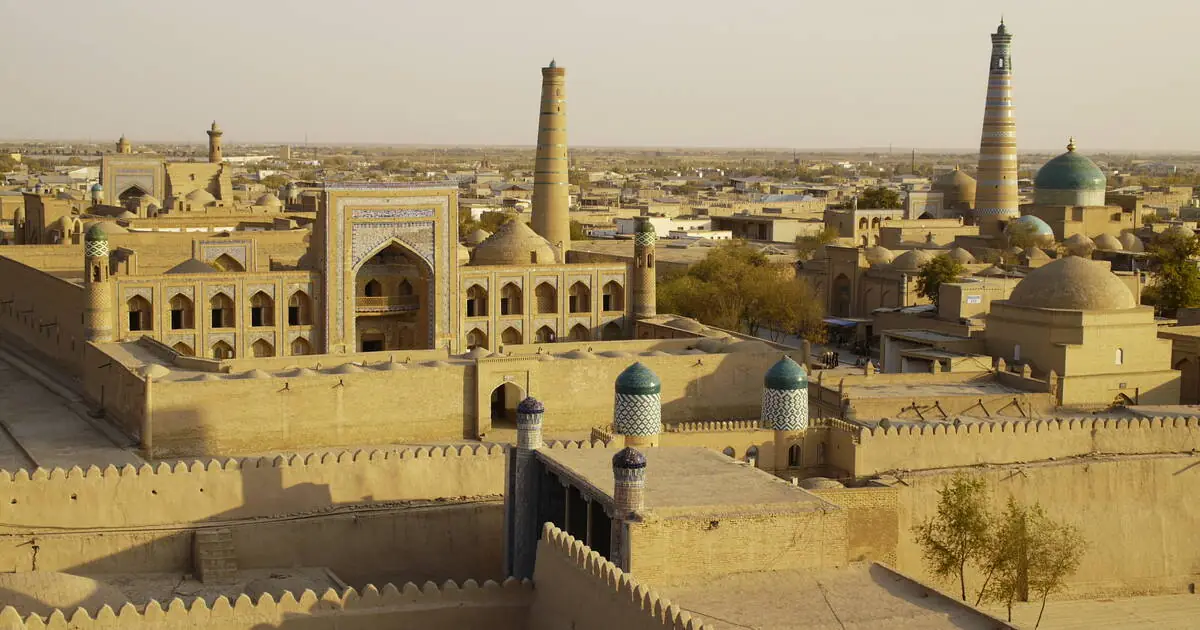
Itchan Kala is the inner walled city of Khiva and one of the most remarkable historical sites in all of Central Asia. Enclosed by towering earthen ramparts, this compact old town packs an astonishing density of minarets, madrasas, palaces, and mosques into an area small enough to cross on foot in a matter of minutes. Unlike historic quarters scattered among modern development elsewhere, Itchan Kala survives almost as a single, unbroken piece — a rare instance of an entire pre-industrial city preserved largely intact.
The name comes from the Uzbek words for "inner fortress," distinguishing this protected core from Dishan Kala, the outer town that once surrounded it beyond a second, now largely vanished, ring of walls. Within Itchan Kala's mudbrick boundary stand more than fifty historic monuments and several hundred older residential houses, forming a townscape that changed relatively little between the eighteenth century and today.
As the political and religious center of the Khanate of Khiva, Itchan Kala was reserved for the ruling family, clergy, and the institutions that served them, while ordinary merchants and craftsmen largely lived and worked outside its walls. That original division still shapes a visit today: stepping through one of its gates feels less like entering a museum and more like crossing into a separate, self-contained world of narrow lanes, sun-baked courtyards, and towering brick minarets.
A Journey Through History
Archaeological evidence places settlement on the site of Itchan Kala as far back as the early first millennium CE, though the fortress in something close to its present form developed much later, as Khiva grew from a minor oasis town into a regional capital. Its position along secondary routes of the Silk Road, and later its role as a hub for caravans crossing the Kyzylkum Desert toward Persia and Russia, gradually raised its importance until it eclipsed older Khorezmian centers such as Kath and Gurganj.
Khiva's fortunes rose sharply in the early sixteenth century when it became the seat of an independent khanate, and by the eighteenth century the ruling Kungrat dynasty had begun an ambitious building campaign that gave Itchan Kala much of the appearance it retains today. Successive khans competed to leave their mark through new mosques, madrasas, and palace complexes, each one adding to the dense cluster of monuments now packed within the city walls.
Much of the outer defensive wall standing today dates from this later Kungrat period, rebuilt and reinforced from the older, partially ruined fortifications that had encircled the city for centuries. At its height in the nineteenth century, Itchan Kala combined the roles of royal residence, religious seat, and administrative capital, sheltering the khan's court alongside the mosques and schools that trained the region's religious scholars.
Russian annexation in the 1870s reduced Khiva's political independence but left the walled city itself largely untouched, and the Soviet era later treated Itchan Kala primarily as a heritage site rather than ground for redevelopment. This unusual combination of circumstances — decline in strategic importance paired with deliberate preservation — is a key reason the old town survives today in such remarkably complete condition, earning it UNESCO recognition in 1990 as Uzbekistan's first inscribed World Heritage property.
The Main Highlights Within the Walls
Kalta Minor Minaret
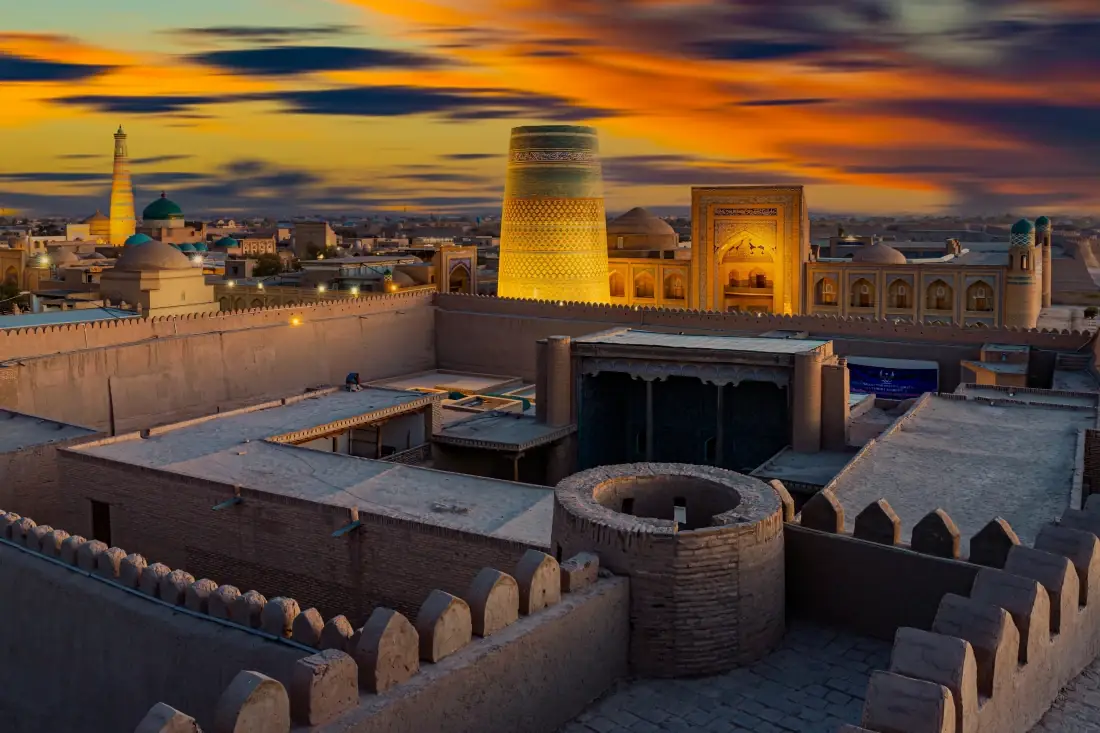
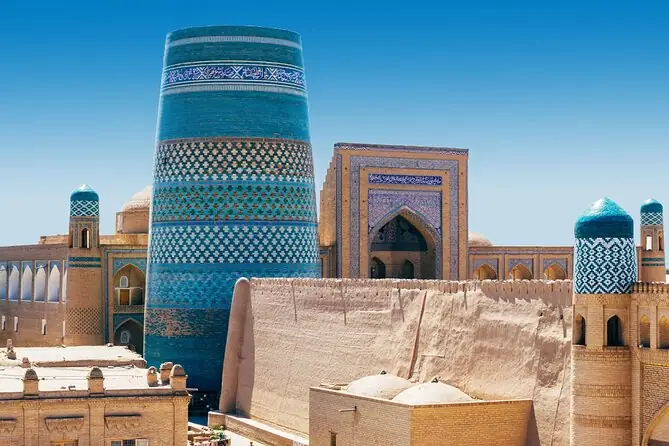
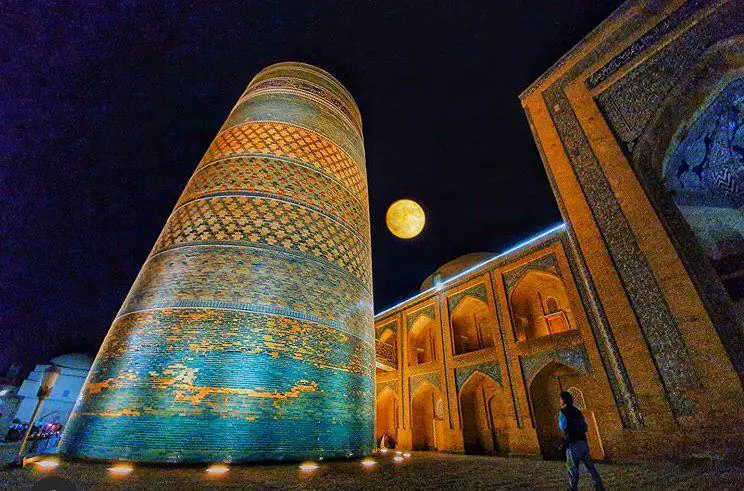
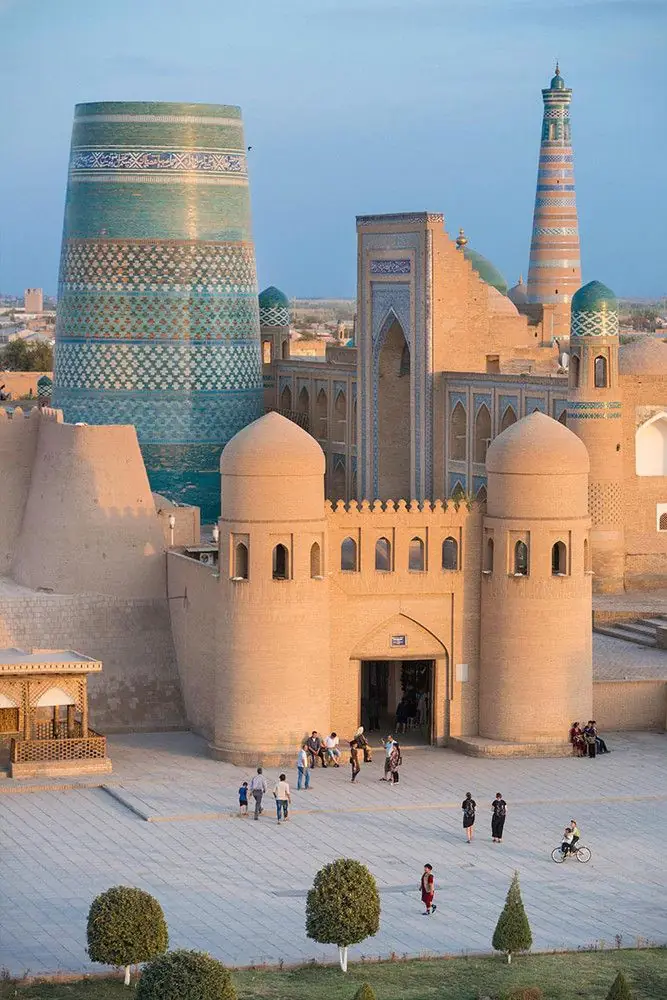
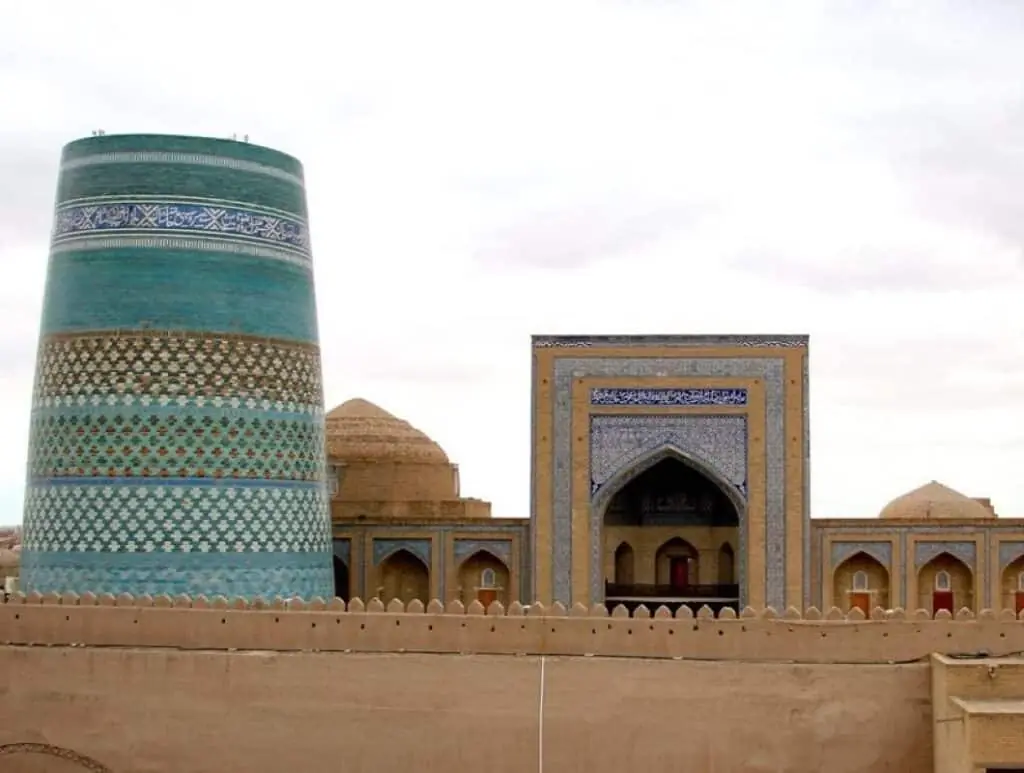
Wrapped in bands of green, blue, and white glazed tile, the short, thick Kalta Minor is Khiva's most photographed structure — and, famously, an unfinished one. Begun in 1852 with the intention of building the tallest minaret in the Islamic world, construction stopped at just under 30 meters after the khan who commissioned it died, leaving behind a stout, almost barrel-shaped tower whose abrupt flat top has become an unmistakable silhouette on the city skyline.
Kunya-Ark Citadel
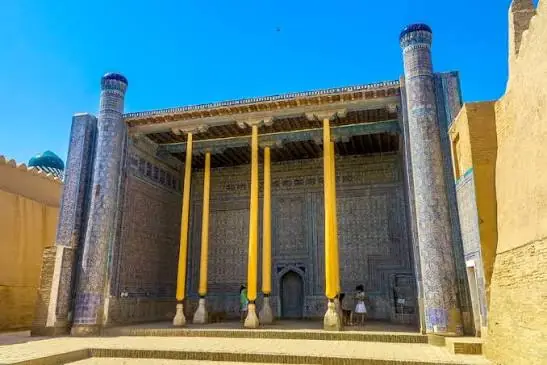
Set against the western wall of Itchan Kala, Kunya-Ark served as a self-contained fortress-within-a-fortress, housing the khan's residence, mint, harem, mosque, and an open-air throne room where the ruler received guests beneath a canopy of glazed tile. Its watchtower offers one of the best panoramic views over Khiva's rooftops and minarets, making it a natural starting point for exploring the rest of the old city.
Juma Mosque
Rather than the domed courtyard typical of Central Asian mosques, the Friday Mosque of Khiva is a low, flat-roofed hall supported by 213 carved wooden columns, some of them recycled from earlier structures dating back centuries. Illuminated only by small skylights cut into the roof, the forest of timber pillars creates an atmosphere unlike any other mosque in the region.
Islam Khodja Minaret
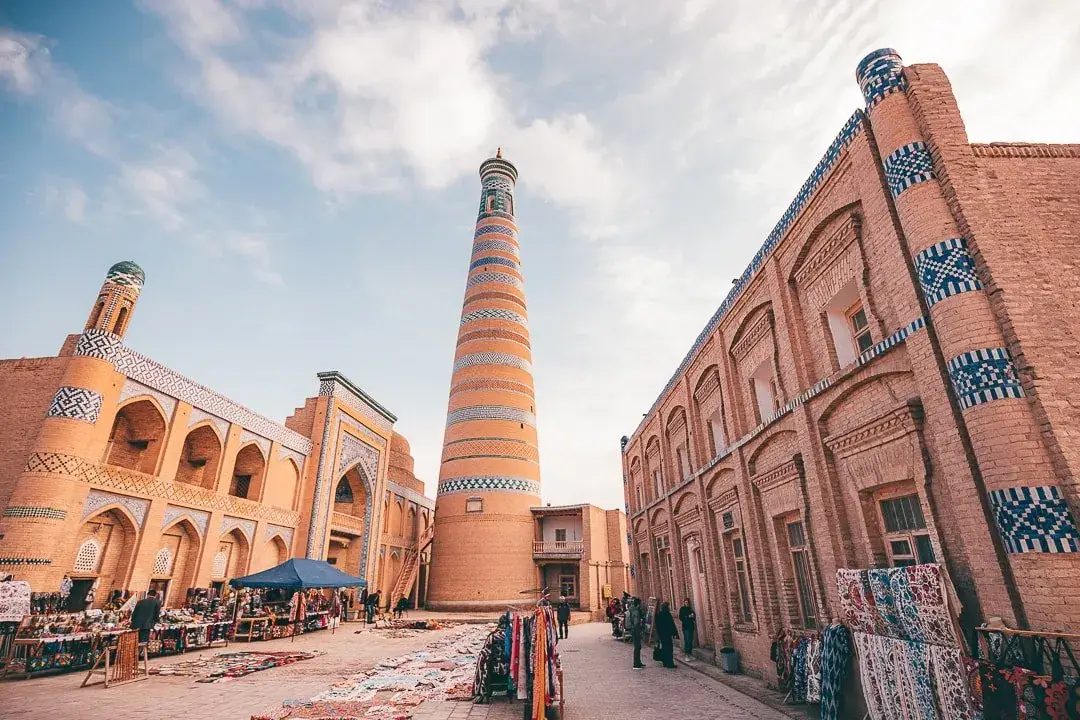
Built in the early twentieth century, the Islam Khodja Minaret is the tallest structure in Khiva, its tapering form banded in turquoise and terracotta tile. Though one of the newest monuments in Itchan Kala, it was designed to harmonize with the older skyline around it, and today it serves as an informal landmark for visitors orienting themselves within the maze of narrow streets below.
An Architectural Time Capsule
What sets Itchan Kala apart architecturally is less any single monument than the sheer completeness of the whole. Rather than isolated landmarks surrounded by later development, its minarets, madrasas, and palaces sit shoulder to shoulder along original street patterns, allowing visitors to read the layout of a working medieval Islamic capital rather than piecing one together from scattered fragments.
Local builders worked almost entirely with materials suited to a desert environment — sun-dried and baked mudbrick for walls, carved elm and walnut for columns and doors, and glazed majolica tile reserved for domes, portals, and minarets where color and durability mattered most. This gives Khiva a warmer, more monochrome palette than the brilliant blue-tiled cityscapes of Samarkand, punctuated by sharp accents of turquoise and green where decoration was concentrated.
Woodcarving reached a particularly high level of refinement here, and Itchan Kala preserves some of Central Asia's finest surviving examples, from the intricately patterned columns of the Juma Mosque to the heavy carved doors found throughout the city's palaces and private houses. This craft tradition, passed down through local workshops for generations, remains one of the region's most distinctive artistic signatures.
Today, UNESCO and Uzbek heritage authorities continue coordinated conservation work throughout the walled city, balancing the practical needs of a living community that still resides within Itchan Kala's walls against the demands of preserving one of the most complete surviving examples of a pre-modern Islamic city anywhere in the world.
Why Visit Itchan Kala?
Few places allow you to walk through an entire historic city rather than visit isolated monuments scattered across a modern one. A visit to Itchan Kala offers a rare, immersive encounter with a complete Islamic townscape, largely undisturbed by the centuries that followed its construction.
During your visit, you can:
Walk through one of the most completely preserved walled cities anywhere in the Islamic world.
Climb the Kunya-Ark watchtower for sweeping views across Khiva's minarets and rooftops.
Stand beneath the unfinished Kalta Minor, one of the most unusual minarets in Central Asia.
Step inside the wooden-columned Juma Mosque, unlike any other mosque in the region.
Browse workshops where local artisans still practice centuries-old woodcarving traditions.
Photograph a townscape of minarets and mudbrick walls found almost nowhere else intact.
A UNESCO World Heritage Treasure
Itchan Kala was inscribed on the UNESCO World Heritage List in 1990, becoming the very first site in Uzbekistan to receive this recognition. The listing acknowledges the walled city as an outstanding, exceptionally well-preserved example of a Central Asian Muslim town from the late medieval period.
What distinguishes Itchan Kala among UNESCO sites in the region is not a single dominant monument but the survival of an entire urban fabric — streets, city walls, residential quarters, and religious buildings preserved together as a functioning whole rather than as isolated ruins.
Today, ongoing conservation efforts aim to protect this fragile balance between heritage preservation and daily life, ensuring that Itchan Kala remains not simply a museum piece but a living reminder of how an entire medieval Central Asian capital once functioned.
Best Time to Visit
Itchan Kala can be visited year-round, but its desert setting makes timing more important here than in most other Uzbek destinations. Spring and autumn offer the most comfortable conditions for the long walks required to see the old city properly.
The most recommended seasons are:
Spring (April–May): Mild daytime temperatures and clear skies make for comfortable walking and good photography light.
Autumn (September–October): Cooler air after the summer heat, with fewer crowds along the main monuments.
Sunset is a particularly rewarding time inside Itchan Kala, when the desert light turns the mudbrick walls a deep gold and the Kunya-Ark watchtower offers one of the best views of the old city bathed in warm evening color.
Interesting Facts
Itchan Kala was the first site in Uzbekistan to be added to the UNESCO World Heritage List, in 1990.
The Kalta Minor minaret was never completed and reaches barely a third of its originally planned height.
The Juma Mosque is supported by 213 wooden columns, some more than a thousand years old.
The Islam Khodja Minaret is the tallest structure in Khiva, despite being one of its newest monuments.
Itchan Kala is small enough to walk across on foot in roughly fifteen to twenty minutes.
Parts of the old city are still inhabited today, blending residential life with heritage preservation.
Travel Tips
Set aside a full half-day, or ideally longer, to properly explore Itchan Kala without rushing between monuments.
Wear comfortable shoes, as most of the old city is best explored on foot over uneven brick paving.
Consider a combined entry ticket, which typically covers access to most major monuments within the walls.
Climb the Kunya-Ark or Islam Khodja viewpoints early or late in the day for the best light and cooler temperatures.
Stay overnight inside or near the walled city if possible, since Itchan Kala feels noticeably different once the day-trip crowds have gone.
The Timeless Legacy of Itchan Kala
Itchan Kala is not simply a collection of historic buildings but a rare surviving window into how an entire medieval Central Asian capital once looked, worked, and worshipped. Its minarets, palaces, and mosques stand today much as they did under the Khanate of Khiva, offering a completeness that few other historic cities in the world can still claim.
For travelers willing to make the journey to Uzbekistan's far northwest, walking through Itchan Kala's gates is less like visiting a monument and more like stepping into a still-inhabited fragment of the nineteenth century. It remains one of the most rewarding and unforgettable destinations along the entire Silk Road.
📞 Phone: +998 97 397 37 73
📧 Email: lapislazulitours@gmail.com
The Resting Place of Khiva's Beloved Poet, Healer, and Wrestler
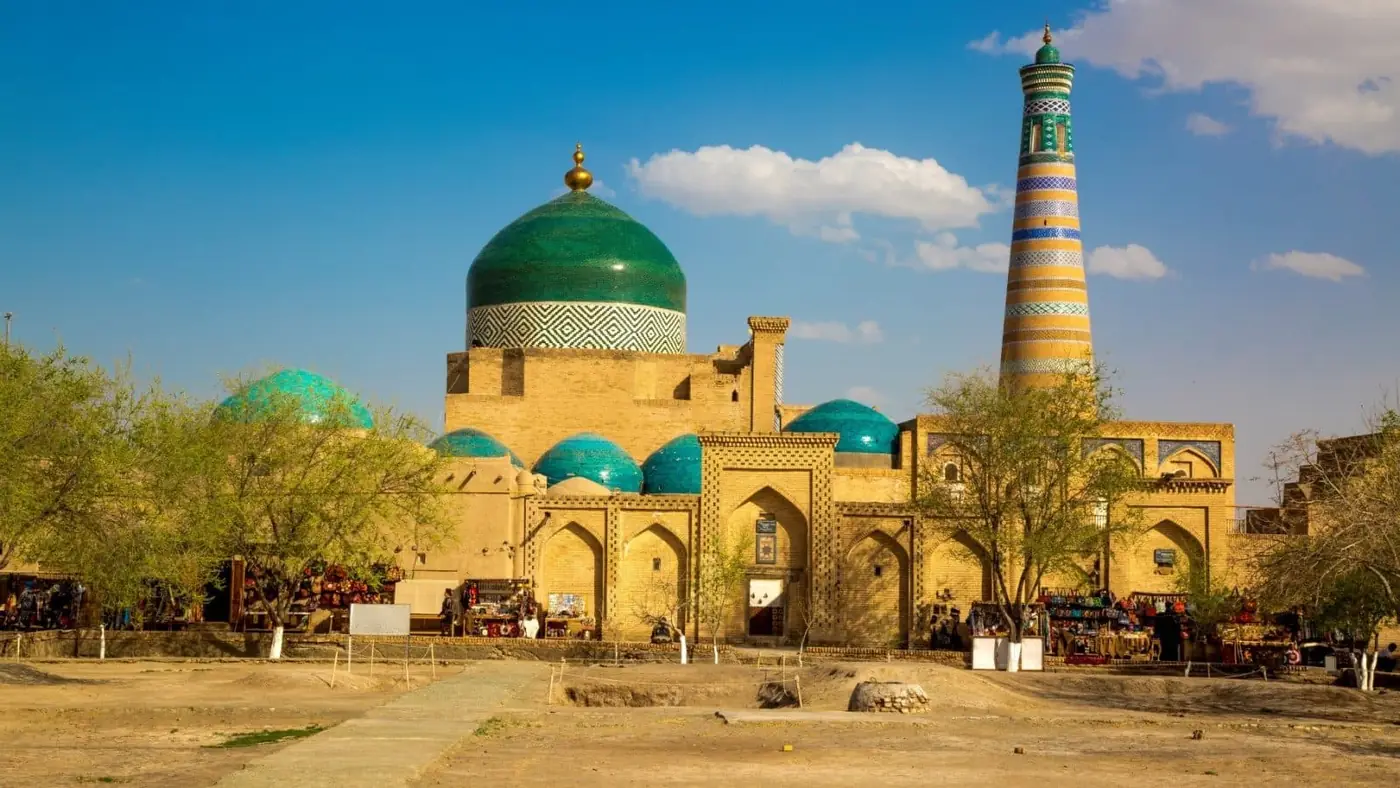
The Pahlavon Mahmud Mausoleum is the most revered shrine within the walls of Itchan Kala and one of the very few sites in Khiva still treated as an active place of pilgrimage rather than a purely historical monument. Crowned by a brilliant turquoise dome and wrapped in some of the finest tilework in the old city, it honors a figure remembered not as a ruler or conqueror but as a craftsman, poet, and folk hero whose memory the people of Khiva have kept alive for over seven centuries.
Pahlavon Mahmud lived in the late thirteenth and early fourteenth centuries, working by trade as a furrier while earning legendary fame as an undefeated wrestler, a healer who treated the poor without charge, and a poet whose verses are still quoted in Uzbekistan today. Over time, popular devotion transformed his modest grave into an elaborate shrine complex, and later Khivan rulers chose to be buried around him, hoping to rest near a man so widely loved that even the khans wished to share his company in death.
Today, the mausoleum functions as both an architectural landmark and a living shrine, visited daily by residents seeking blessings alongside travelers drawn by its glittering tilework and unusual atmosphere of quiet devotion. Its cool, dim interior, filled with the hush of visitors and the intricate glow of glazed ceramics, offers one of the most emotionally resonant experiences to be found anywhere within Itchan Kala's walls.
A Journey Through History
Born in Khiva sometime in the mid-thirteenth century, Pahlavon Mahmud earned his living as a furrier and leatherworker, a modest trade that stood in sharp contrast to the reputation he built outside his workshop. Chronicles and folk tradition alike describe him as an undefeated wrestler who traveled and competed as far as India, yet who remained known above all for humility, refusing to exploit his physical strength or growing fame for personal gain.
Alongside his athletic reputation, Pahlavon Mahmud practiced medicine, treating the sick and poor of Khiva free of charge, and wrote poetry under the pen name Pirovard-Vali that blended Sufi philosophical themes with the plain language of everyday life. This combination of physical strength, healing skill, and literary sensitivity made him a uniquely beloved figure, remembered by ordinary Khivans long after rulers and dynasties of his era had faded from memory.
Following his death in the early fourteenth century, his grave became a site of informal pilgrimage almost immediately, and a modest structure was raised to mark it. The mausoleum complex seen today, however, dates largely from the eighteenth and nineteenth centuries, when successive Khivan khans expanded the original tomb into a much larger shrine, adding a mosque, a domed chamber, and elaborate tiled interiors befitting the figure's growing legendary status.
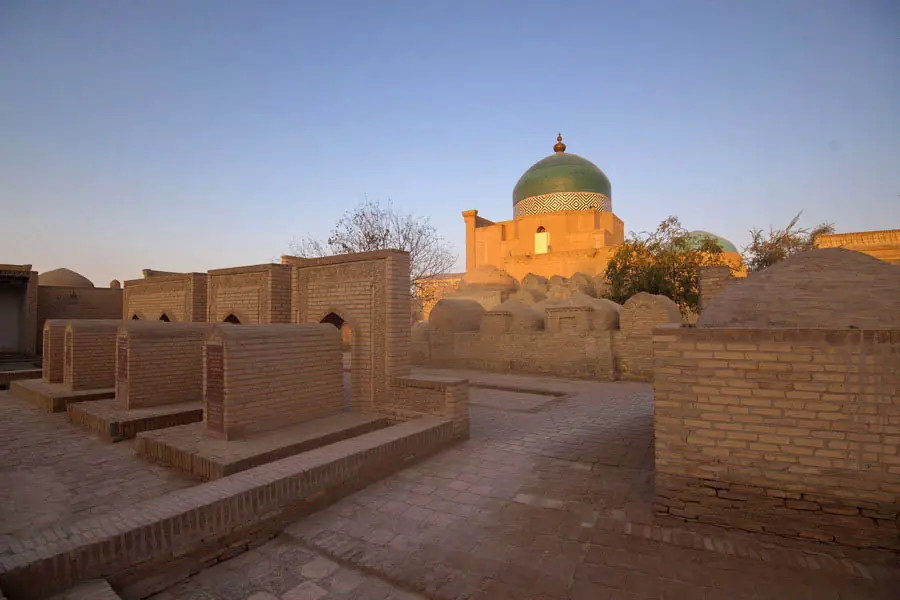
So great was the devotion to Pahlavon Mahmud that several rulers of the Khanate of Khiva chose to be interred within the same complex, seeking a kind of posthumous closeness to a man whose popular reputation for goodness ultimately outshone their own. Today, this layering of royal tombs around a craftsman's grave remains one of the more unusual and telling aspects of the site's history, a reversal of the usual order in which ordinary people are buried near the powerful rather than the other way around.
An Architectural and Spiritual Masterpiece
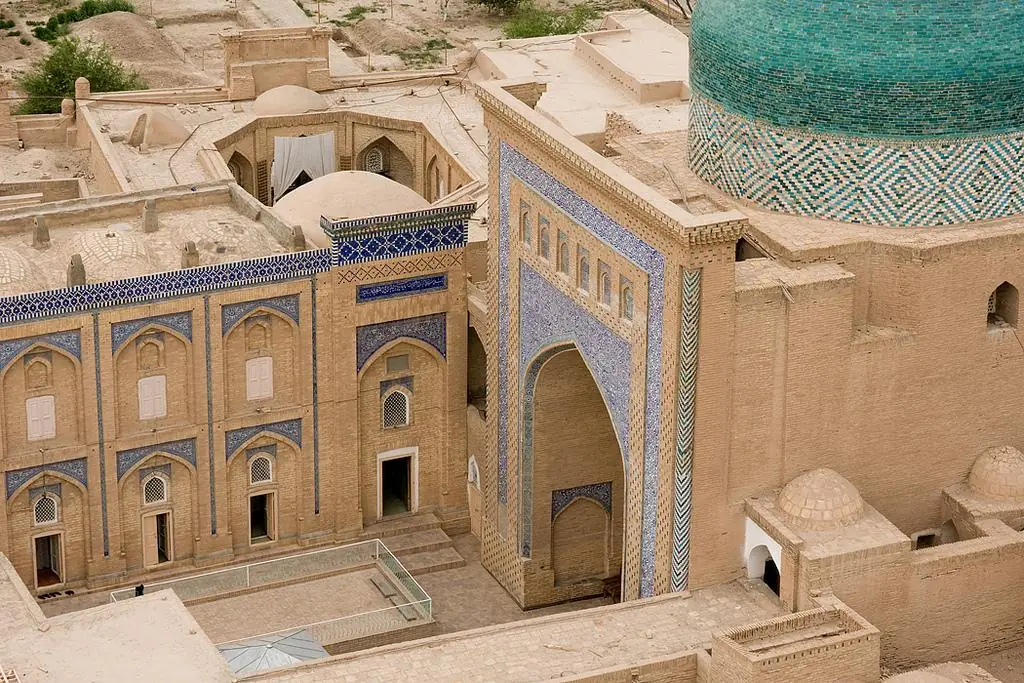
The mausoleum complex is built around a serene inner courtyard, from which visitors pass into a domed chamber holding the tomb itself. Above it rises one of Khiva's most beautiful turquoise domes, its exterior tilework catching the desert light in shifting shades of blue and green that have made it, alongside Kalta Minor, one of the most recognizable silhouettes in the old city.
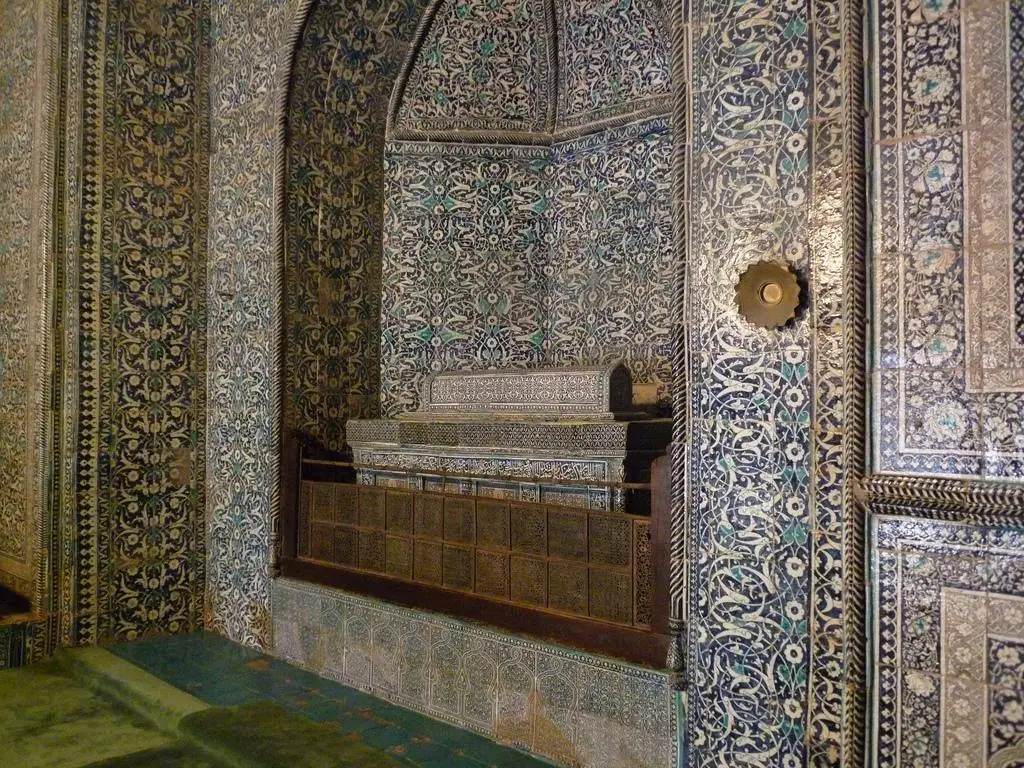
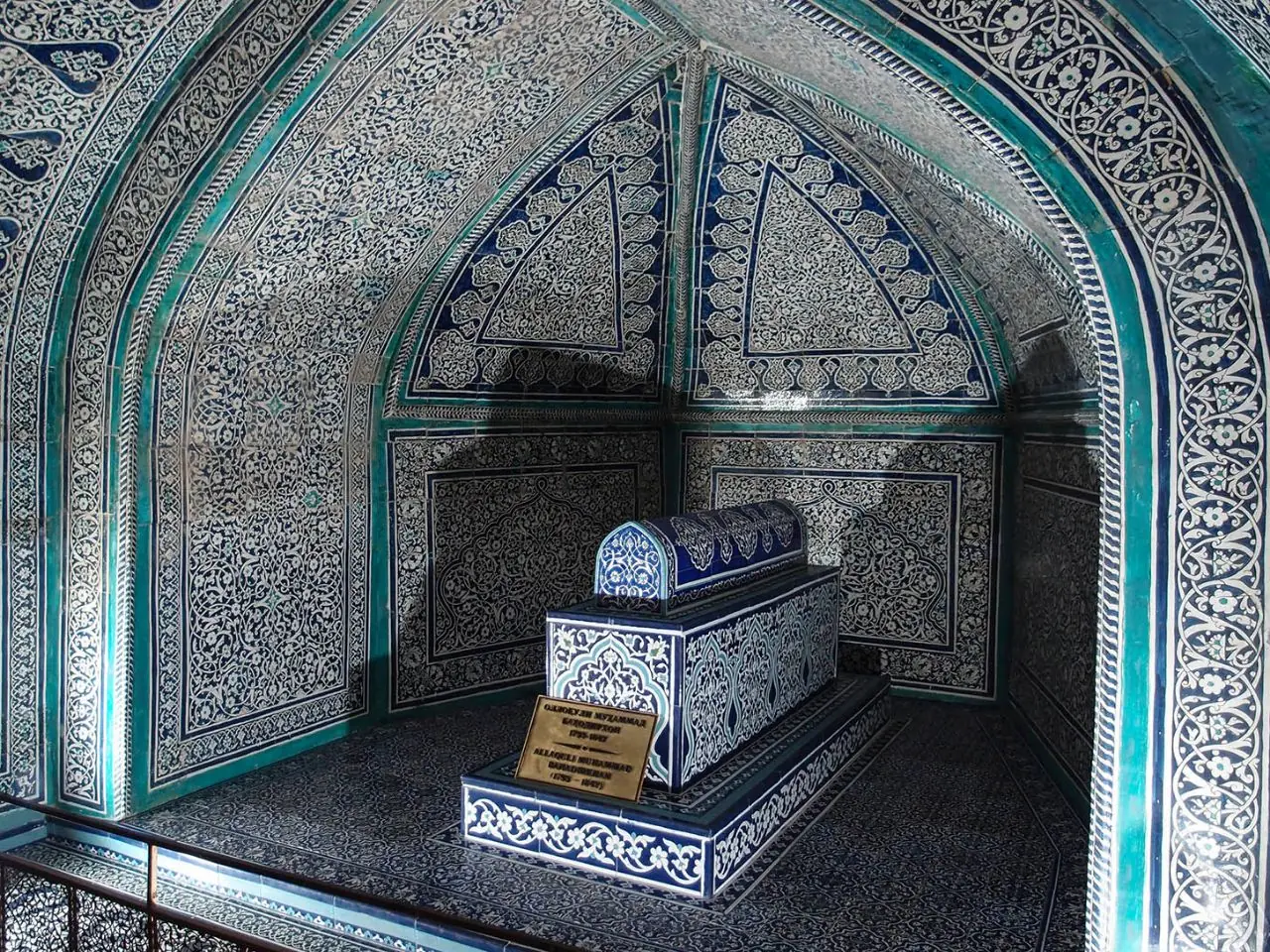
Inside, the walls are covered almost floor to ceiling in richly patterned glazed tiles, their geometric and floral motifs rendered with a density and precision that rank among the finest interior decorative work found anywhere in Khorezm. Unlike the more austere brick exteriors typical of much Khivan architecture, the interior here embraces color and ornament without restraint, reflecting the reverence in which the site has always been held.
Surrounding the central tomb chamber are the burial vaults of several Khivan khans and members of their families, their more restrained stone and tile markers standing in quiet contrast to the elaborate decoration devoted to Pahlavon Mahmud himself. Small side rooms and a modest mosque complete the complex, together forming one of the most architecturally unified religious sites within Itchan Kala's walls.
What makes the mausoleum architecturally distinctive is less its scale than its intimacy — a compact, carefully composed space designed less to overwhelm visitors, as grand mosques and madrasas often do, than to draw them inward toward quiet reflection, in keeping with the humble character of the man it commemorates.
Why Visit the Pahlavon Mahmud Mausoleum?
Of all the monuments within Itchan Kala, the Pahlavon Mahmud Mausoleum offers the most direct sense of living tradition — a place still visited for blessings and quiet reflection rather than admired purely as a historical relic. A visit here adds emotional depth to a tour otherwise focused on architecture and history alone.
During your visit, you can:
Step inside one of the most richly tiled interiors anywhere in Khiva.
Learn the story of a beloved poet, healer, and wrestler still honored centuries after his death.
Photograph one of Khiva's most striking turquoise domes up close.
Observe local visitors continuing a centuries-old tradition of pilgrimage and prayer.
See the burial place of several Khivan khans gathered around a craftsman's tomb.
Experience a quieter, more contemplative side of Itchan Kala away from the busier monuments.
Legends and Popular Devotion
Few figures in Khorezmian folklore inspire as many stories as Pahlavon Mahmud. Local tradition credits him with feats of extraordinary strength paired with equally extraordinary restraint — tales describe him deliberately losing important wrestling matches rather than humiliate opponents, or quietly treating patients who could offer him nothing in return.
Over the centuries, the site became associated with popular beliefs about healing and good fortune, and to this day many visitors, both local and from elsewhere in Uzbekistan, come specifically to pray near the tomb, tie strips of cloth to nearby structures, or simply sit quietly within the shrine. Whether or not every detail of his life can be verified historically, the depth of continued devotion says as much about Khivan culture as any single fact about the man himself.
Best Time to Visit
The Pahlavon Mahmud Mausoleum can be visited at any time of year, and its shaded, tiled interior offers welcome relief from the desert heat even during the hottest months. That said, spring and autumn remain the most pleasant seasons for combining a visit here with longer walks through the rest of Itchan Kala.
The most recommended seasons are:
Spring (April–May): Comfortable temperatures make it easy to combine the mausoleum with a longer walking tour of the old city.
Autumn (September–October): Cool, clear days provide a calm atmosphere well suited to the mausoleum's contemplative mood.
Visiting in the quieter hours of early morning tends to offer the most peaceful atmosphere, before the flow of daytime visitors picks up around the more heavily trafficked monuments nearby.
Interesting Facts
Pahlavon Mahmud worked as a furrier and leatherworker rather than as a soldier, scholar, or ruler.
He wrote poetry under the pen name Pirovard-Vali, verses still read and quoted in Uzbekistan today.
Several khans of the Khanate of Khiva chose to be buried within the same complex as him.
The mausoleum remains an active pilgrimage site, visited daily by local worshippers.
Its turquoise dome is considered one of the most beautiful in Khiva, rivaling that of Kalta Minor in local esteem.
The interior tilework is regarded as among the finest surviving examples of decorative ceramic art in Khorezm.
Travel Tips
Allow around 30 to 45 minutes to visit the mausoleum and take in its interior at an unhurried pace.
Dress modestly and behave respectfully, as this remains an active place of worship for local visitors.
Ask permission before photographing worshippers, out of respect for those visiting to pray.
Visit in the early morning for a quieter, more contemplative experience of the shrine.
Combine your visit with the nearby Islam Khodja Minaret and Juma Mosque for a natural walking route through this part of Itchan Kala.
The Timeless Legacy of Pahlavon Mahmud
In a city otherwise dominated by the monuments of khans and dynasties, the Pahlavon Mahmud Mausoleum stands out as a tribute to an ordinary craftsman whose strength, humility, and generosity earned him a devotion that has outlasted the rulers buried beside him. Its glittering dome and tiled interior are only part of what draws people here — the rest is the enduring memory of a man the people of Khiva have chosen never to forget.
For travelers exploring Itchan Kala, a stop at this mausoleum offers something the grander monuments cannot quite provide: a quiet, human-scaled encounter with the values a whole community chose to honor. It remains one of the most moving stops on any journey through the walled city of Khiva.
📞 Phone: +998 97 397 37 73
📧 Email: lapislazulitours@gmail.com
The Fortress Within a Fortress at the Heart of Khiva
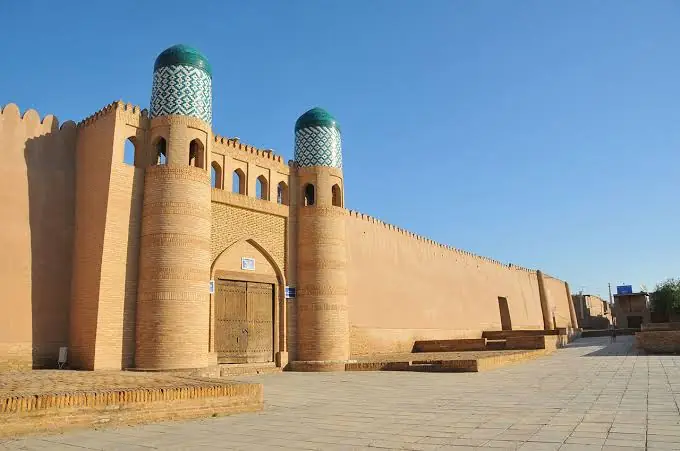
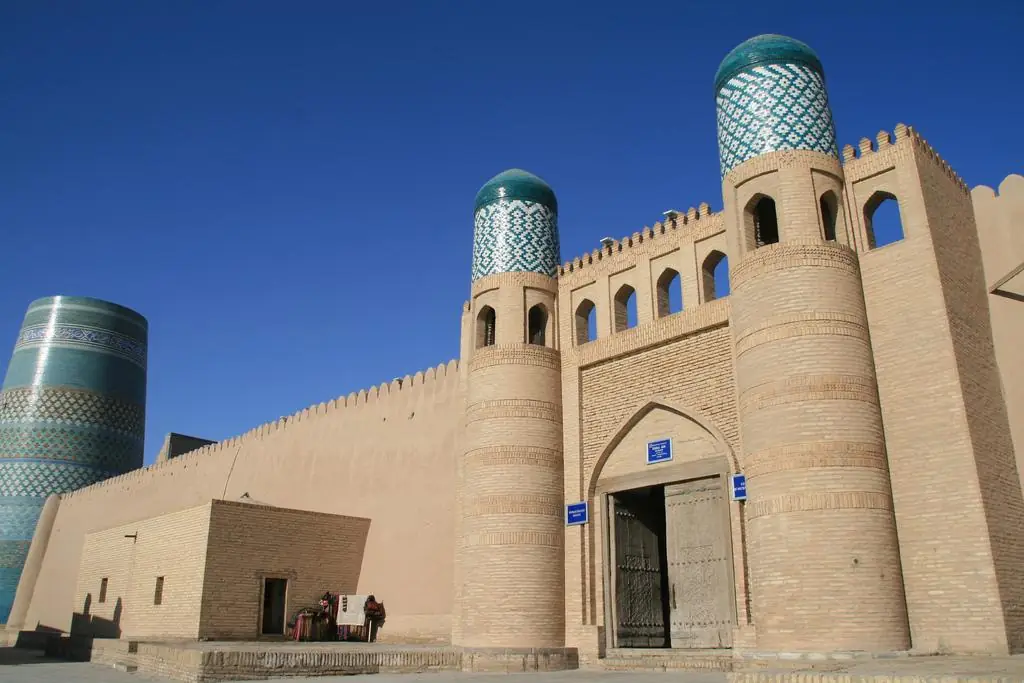
Kunya-Ark is a citadel standing inside the walled city of Ichan-Kala, once serving as the private residence of the Khiva khans and the political nerve center of the Khanate of Khiva. Rather than a single building, it is a compact fortified town of its own, tucked behind thick clay walls near the western gate of the old city.
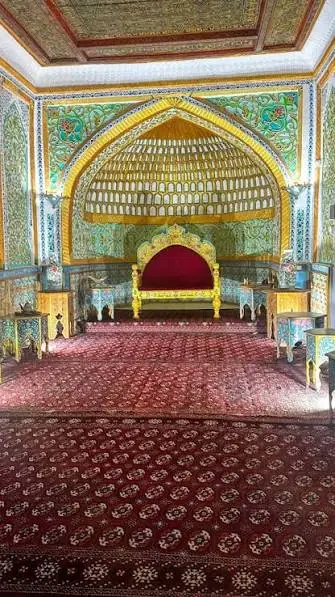
For generations, the rulers of Khorezm governed from within these walls, receiving envoys, minting coins, storing arms, and holding court in halls decorated with glazed tilework. Life inside Kunya-Ark moved to the rhythm of the khan's household — guards on watch, craftsmen at work, and officials moving between the reception yard and the treasury.
Today, restored sections of Kunya-Ark are open as a museum, letting visitors step through the same gates the khans once passed, climb the watchtower for a sweeping view of Khiva's skyline, and get a rare, intimate look at how a ruling court actually functioned along the Silk Road.
A Journey Through History
The origins of Kunya-Ark date back to the 12th century, when an early fortress is believed to have occupied this raised ground within the city. The structures visible today, however, largely date from the early 19th century, when Khan Muhammad Amin rebuilt and expanded the citadel into the form it holds now.
Across the 18th and 19th centuries, Kunya-Ark grew into a fully functioning seat of government, housing the khan's residence, a mosque reserved for the ruling family, a mint that struck the Khanate's own coins, an arsenal, stables, and a courtyard where justice was dispensed and formal audiences held.
The name "Kunya-Ark," meaning "Old Fortress," distinguishes it from the newer palace the khans later built outside Ichan-Kala. Despite the shift, Kunya-Ark remained a working center of power until the fall of the Khanate in the early 20th century, after which it gradually passed into the hands of historians and conservators.
Restoration work carried out over the past decades has stabilized many of its structures, and Kunya-Ark now forms one of the anchor sites of the Ichan-Kala museum reserve, giving visitors direct access to a rare, largely intact example of a Central Asian royal citadel.
Life Within the Citadel Walls
Kunya-Ark functioned as a self-contained world of government and domestic life. Behind its walls, the khan's family, officials, guards, and household staff carried out the daily business of ruling Khorezm, largely separate from the bustle of the surrounding city.
Inside Kunya-Ark, visitors can discover:
The Kurinishkhana, the reception court where the khan received guests and held audiences.
A private mosque used exclusively by the ruling family.
The mint, where the Khanate's coins were struck and stored.
An arsenal and stables that served the citadel's guards and military needs.
The watchtower, offering panoramic views over Ichan-Kala and the surrounding oasis.
Together, these structures reveal Kunya-Ark not simply as a fortress, but as a living seat of government, where politics, faith, defense, and daily household life all shared the same walls.
An Architectural Landmark
Built from sun-baked clay and mudbrick in the traditional Khorezm style, Kunya-Ark presents thick, sloping walls designed for both defense and insulation against the desert climate. Its scale is more modest than a grand palace, but its layout reflects careful planning for security and ceremony alike.
The reception courtyard is one of the citadel's architectural highlights, framed by a raised platform and decorated with panels of blue-and-white majolica tilework typical of Khiva's craftsmanship. Wooden columns, carved doorways, and iwans throughout the complex show the same decorative traditions found across Ichan-Kala.
The watchtower, rebuilt in the 19th century, remains one of the tallest vantage points in old Khiva, and climbing its narrow stairway rewards visitors with one of the best panoramic views of the city's minarets, domes, and mudbrick rooftops.
Several of the restored halls now house small museum displays of coins, weapons, and household items from the khanate period, giving visitors a tangible sense of daily life inside a working Central Asian court.
Why Visit Kunya-Ark?
A visit to Kunya-Ark offers a compact but rich window into how the Khanate of Khiva actually governed itself, away from the more famous minarets and madrasas of Ichan-Kala.
During your visit, you can:
Stand in the reception yard where the khans once held court and greeted foreign envoys.
Climb the watchtower for the finest panoramic view over Ichan-Kala.
Explore the mint, arsenal, and mosque used by the ruling family.
See original majolica tilework and traditional Khorezm woodcarving up close.
Learn the story of Khiva's khans from knowledgeable local guides.
Part of a UNESCO World Heritage Site
Kunya-Ark lies within Ichan-Kala, the inner walled city of Khiva, which was inscribed on the UNESCO World Heritage List as one of the best-preserved examples of a Central Asian Islamic city. Its recognition reflects the exceptional density and authenticity of the monuments still standing within these walls.
As one of Ichan-Kala's most historically significant sites, Kunya-Ark contributes directly to the value that earned the city its UNESCO status, standing as tangible proof of the political life that once animated this desert oasis city.
Travel Tips for Visitors
Kunya-Ark is compact compared to some of Central Asia's larger citadels, but its narrow stairways and uneven courtyards reward an unhurried visit.
Allow around 1–1.5 hours to see the main courtyards and museum halls.
Wear sturdy shoes, since the watchtower stairs are narrow and steep.
Visit near sunset for soft light over the domes and minarets of Ichan-Kala.
Hire a local guide to bring the citadel's stories and legends to life.
Combine your visit with the Juma Mosque and Tash Hauli Palace nearby.
Best Time to Visit
Spring (March–May) and autumn (September–November) offer the most comfortable temperatures for exploring Kunya-Ark and the rest of Ichan-Kala on foot.
Late afternoon visits are particularly rewarding, as the low sun brings out the color of the tilework and casts long shadows across the citadel's courtyards.
Khiva Awaits You
Step through the gates of Kunya-Ark and discover how a desert kingdom once ruled itself. Walk its courtyards, climb its watchtower, and imagine the envoys, craftsmen, and courtiers who once filled these ancient walls.
Ready to explore Kunya-Ark? Let Lapis Lazuli Tours create an unforgettable journey through the history and culture of Khiva. Contact our travel experts today to plan your perfect adventure.
📞 Phone: +998 97 397 37 73
📧 Email: lapislazulitours@gmail.com
The Heart of Bukhara and a Living Witness to the Ancient Silk Road
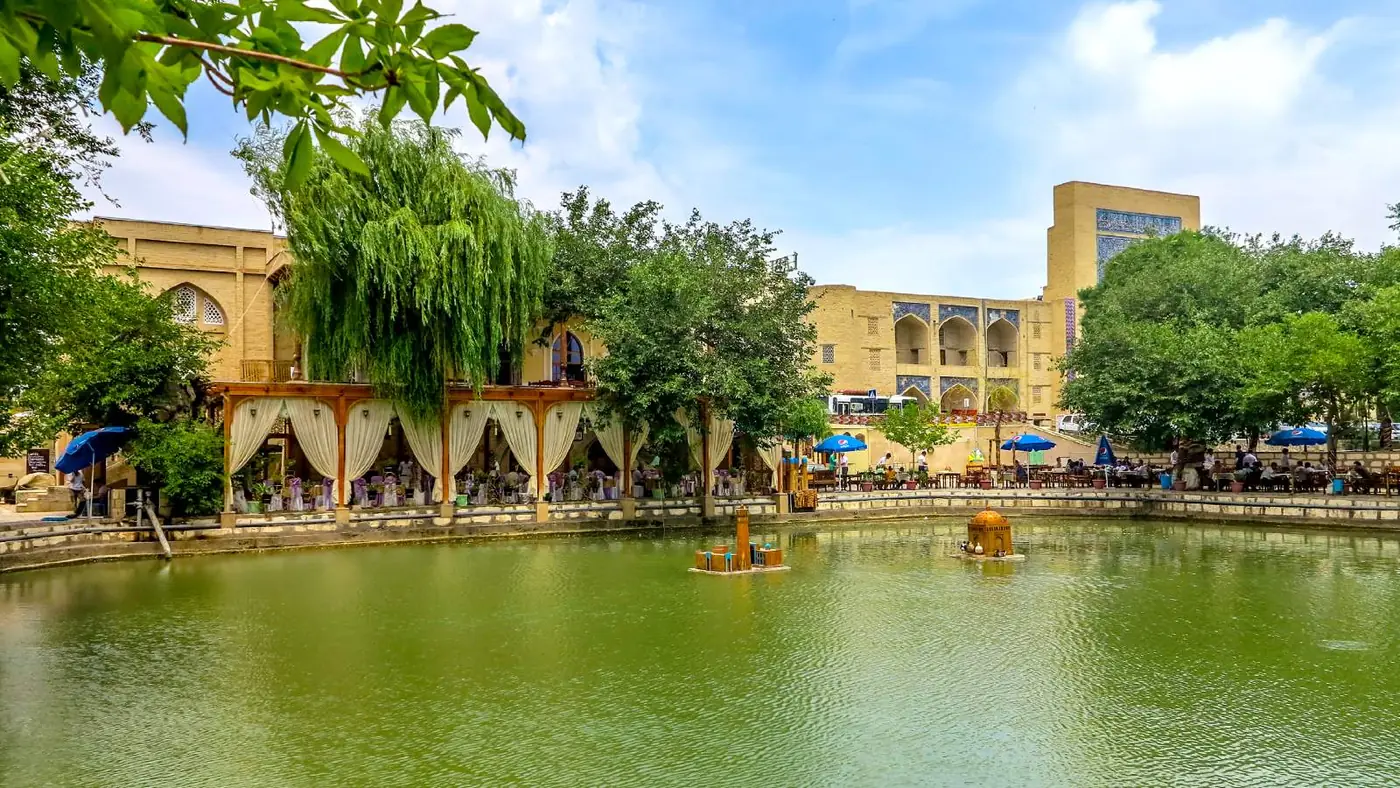
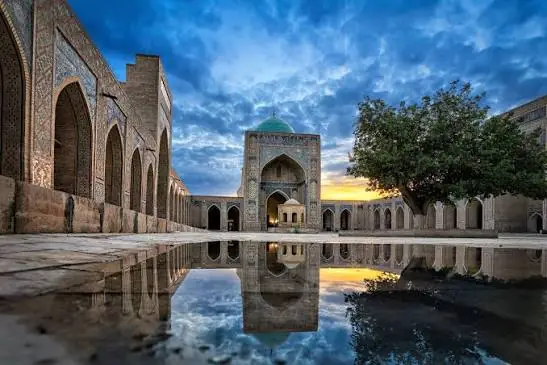
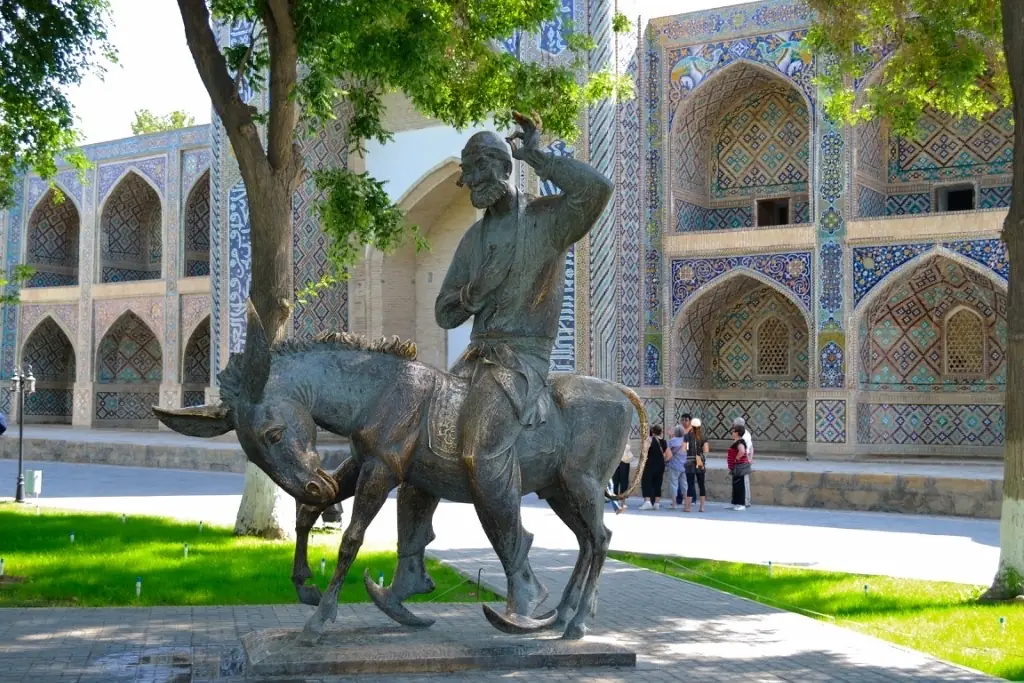
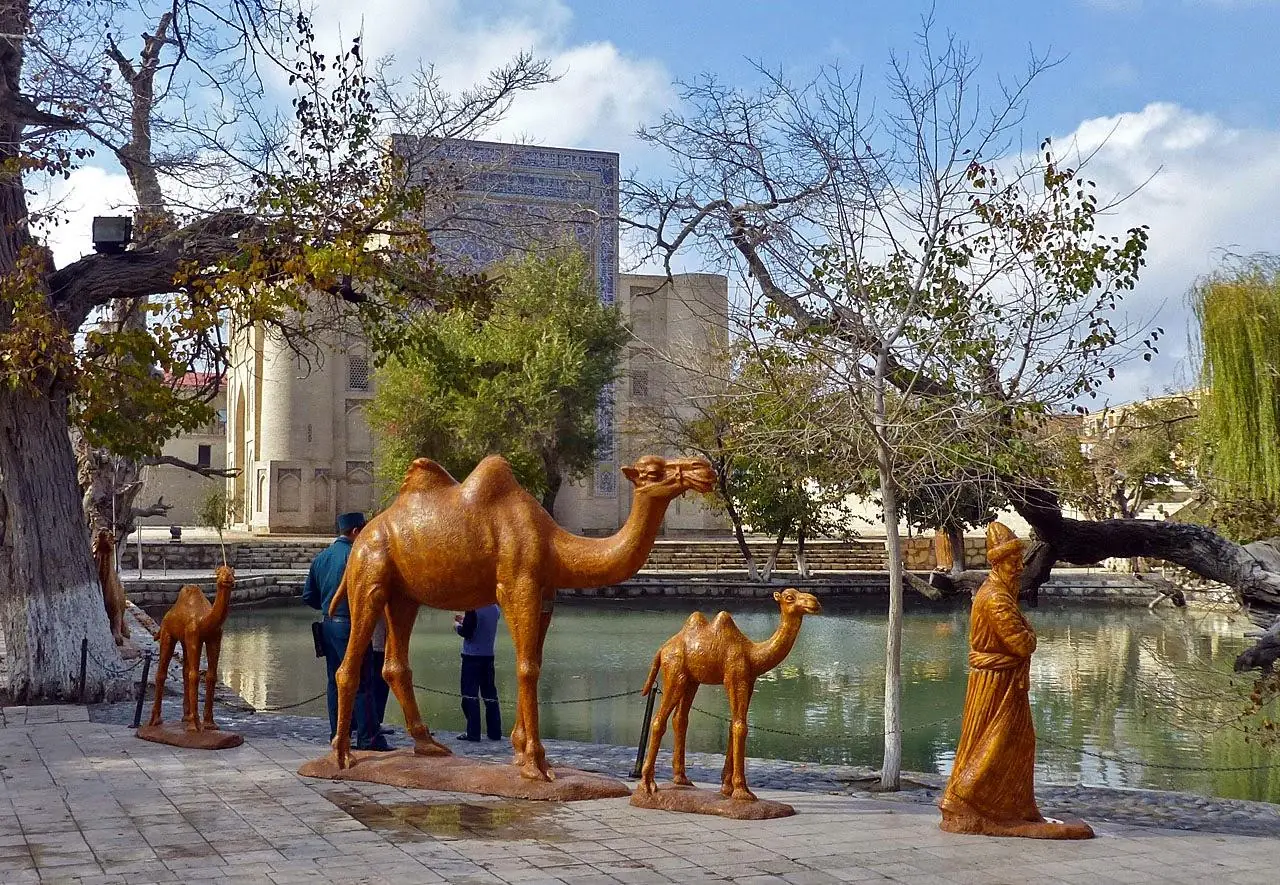
The Lyabi Hovuz Ensemble is one of Bukhara's most beautiful and vibrant historical landmarks. For centuries, it has served as a gathering place for local residents, merchants, scholars, and travelers from across the Great Silk Road. Surrounded by magnificent madrasas, ancient religious buildings, and traditional caravanserais, the ensemble remains one of the finest examples of Bukhara's rich cultural heritage.
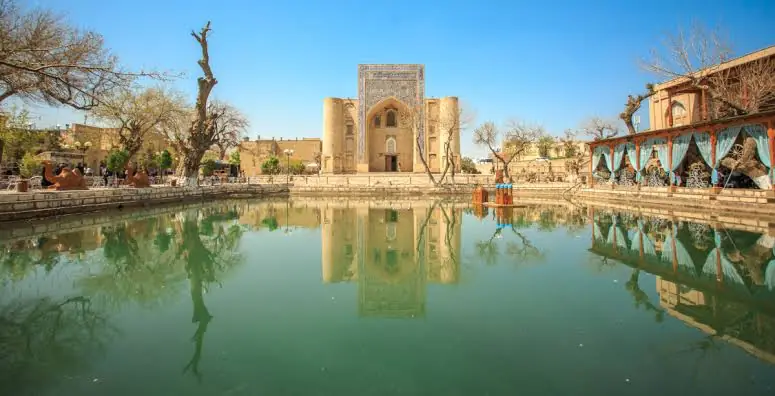
The name "Lyabi Hovuz" comes from the Persian-Tajik language and means "by the pond." It refers to the large man-made pool at the center of the complex, which supplied drinking water to the people of Bukhara for centuries and became an essential part of everyday city life.
Today, Lyabi Hovuz beautifully combines history, traditional culture, and modern tourism. During the day, visitors can admire its remarkable architecture and peaceful surroundings, while in the evening the illuminated monuments, traditional teahouses, and live cultural performances create one of the most enchanting atmospheres in all of Bukhara.
A Journey Through History
The history of the Lyabi Hovuz Ensemble dates back to the 16th and 17th centuries during the rule of the Shaybanid dynasty. The large central pond, which gives the complex its name, was excavated around 1620 and gradually became the focal point around which some of Bukhara's most important public buildings were constructed.
From its earliest days, Lyabi Hovuz served as one of Bukhara's busiest social and commercial centers. Merchants traveling along the Great Silk Road stopped here to rest, scholars gathered to exchange knowledge, and local residents met beside the pond, making it an essential part of everyday life in the ancient city.
Over the centuries, the ensemble has remained one of Bukhara's most beloved landmarks. Although the city has changed through the ages, Lyabi Hovuz has preserved its historical charm and continues to welcome visitors from around the world as one of the cultural and architectural treasures of Uzbekistan.
The Main Highlights of the Ensemble
Lyabi Hovuz Pond
The large historic pond at the center of the ensemble is its defining feature and the heart of the complex. For centuries, it served as one of Bukhara's primary sources of drinking water. Today, surrounded by ancient trees, walking paths, and traditional teahouses, it offers one of the most peaceful and picturesque settings in the city.
Kukeldash Madrasa
Built in the 16th century, Kukeldash Madrasa is one of the largest historic madrasas in Bukhara. Once home to hundreds of students studying religious and secular sciences, it continues to impress visitors with its monumental entrance portal, elegant courtyard, and remarkable architectural design.
Nadir Divan-Begi Madrasa
Constructed in the early 17th century, this remarkable building was originally intended to be a caravanserai before being transformed into a madrasa. Its magnificent entrance is decorated with rare mythical birds and sun motifs, making it one of the most distinctive architectural masterpieces in Central Asia.
Nadir Divan-Begi Khanqah
Another important part of the ensemble is the Nadir Divan-Begi Khanqah, which once served as a gathering place for Sufi dervishes and religious scholars. Throughout history, it hosted spiritual ceremonies, intellectual discussions, and religious teachings, playing an important role in Bukhara's cultural and spiritual life.
An Architectural Masterpiece
The Lyabi Hovuz Ensemble is one of the finest examples of traditional urban planning and architectural harmony in Central Asia. The historic pond, monumental madrasas, elegant khanqah, and centuries-old trees blend seamlessly to create a peaceful atmosphere that reflects the timeless beauty of ancient Bukhara.
The buildings surrounding the pond were constructed using baked bricks and decorated with exquisite glazed tiles, intricate geometric patterns, and beautifully crafted ornamental details. Although each monument was built during a different period, together they form a perfectly balanced architectural ensemble that has remained remarkably well preserved for centuries.
One of the most distinctive features of Lyabi Hovuz is the way history and everyday life exist side by side. Visitors can admire magnificent historical monuments while enjoying traditional teahouses, local handicraft shops, and the lively atmosphere that has characterized this square since the days of the Great Silk Road.
Today, Lyabi Hovuz is regarded as one of Bukhara's most photogenic and vibrant historical destinations. Its unique combination of architectural elegance, cultural heritage, and tranquil surroundings makes it a favorite place for historians, photographers, artists, and travelers from around the world.
Why Visit Lyabi Hovuz?
Lyabi Hovuz is one of the best places to experience the authentic atmosphere of historic Bukhara. Here, visitors can admire centuries-old architecture, relax beside the peaceful pond, discover local traditions, and enjoy the unique charm of one of the city's most vibrant cultural landmarks.
During your visit, you can:
Stroll through one of Bukhara's most famous historic squares.
Explore the magnificent Kukeldash Madrasa and Nadir Divan-Begi Madrasa.
Enjoy authentic Uzbek cuisine at traditional teahouses overlooking the historic pond.
Browse local handicraft shops and purchase handmade souvenirs created by Bukhara's skilled artisans.
Experience the magical evening atmosphere as the historic buildings are beautifully illuminated.
Capture unforgettable photographs at one of the most picturesque locations in Bukhara.
UNESCO World Heritage
The Lyabi Hauz Ensemble forms an integral part of the "Historic Centre of Bukhara", which has been inscribed on the UNESCO World Heritage List. The ensemble is recognized for its outstanding historical value, exceptional architectural harmony, and its remarkable preservation of the traditional urban character of one of Central Asia's oldest cities.
For centuries, Lyabi Hauz has served as a vibrant gathering place for merchants, scholars, pilgrims, and local residents. Today, it remains one of Bukhara's most treasured cultural landmarks, offering visitors an authentic glimpse into the city's rich Silk Road heritage while preserving the atmosphere of a medieval Central Asian oasis.
Best Time to Visit
The Lyabi Hauz Ensemble is a wonderful destination throughout the year, with each season offering its own unique charm. However, the most comfortable times to visit are during spring (March–May) and autumn (September–November), when the weather is mild and perfect for walking through Bukhara's historic streets and enjoying the peaceful atmosphere around the ancient pond.
Early mornings provide a calm setting for sightseeing and photography before the crowds arrive, while evenings are especially magical. As the historic buildings are beautifully illuminated and their reflections shimmer across the water, Lyabi Hauz transforms into one of the most romantic and picturesque locations in Bukhara, making it an unforgettable experience for every visitor.
Interesting Facts
Lyabi Hauz is home to one of the few large historic ponds that have survived in Bukhara.
The central pond was constructed in the early 17th century and has remained the heart of the ensemble for nearly 400 years.
The surrounding monuments, including Kukeldash Madrasa and Nadir Divan-Begi Madrasa, were built during the 16th and 17th centuries.
The mythical bird motifs decorating the Nadir Divan-Begi Madrasa are among the rare figurative designs found in Central Asian Islamic architecture.
Today, Lyabi Hauz is one of Bukhara's most photographed and visited cultural landmarks.
Throughout the year, the square hosts traditional music performances, folklore festivals, and cultural events that celebrate Uzbekistan's rich heritage.
Travel Tips
Allow at least 1.5–2 hours to fully explore the Lyabi Hauz Ensemble and its historic monuments.
Visit in the evening to experience the beautifully illuminated buildings reflected in the tranquil waters of the ancient pond.
Relax at one of the traditional teahouses surrounding the pond and enjoy authentic Uzbek cuisine in a peaceful setting.
Browse the nearby handicraft shops to discover handmade ceramics, textiles, miniature paintings, and unique Bukhara souvenirs.
Hiring a local guide will help you uncover the fascinating history, legends, and architectural details of the ensemble.
Combine your visit with the Ark Fortress and the Poi Kalon Complex for a complete one-day tour of Bukhara's most iconic historical landmarks.
Final Thoughts
The Lyabi Hauz Ensemble is more than just a historical landmark—it is the living heart of Bukhara, where centuries of history, culture, architecture, and hospitality come together in perfect harmony. For generations, this peaceful square has welcomed merchants, scholars, pilgrims, and travelers from across the world, preserving the timeless spirit of the Silk Road.
Today, Lyabi Hauz remains one of Uzbekistan's most captivating destinations. Its tranquil pond, magnificent madrasas, traditional teahouses, and vibrant atmosphere offer visitors an unforgettable journey through the rich heritage of Central Asia. Whether you come to admire its architecture, experience local traditions, or simply relax beneath the shade of ancient trees, Lyabi Hauz promises memories that will last a lifetime and stands as an essential stop on every visit to Bukhara.
Ready to discover the timeless beauty of Lyabi Hauz? Let Lapis Lazuli Tours help you plan a seamless and unforgettable journey through the historic heart of Bukhara.
📞 Phone: +998 97 397 37 73
📧 Email: lapislazulitours@gmail.com
The Tallest Minaret in Uzbekistan and the Symbol of Khiva
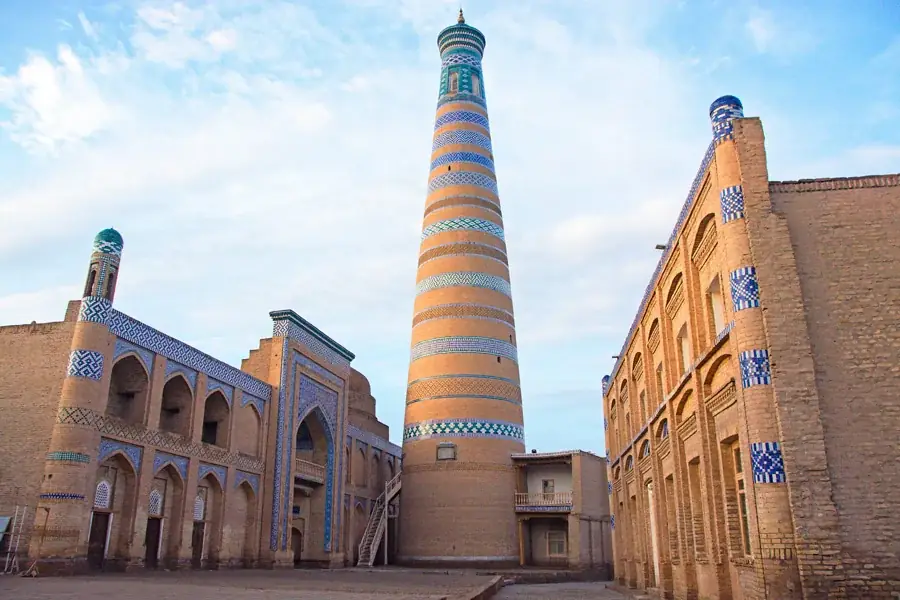
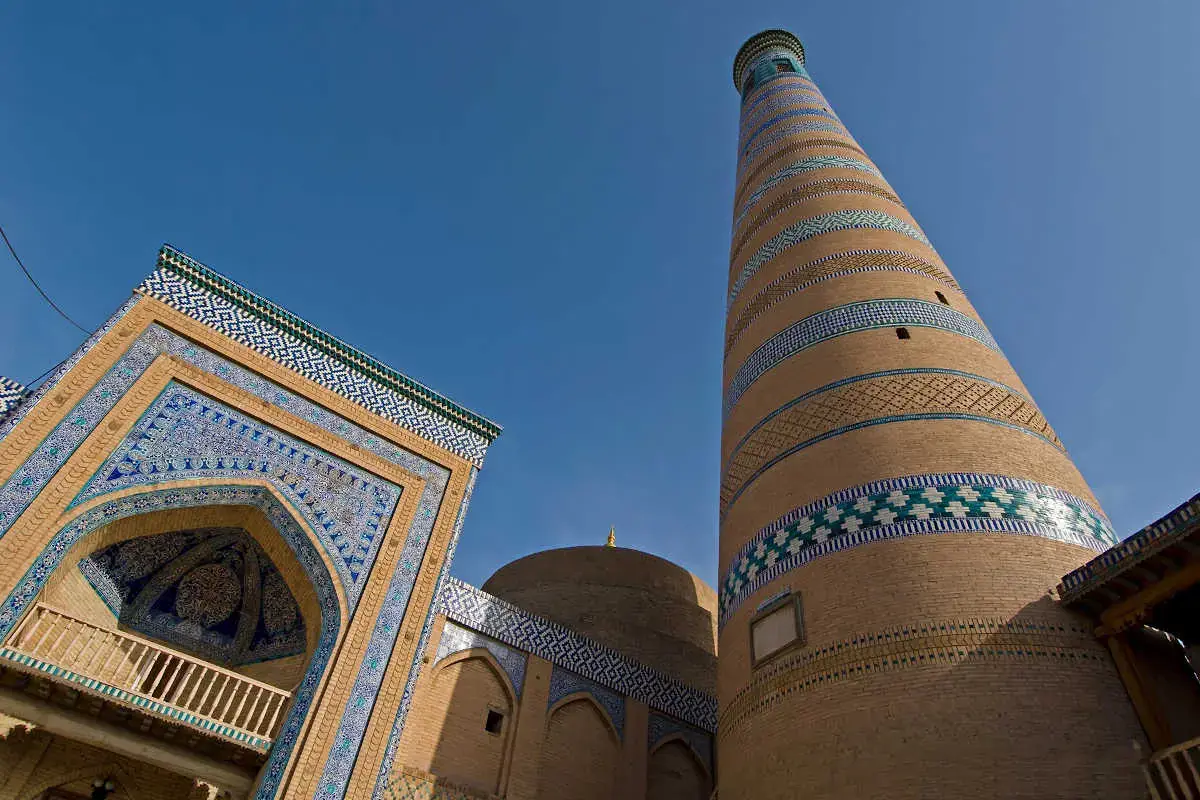
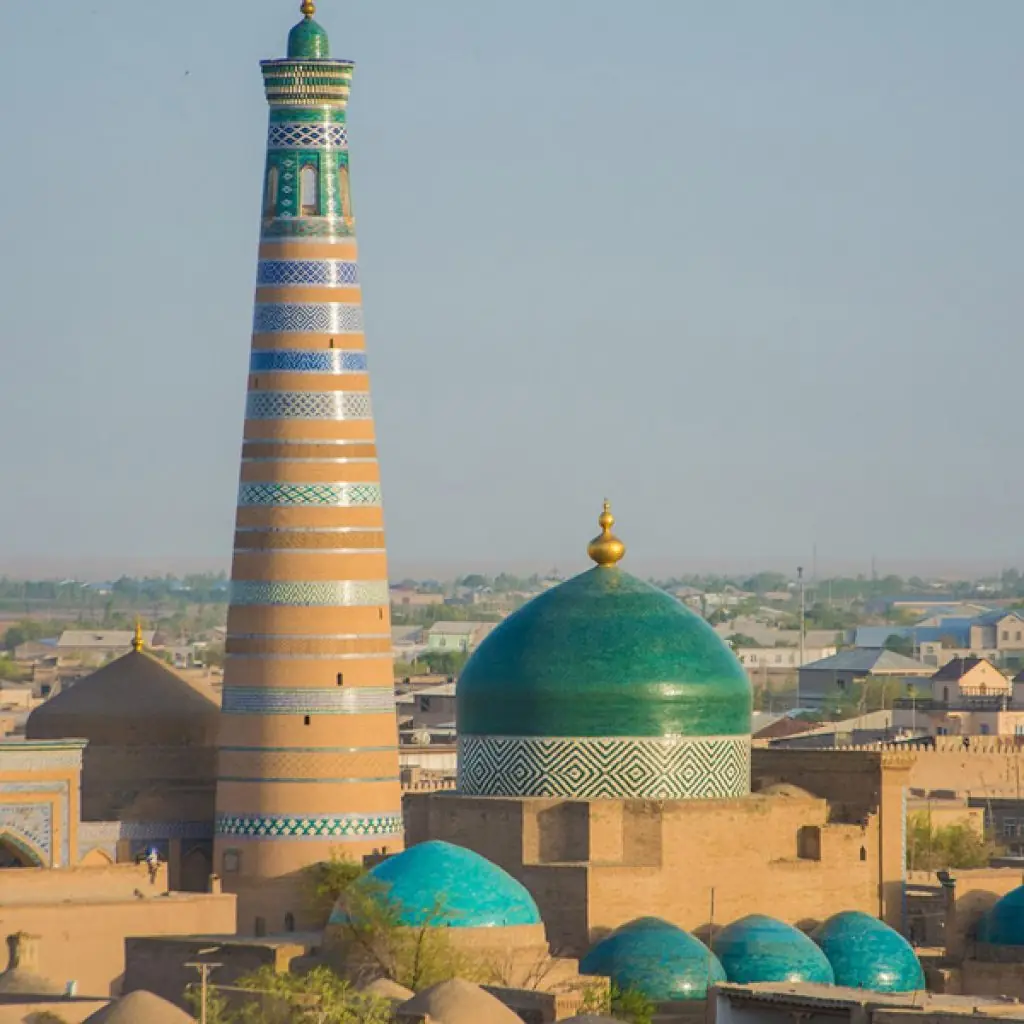
Rising above the low mudbrick rooftops of Ichan-Kala, the Islam Khodja Minaret is the tallest structure in Khiva and one of the most recognizable landmarks in all of Uzbekistan. Slender, tapering, and wrapped in bands of turquoise and dark blue tilework, it has become the single most photographed symbol of the old walled city, appearing on postcards, guidebooks, and even Uzbek currency.
Standing beside the minaret is its companion madrasah, a quieter but equally graceful building that once trained students in religious and secular sciences. Together, the two structures form one of the last great architectural ensembles built in Khiva before the fall of the Khanate, a final flourish of the city's centuries-long building tradition.
Despite being one of the youngest monuments inside Ichan-Kala, the Islam Khodja complex carries the same weight of history as its older neighbors, and climbing the minaret's narrow interior staircase remains one of the most memorable experiences a visitor to Khiva can have.
A Journey Through History
The complex takes its name from Islam Khodja, a reform-minded vizier who served under the last ruling khans of Khiva in the early 20th century. Serving as chief minister to Khan Muhammad Rahim Khan II and later Asfandiyar Khan, Islam Khodja was known for pushing the Khanate toward modernization, sponsoring new schools, a hospital, a postal service, and a printing press alongside more traditional religious projects.
Construction of the minaret and madrasah began around 1908 and was completed in 1910, making the complex one of the very last major monuments raised in Ichan-Kala before the old order gave way. Despite arriving so late in Khiva's architectural history, the builders drew directly on centuries-old Khorezm traditions of tilework and proportion, giving the minaret a timeless appearance that belies its relatively recent construction.
Islam Khodja himself did not enjoy his creation for long. He was assassinated in 1913 amid the political turmoil that gripped the Khanate in its final years, but the minaret that bears his name has long outlived the intrigues of the court that built it, standing today as his most lasting legacy.
Through the Soviet period and into independence, the minaret and madrasah were preserved as part of the Ichan-Kala museum reserve. The madrasah's student cells and lecture halls were later adapted to house museum exhibits, while the minaret itself remained open for visitors willing to climb its steep, winding stairs.
An Architectural Icon
At roughly 45 metres tall, the Islam Khodja Minaret is the tallest structure in Khiva and one of the tallest historic minarets in Central Asia. Its form follows the classic Khorezm silhouette — a broad base tapering gradually toward a slender crown — but its proportions are unusually elegant, giving it a lightness that larger, older minarets in the region often lack.
The minaret's surface is wrapped in horizontal bands of glazed brick and majolica tile, alternating turquoise, deep blue, and unglazed terracotta in geometric patterns that shift as the tower narrows. This banded decoration, a hallmark of Khivan craftsmanship, catches the desert light differently throughout the day, from soft gold at sunrise to deep blue at dusk.
A narrow spiral staircase of roughly a hundred steps winds up through the minaret's interior to an observation gallery near the top. The climb is steep and the passage tight, but it opens onto one of the finest panoramic views in Uzbekistan, taking in the domes, minarets, and mudbrick walls of Ichan-Kala spread out below.
The adjoining madrasah follows a more restrained, rectangular plan built around a central courtyard, with two floors of student cells (hujra) arranged along the perimeter. Its facade, though simpler than the minaret's, carries the same careful brickwork and tile accents, and its halls today house the Khorezm Museum of Applied Arts, displaying embroidery, ceramics, jewelry, and woodwork from across the region.
Why Visit Islam Khodja?
Few experiences capture the scale and beauty of Ichan-Kala as completely as a visit to the Islam Khodja complex, which combines a physical climb, striking architecture, and one of the best views in Uzbekistan into a single stop.
During your visit, you can:
Climb the tallest minaret in Uzbekistan for a sweeping panorama of old Khiva.
Study the distinctive turquoise and blue tile banding up close at the base of the tower.
Explore the Museum of Applied Arts inside the adjoining madrasah.
Photograph one of Khiva's most iconic and most recognizable landmarks.
Learn the story of Islam Khodja, the reformist vizier behind the complex, from a local guide.
Part of a UNESCO World Heritage Site
The Islam Khodja Minaret and Madrasah stand within Ichan-Kala, the inner walled city of Khiva, inscribed on the UNESCO World Heritage List as an outstanding and remarkably complete example of a Central Asian Islamic city.
Although built later than most of the monuments around it, the complex is considered fully in keeping with the artistic traditions that earned Ichan-Kala its UNESCO status, and its silhouette has become one of the defining images used to represent the site to the wider world.
Travel Tips for Visitors
The climb inside the minaret is narrow, steep, and can feel tight for larger visitors or those uneasy with confined spaces, so it is worth planning ahead before joining the queue.
Set aside 30–45 minutes for the climb and the madrasah museum combined.
Wear closed, comfortable shoes with good grip for the worn stone steps.
Visit early in the morning to avoid queues at the narrow staircase entrance.
Carry a bottle of water, as the stairwell is enclosed and can get warm in summer.
Combine your visit with the nearby Kalta Minor Minaret and Muhammad Amin Khan Madrasah.
Best Time to Visit
Spring (March–May) and autumn (September–November) bring the mildest weather for climbing the minaret and exploring Ichan-Kala on foot, avoiding the intense summer heat of the desert climate.
Late afternoon light is particularly striking on the minaret's tilework, while sunset views from the top of the tower over the domes and minarets of Ichan-Kala are among the most memorable in Khiva.
Khiva Awaits You
Climb the tallest minaret in Uzbekistan, trace the story of the reformist vizier who built it, and take in a view over Khiva that few other cities in Central Asia can match. The Islam Khodja complex is a fitting final chapter in the long architectural story of Ichan-Kala.
Ready to explore the Islam Khodja Minaret and Madrasah? Let Lapis Lazuli Tours create an unforgettable journey through the history and culture of Khiva. Contact our travel experts today to plan your perfect adventure.
📞 Phone: +998 97 397 37 73
📧 Email: lapislazulitours@gmail.com
The Stone Palace of Khiva's Golden Age
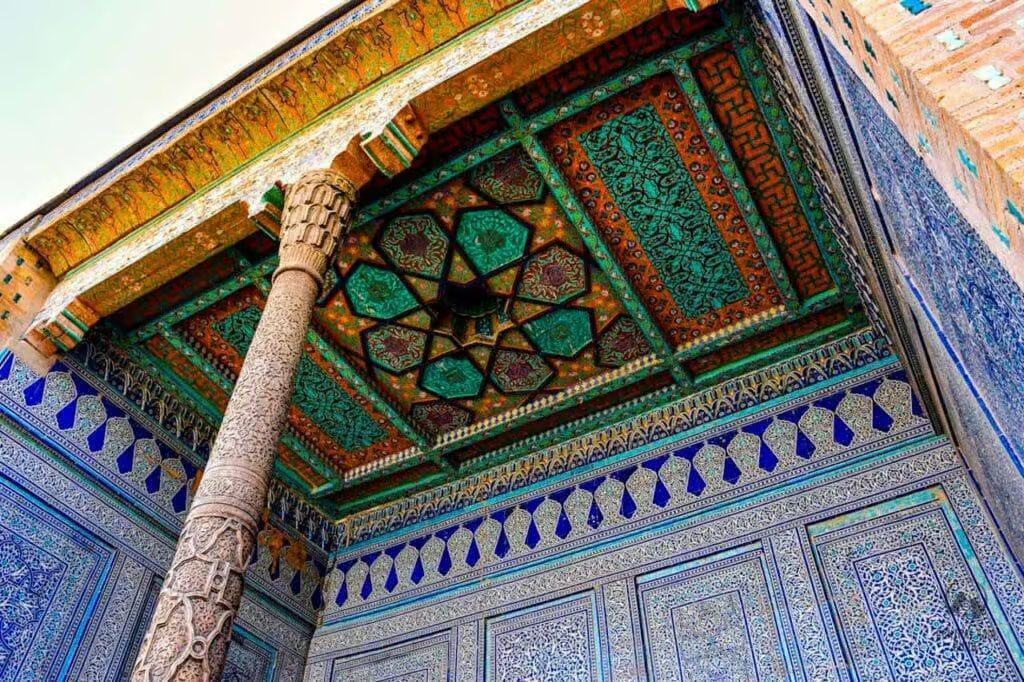
Tash Khauli, meaning "Stone Courtyard," is one of the most richly decorated palaces in Khiva, built as a second royal residence when the older Kunya-Ark citadel could no longer meet the needs of a growing court. Unlike the more austere fortress architecture nearby, Tash Khauli was designed to impress, with courtyard after courtyard finished in dense, colorful tilework.
The palace is divided into distinct sections that once served very different purposes — private family quarters, a formal reception area for state business, and a courtroom where disputes were settled. Walking between them today, visitors move from intimate, enclosed courtyards to grand ceremonial spaces within the space of a few steps.
A Journey Through History
Tash Khauli was commissioned in 1830 by Allakuli Khan, who wanted a new palace close to Kunya-Ark to house his household and handle the growing administrative demands of the Khanate. He reportedly ordered the project completed within two years, an unrealistic timeline that construction never actually met.
Work continued for nearly a decade, stretching from 1830 to 1838 under the direction of the architect Muhammad Niyaz Hajji Bek. Chronicles claim the khan grew so frustrated with the delays that he had a previous chief architect executed, a story that, true or not, reflects how much prestige he attached to the project.
Once finished, Tash Khauli functioned alongside Kunya-Ark as a working palace, hosting the khan's family, his officials, and the day-to-day business of the court. It remained in active use until the fall of the Khanate in the early 20th century.
Three Palaces in One
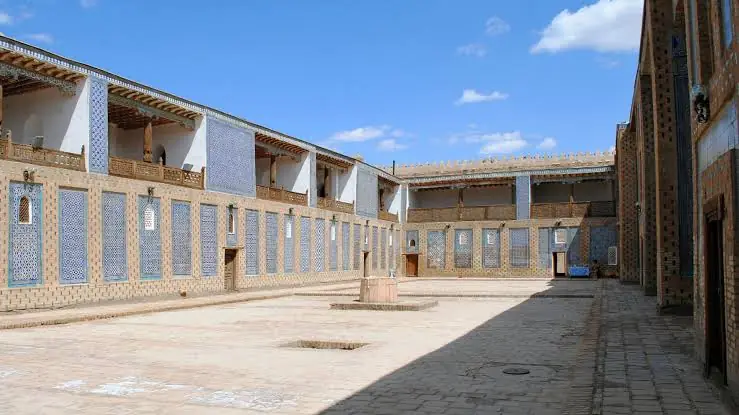
Tash Khauli is built around three connected courtyard complexes, each with its own function and character, together forming one of the most complete surviving examples of a 19th-century Khorezm royal residence.
Inside Tash Khauli, visitors can discover:
The Harem, the khan's private residential quarters, with separate apartments for his wives arranged around a shared courtyard.
The Ishrat-Khauli, a formal reception courtyard used for entertaining guests and hosting ceremonies.
The Arz-Khana, a courtroom courtyard where the khan personally heard petitions and settled disputes.
Wooden verandas supported by intricately carved columns, opening onto each courtyard.
Together, these three sections reveal a palace built to run a household and a state at the same time, with private, ceremonial, and administrative life all held within a single walled complex.
An Architectural Masterpiece
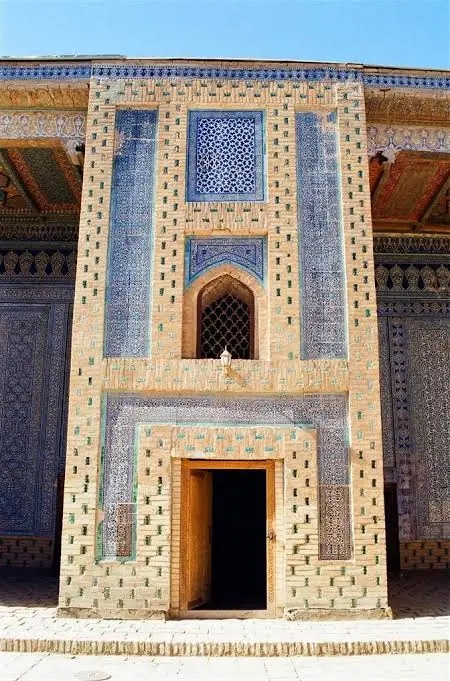
Tash Khauli is best known for the sheer density of its decoration. Nearly every wall surface in the main courtyards is covered in glazed majolica tile, arranged in intricate floral and geometric patterns in shades of blue, turquoise, and white — among the finest tilework found anywhere in Khiva.
Carved wooden columns support the verandas that line each courtyard, their surfaces worked with detailed floral and geometric motifs typical of Khorezm woodcraft. Combined with the tiled walls and open sky above each courtyard, the effect is one of the most visually striking interiors in the old city.
Despite its ornamentation, the palace's layout remains practical, with thick outer walls for security and separate, self-contained courtyards that allowed different parts of court life to function independently of one another.
Why Visit Tash Khauli?
Tash Khauli offers some of the richest tilework in Khiva alongside a genuine sense of what daily life looked like for a 19th-century Central Asian ruling family.
During your visit, you can:
Walk through the harem courtyard where the khan's family once lived.
Admire some of the densest and most colorful tilework anywhere in Ichan-Kala.
See the courtroom where the khan once heard petitions in person.
Photograph the palace's carved wooden columns and ornate verandas.
Part of a UNESCO World Heritage Site
Tash Khauli lies within Ichan-Kala, the inner walled city of Khiva, inscribed on the UNESCO World Heritage List as one of the best-preserved examples of a Central Asian Islamic city. Its lavish tilework is considered one of the outstanding artistic achievements within the site.
Travel Tips for Visitors
Allow around 45 minutes to an hour to see all three courtyards.
Visit around midday when sunlight fills the open courtyards, bringing out the tilework's colors.
Look closely at the column carvings, as each one has slightly different detailing.
Combine your visit with nearby Kunya-Ark, just a short walk away.
Best Time to Visit
Spring (March–May) and autumn (September–November) offer the most comfortable conditions for exploring Tash Khauli's open-air courtyards.
Khiva Awaits You
Step into the courtyards of Tash Khauli and discover one of Khiva's most beautifully decorated palaces, where politics, family life, and justice once unfolded side by side behind the same stone walls.
Ready to explore Tash Khauli Palace? Let Lapis Lazuli Tours create an unforgettable journey through the history and culture of Khiva. Contact our travel experts today to plan your perfect adventure.
📞 Phone: +998 97 397 37 73
📧 Email: lapislazulitours@gmail.com