

Tashkent
Welcome to Tashkent
Most journeys through Uzbekistan begin here, in a capital that rarely gets the attention its Silk Road neighbors do, yet rewards anyone who slows down long enough to look past the airport transfer. Tashkent is a city built in layers — an oasis settlement older than most European capitals, an early stop on Silk Road trade routes, a showcase Soviet metropolis rebuilt after a devastating earthquake, and now a fast-growing modern capital still finding its own identity.
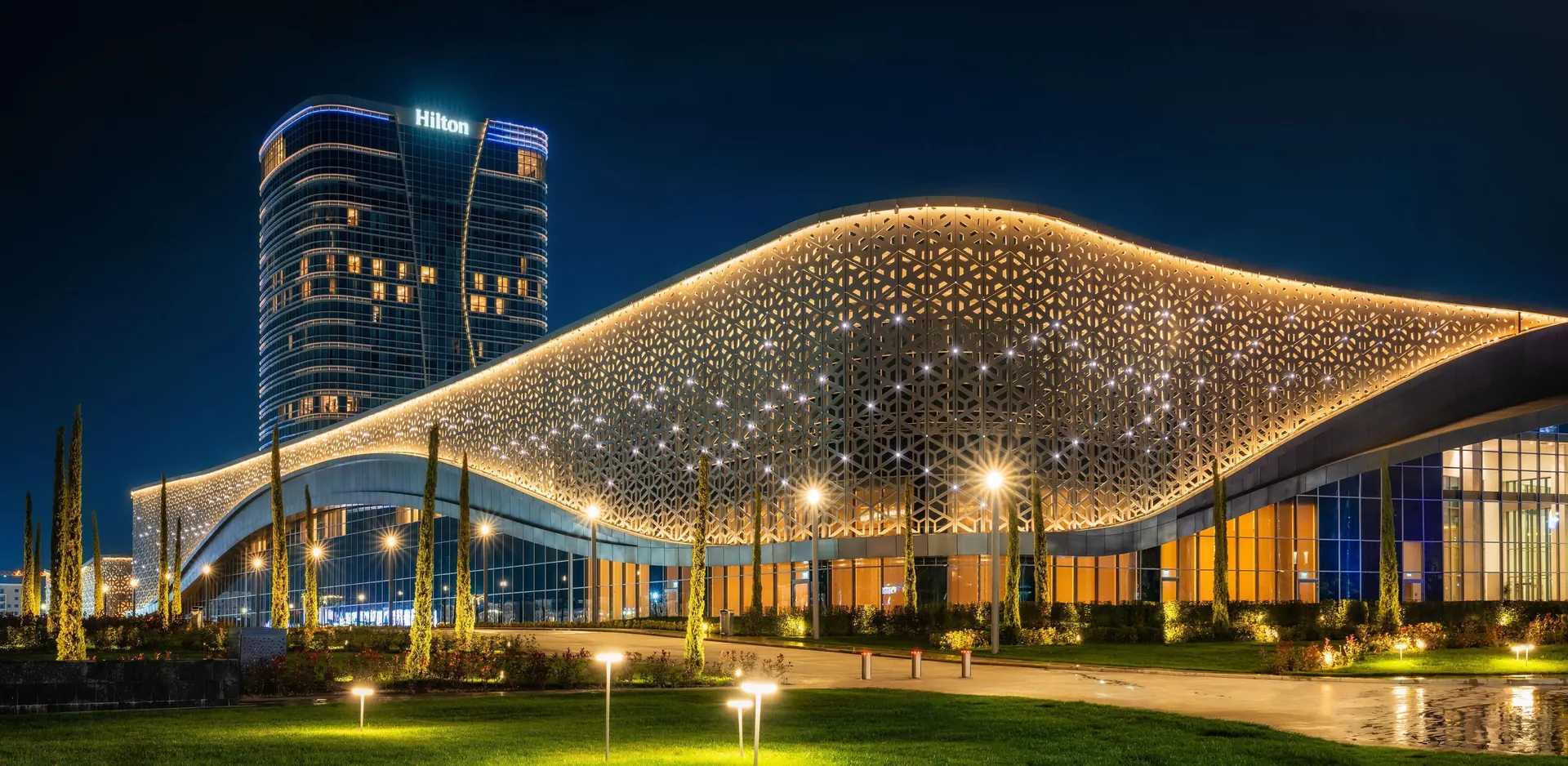
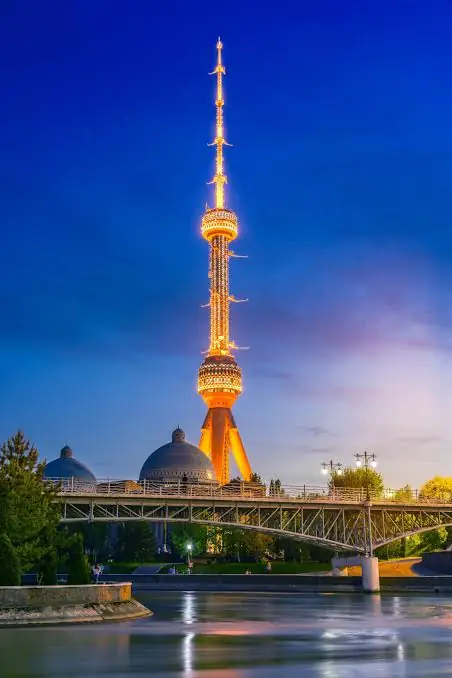
Tashkent sits in the northeast of Uzbekistan, close to the Kazakh border, and functions as the country's political, economic, and academic center. Unlike Samarkand or Bukhara, its skyline isn't dominated by turquoise domes but by wide Soviet-era boulevards, leafy parks, and an increasingly ambitious mix of new glass towers, giving the city a different, less polished kind of character.
A visit here works best as a way to bookend a longer trip — a day or two to walk through Khast Imam's old quarter, ride one of the world's more unusually decorated metro systems, and get a feel for how contemporary Uzbeks actually live, before or after tracing the older monuments further south.
Basic Information
Travel Information
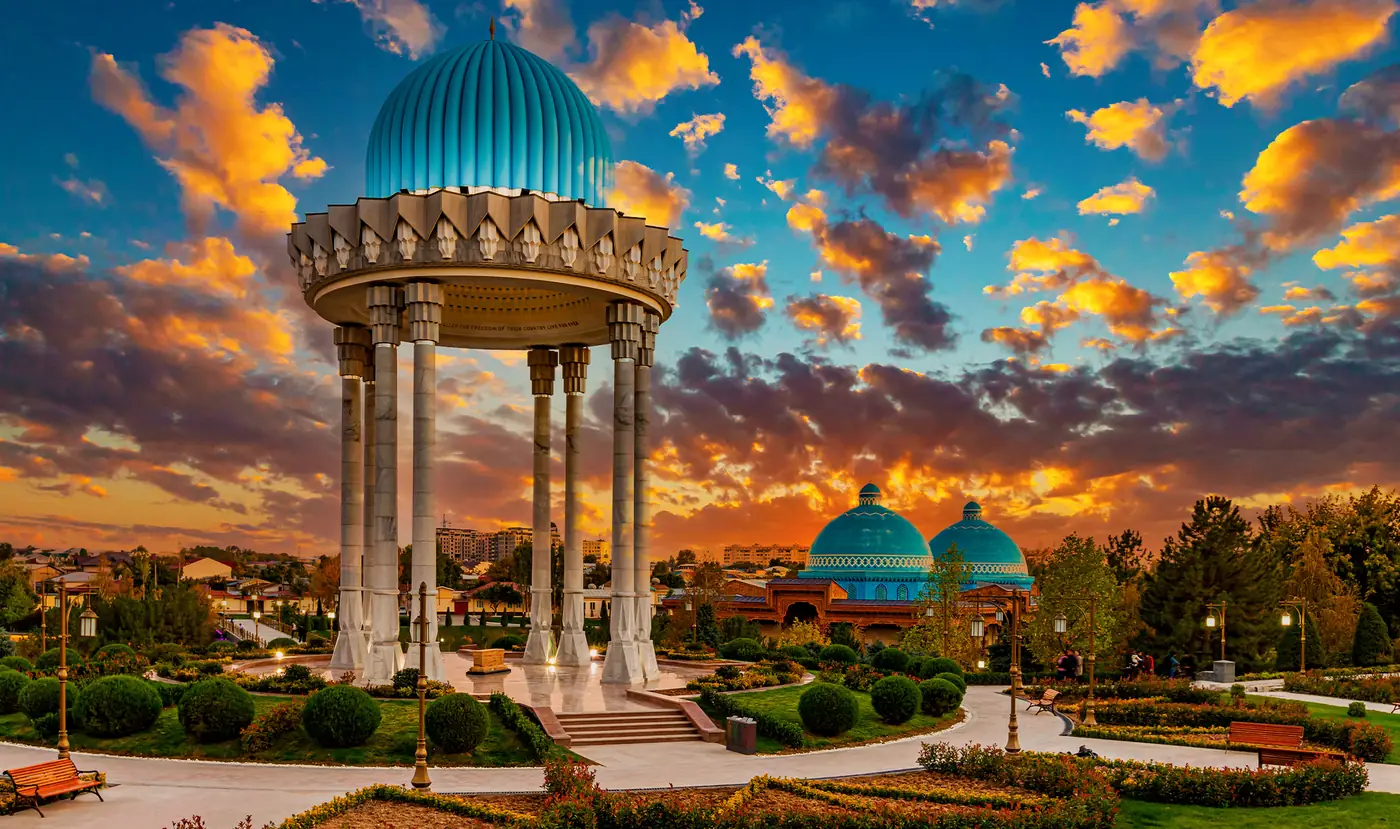
Why Visit Tashkent?
Tashkent gives travelers a version of Uzbekistan that the Silk Road cities further south don't — a working capital shaped as much by twentieth-century history as by anything older. The 1966 earthquake and the Soviet reconstruction that followed left the city with wide avenues, fountains, and a metro system built as much for civic pride as for transport.
At the same time, older Tashkent hasn't disappeared. The narrow lanes around Khast Imam and the stalls of Chorsu Bazaar still carry the rhythm of the pre-Soviet city, making Tashkent a place where two very different eras of Central Asian history sit only a short walk apart.
What Makes Tashkent Truly Special
Home to Khast Imam Complex, the city's historic religious and scholarly quarter.
One of Central Asia's oldest continuously inhabited oasis cities, with roots reaching back over two thousand years.
Features a metro system famous for stations decorated more like small museums than transit stops.
Chorsu Bazaar offers one of the country's largest and most atmospheric traditional markets.
Serves as Uzbekistan's main international gateway, making it a natural starting or closing point for any trip.
Blends Soviet-era architecture with a fast-growing modern skyline, offering a different visual identity from southern Uzbekistan.
History of Tashkent
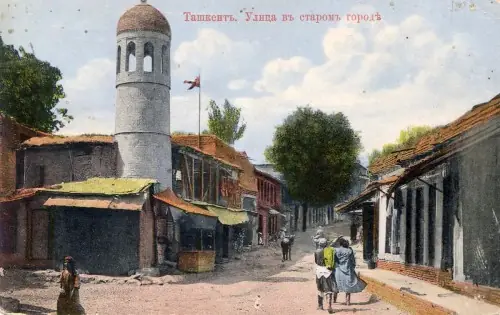
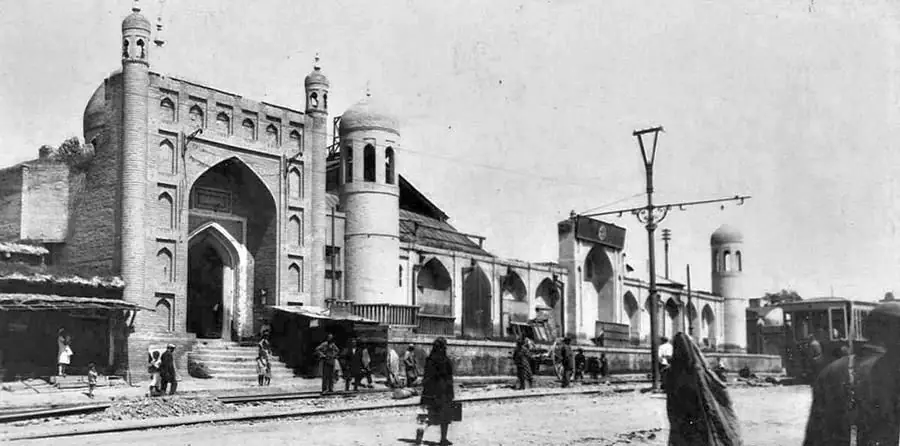
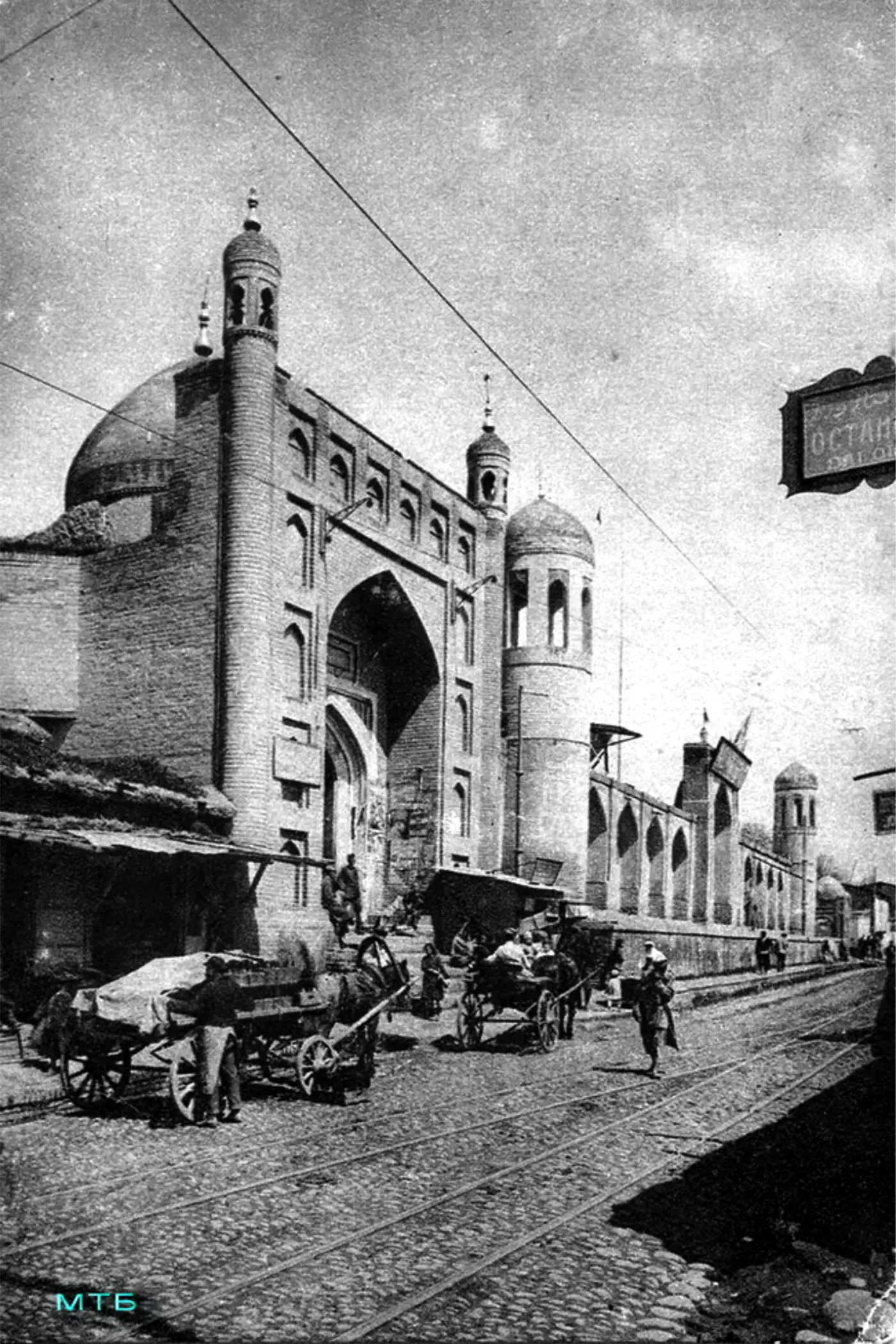
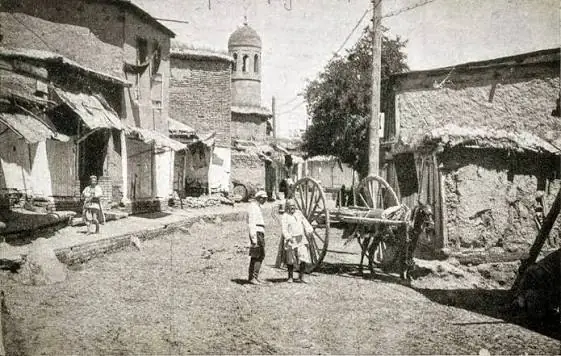
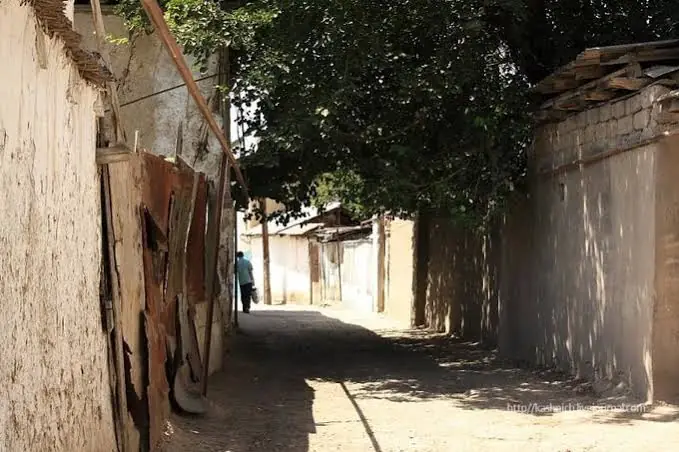
Tashkent's history stretches back over two thousand years, first as the oasis settlement of Chach and later as a significant stop along Silk Road trade routes connecting Central Asia to China, Persia, and beyond. Its position at a crossing of routes made it a frequent target for conquest, passing through Arab, Karakhanid, Mongol, and Timurid control over the centuries.
In 1865, the city was taken by the Russian Empire and made the administrative center of Russian Turkestan, a role that brought European-style planning, rail links, and a growing population of settlers alongside the older Uzbek city. That dual structure — an old town and a newer, planned district — still shapes how Tashkent is laid out today.
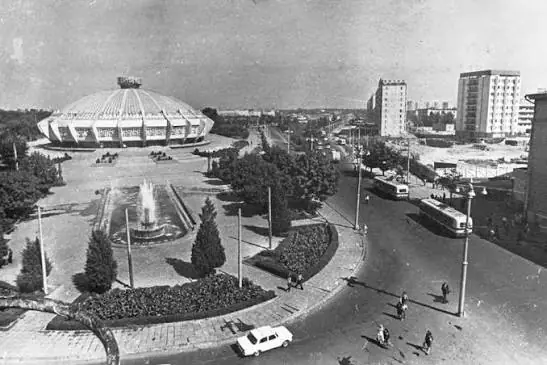
A powerful earthquake in 1966 destroyed much of the remaining old city center, and the Soviet Union responded with an ambitious rebuilding program, sending architects and workers from across the USSR to construct the wide avenues, apartment blocks, and monumental public buildings that still define much of central Tashkent. Since Uzbekistan's independence in 1991, the city has continued to grow rapidly, adding a new layer of contemporary towers and infrastructure to its Soviet-era core.
Geographical Location of Tashkent
Tashkent sits in the northeastern part of Uzbekistan, in the foothills where the Chirchiq River valley opens onto the wider plains stretching toward the Kazakh steppe. The city itself forms its own administrative unit, separate from the surrounding Tashkent region, and spreads across a largely flat landscape broken up by wide boulevards, parks, and canals.
The city borders Kazakhstan to the north and is encircled by Tashkent region on its other sides. Tashkent International Airport handles the great majority of the country's international flights, and the city serves as the main hub for rail and road connections to Samarkand, Bukhara, the Fergana Valley, and destinations further south, making it the natural starting point for most visits to Uzbekistan.
Traditional Cuisine of Tashkent
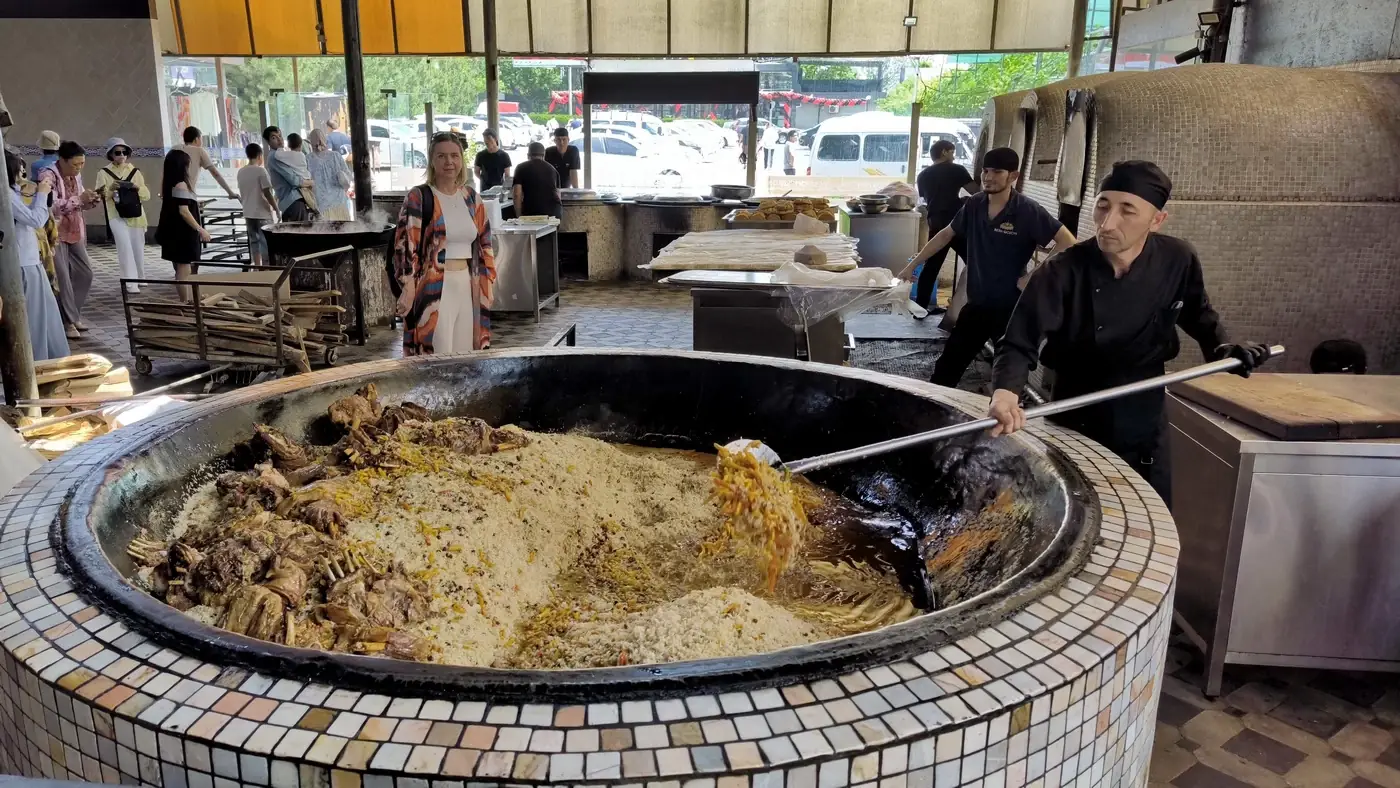
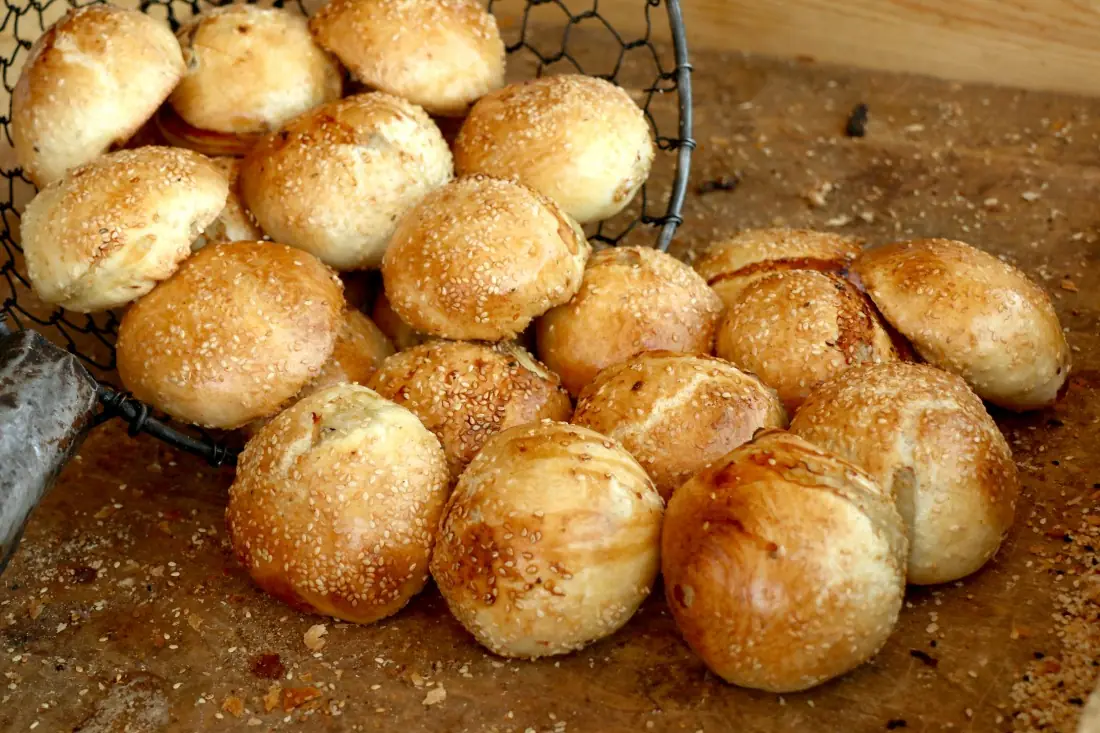
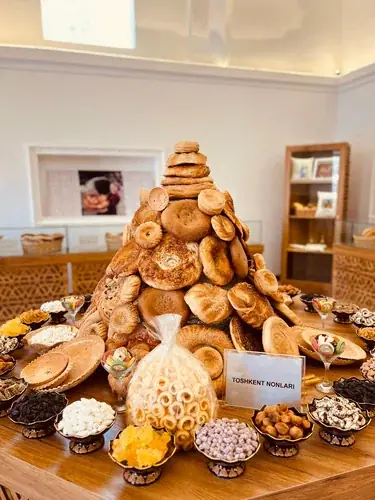
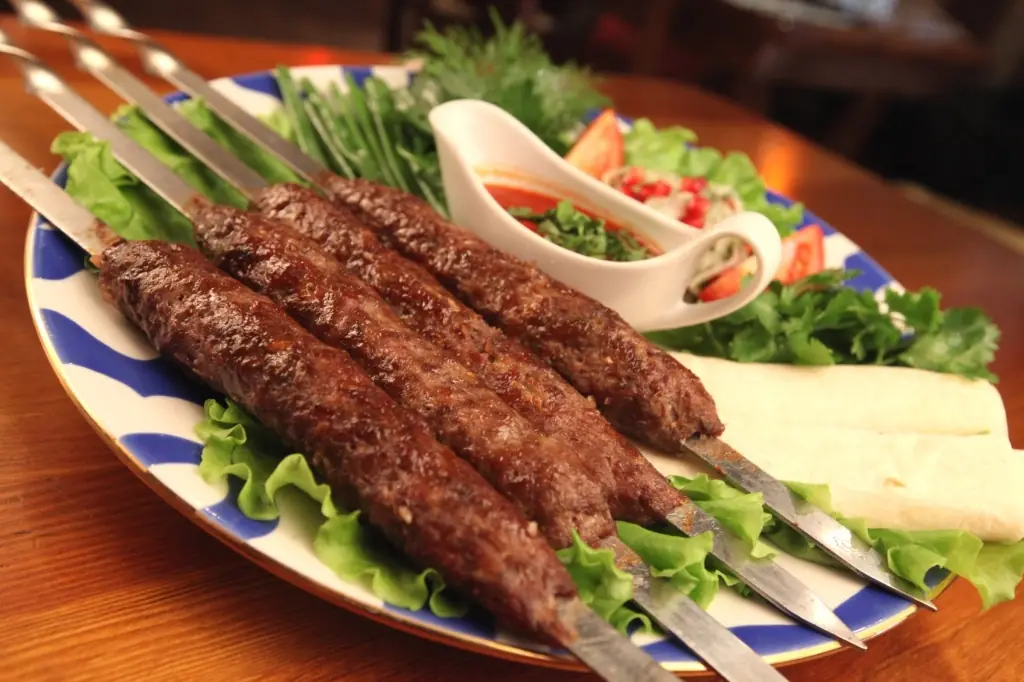
Tashkent has its own take on Uzbek staples, most famously Tashkent-style plov, cooked with yellow carrots and often a lighter hand with oil than versions found further south. Visitors can also try fresh non straight from tandoor ovens, grilled shashlik, hearty dimlama, and the wide range of somsa sold at Chorsu Bazaar, alongside a noticeable Korean and Russian culinary influence carried over from the city's Soviet-era history.

Best Time to Visit
The best time to visit Tashkent is during spring (April–May) and autumn (September–October), when daytime temperatures are comfortable for walking through Khast Imam's old quarter, exploring Chorsu Bazaar, or spending time outdoors around Independence Square. Summers can turn genuinely hot, while winters, though generally mild, occasionally bring cold snaps and snow.
Tashkent International Airport handles most of the country's international flights, and the city's rail and road links make it the natural starting or ending point for a wider trip through Samarkand, Bukhara, the Fergana Valley, or Surkhandarya in the south.
Tashkent Awaits You
Wander the old lanes of Khast Imam, haggle for spices and dried fruit at Chorsu Bazaar, admire the mosaics of a metro station built like a public gallery, and get a first, unfiltered impression of how modern Uzbekistan actually lives. Tashkent offers a side of the country defined by everyday energy rather than ancient monuments alone.
Ready to discover Tashkent? Let Lapis Lazuli Tours craft an unforgettable itinerary for you. Contact our specialists today and start planning your perfect journey.
📞 Phone: +998 97 397 37 73
📧 Email: lapislazulitours@gmail.com
Tashkent's Spiritual Heart, Built Around a Scholar's Grave
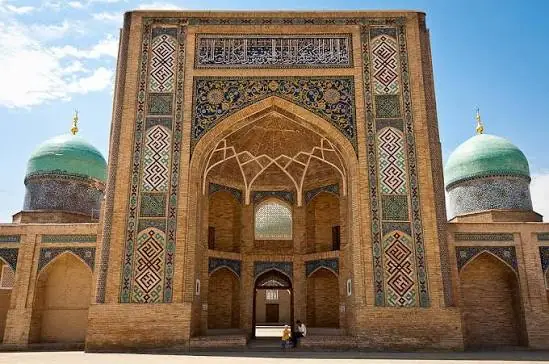
Tucked into the old Sebzar quarter of Tashkent, away from the wide Soviet-era boulevards that define most of the modern city, Khast Imam Complex is where Tashkent's religious and scholarly history is still concentrated in one place. The name itself, sometimes rendered Hazrati Imam, points to the grave at its center — that of a tenth-century scholar whose reputation shaped how the city thought of itself for centuries afterward.
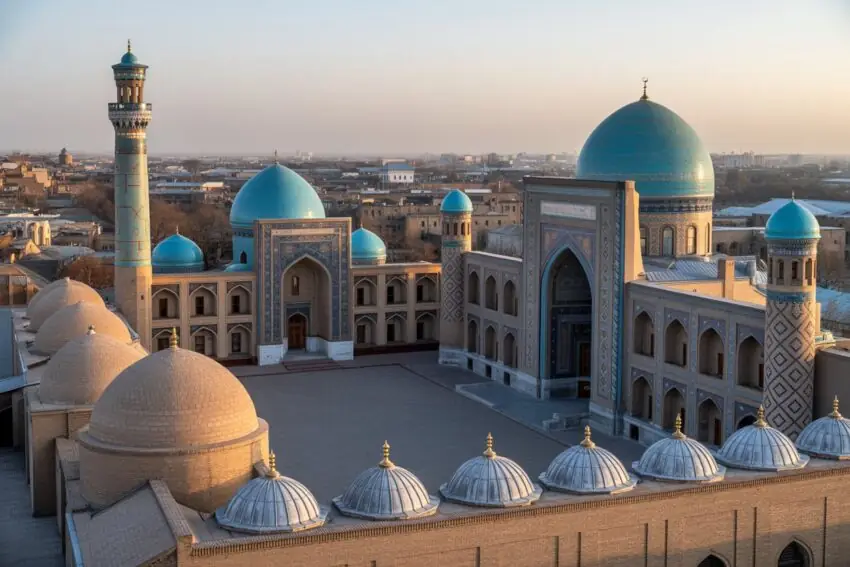
Unlike the grand Timurid ensembles of Samarkand, Khast Imam grew more gradually, gathering a mausoleum, several madrasahs, a mosque, and a library around a single revered burial site over the course of roughly a thousand years. What stands there today is largely the product of restoration and rebuilding, yet the underlying purpose of the square — as a place of prayer, study, and pilgrimage — has stayed remarkably constant.
For visitors, Khast Imam offers something rare within Tashkent itself: an active religious complex, home to the country's chief mufti and one of the oldest surviving Quran manuscripts in the world, standing only a short walk from the stalls of Chorsu Bazaar.
A Thousand Years Built Around One Grave
The complex takes its name from Sheikh Khovendi at-Tahur, better known by his title Qaffal Shoshi, a tenth-century scholar, hadith expert, and locksmith by trade who was born and later buried in Tashkent. His reputation for learning drew students and pilgrims to his grave long after his death, and a mausoleum was eventually raised over the site to mark its importance.
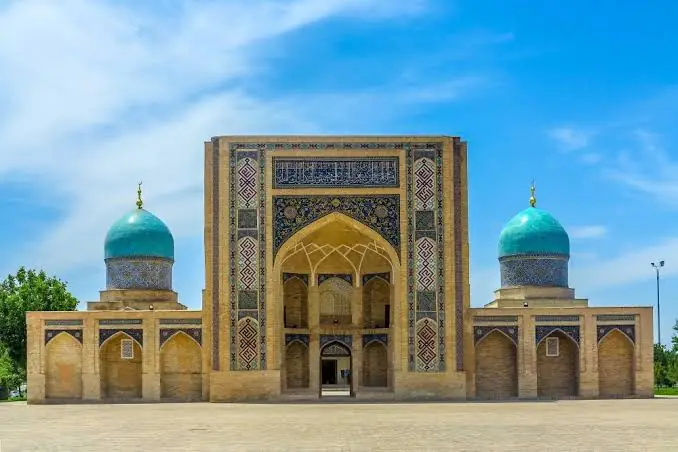
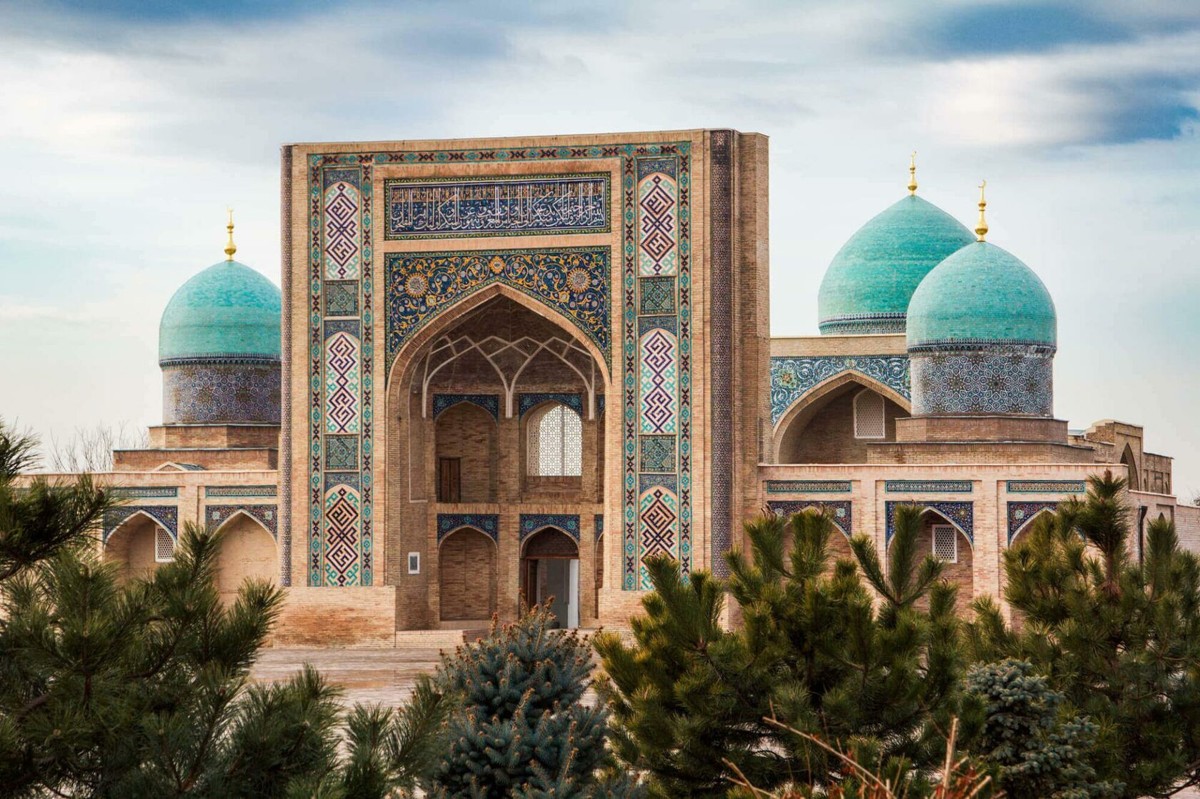
Over the following centuries, the square around the mausoleum slowly filled in with additional structures. The Barak Khan Madrasah was built in the sixteenth century, reportedly on the site of an earlier structure linked to the Timurid ruler Ulugh Beg, while the Muyi Muborak Madrasah was constructed to house what would become one of the complex's most significant treasures.
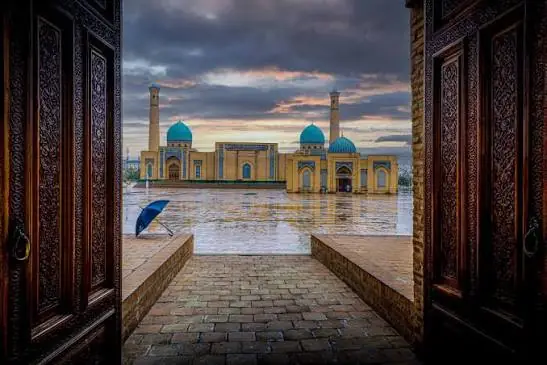
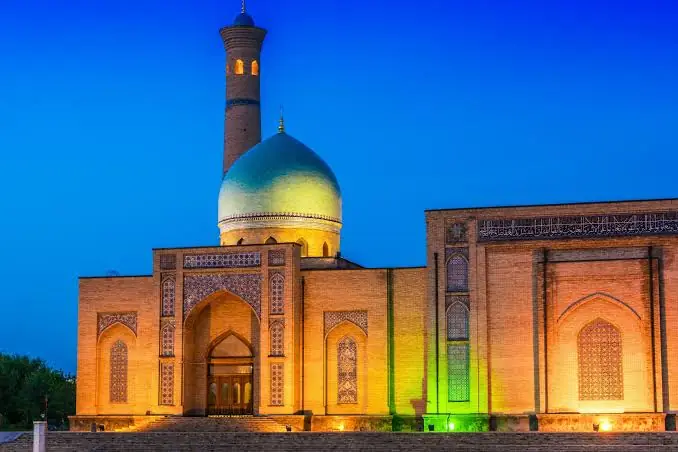
Much of what visitors see at Khast Imam today reflects a major renovation and expansion carried out in the 2000s, when the square was significantly redesigned and a large new mosque, the Hazrati Imam Mosque, was constructed to serve as the complex's centerpiece. Older structures were restored alongside the new construction, giving the site a blend of centuries-old buildings and comparatively recent additions.
Today, Khast Imam also functions as the administrative and spiritual center of the Muslim Board of Uzbekistan, home to the country's chief mufti, which keeps the complex an active religious institution rather than a purely historical site.
Inside the Complex
The Mausoleum of Qaffal Shoshi
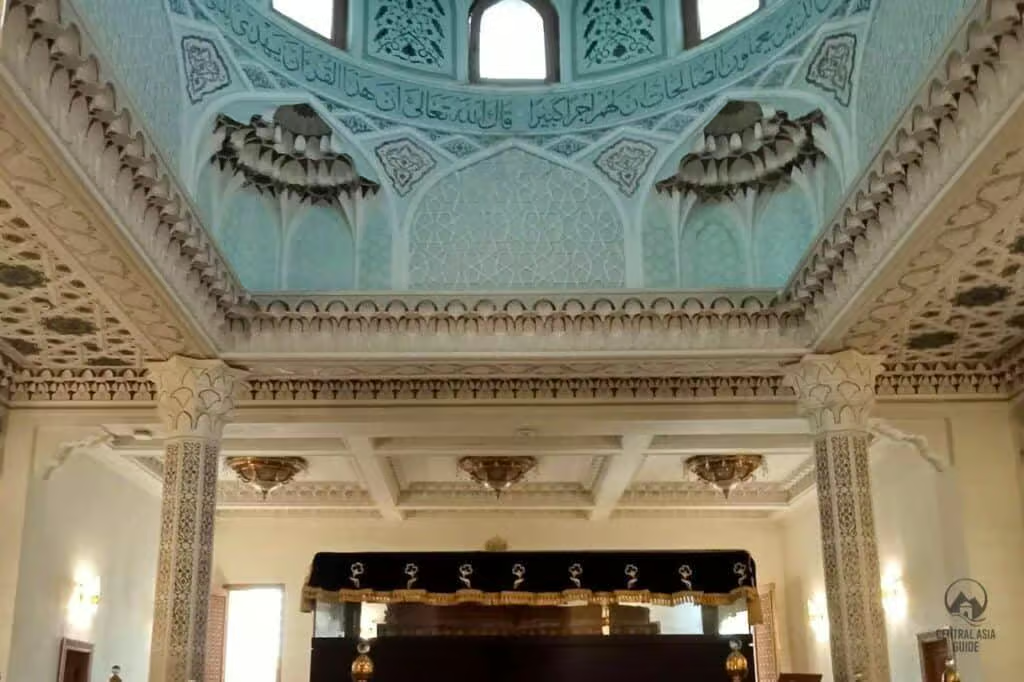
At the heart of the complex stands the mausoleum of Sheikh Khovendi at-Tahur, the scholar whose grave gave the square its purpose in the first place. Rebuilt and restored across several periods, the mausoleum remains a place of quiet visitation, drawing local worshippers as much as curious travelers.
Muyi Muborak Madrasah and the Uthman Quran
The Muyi Muborak Madrasah houses one of the complex's most remarkable holdings: an early Quran manuscript, widely known as the Uthman Quran, believed by many scholars to date to the seventh century and associated with the third Islamic caliph, Uthman ibn Affan. Its heavily worn, bloodstained pages are kept under protective glass, and the manuscript is regarded as one of the oldest surviving Quran copies anywhere in the world.
Barak Khan Madrasah
Framed by a restored portal and courtyard, the Barak Khan Madrasah once served as a working center of religious education and now houses offices connected to the Muslim Board of Uzbekistan alongside small shops selling crafts and souvenirs, a practical use that keeps the historic building in active daily life.
Hazrati Imam Mosque
Dominating the square with its large blue dome and twin minarets, the comparatively new Hazrati Imam Mosque was built to accommodate thousands of worshippers and now serves as the complex's main congregational space, giving Khast Imam a monumental scale it lacked for most of its history.
Why Visit Khast Imam Complex?
Few places in Tashkent let you stand this close to a living center of Islamic scholarship and administration while also viewing a manuscript with a direct claim to the earliest years of Islam itself.
During your visit, you can:
See the Uthman Quran, one of the oldest surviving Quran manuscripts in the world.
Visit the mausoleum of Qaffal Shoshi, the scholar behind the complex's name.
Admire the scale of the Hazrati Imam Mosque and its blue dome.
Walk through the restored courtyard of the historic Barak Khan Madrasah.
See the seat of the Muslim Board of Uzbekistan, still an active religious institution today.
Combine your visit with nearby Chorsu Bazaar for a fuller day in Tashkent's old quarter.
Best Time to Visit
The open square at Khast Imam offers little shade, and Tashkent's summer heat can make a longer visit uncomfortable, so timing your trip well makes a real difference here.
The most recommended seasons are:
Spring (April–May): Mild temperatures and good light for photographing the mosque and madrasahs.
Autumn (September–October): Cooler days make walking between the different buildings far more comfortable.
Visiting earlier in the morning also tends to be quieter, before the square fills with both worshippers and visiting groups.
Interesting Facts
The complex is named after Sheikh Khovendi at-Tahur, known as Qaffal Shoshi, a tenth-century scholar and locksmith.
The Muyi Muborak Madrasah holds the Uthman Quran, believed to date to the seventh century.
The Barak Khan Madrasah dates to the sixteenth century and may occupy the site of an earlier Timurid-era structure.
The large Hazrati Imam Mosque was built during a major renovation of the square in the 2000s.
Khast Imam serves as the seat of the Muslim Board of Uzbekistan and the country's chief mufti.
The complex sits within Tashkent's historic Sebzar quarter, close to Chorsu Bazaar.
Travel Tips
Dress modestly, as the complex remains an active center of worship and religious administration.
Check opening hours for the Uthman Quran display before your visit, as access can vary.
Combine your visit with Chorsu Bazaar, which sits just a short walk from the complex.
Be respectful around worshippers, particularly near the mausoleum and inside the mosque.
Set aside enough time to see all four main structures, rather than rushing through the square.
The Timeless Legacy of a Scholar's Square
From a tenth-century locksmith-turned-scholar to the seat of the country's highest religious authority, Khast Imam has carried the same underlying purpose across a thousand years — a place where learning and faith are kept close together. Few squares anywhere in Central Asia can claim such an unbroken thread of purpose.
Standing before the Uthman Quran or beneath the dome of the Hazrati Imam Mosque, visitors get a rare sense of Tashkent's older identity, one that persists quietly behind the city's Soviet boulevards and modern towers.
📞 Phone: +998 97 397 37 73
📧 Email: lapislazulitours@gmail.com
Tashkent's Market at the Meeting of Four Roads
Long before Tashkent had boulevards, metro lines, or a single high-rise, there was Chorsu — the market square where roads from every direction converged and merchants set up to trade. The name itself, drawn from Persian, roughly translates as "four streams" or "four roads," a reference to the crossroads that shaped this spot into a marketplace centuries before anyone thought to build a city around it.
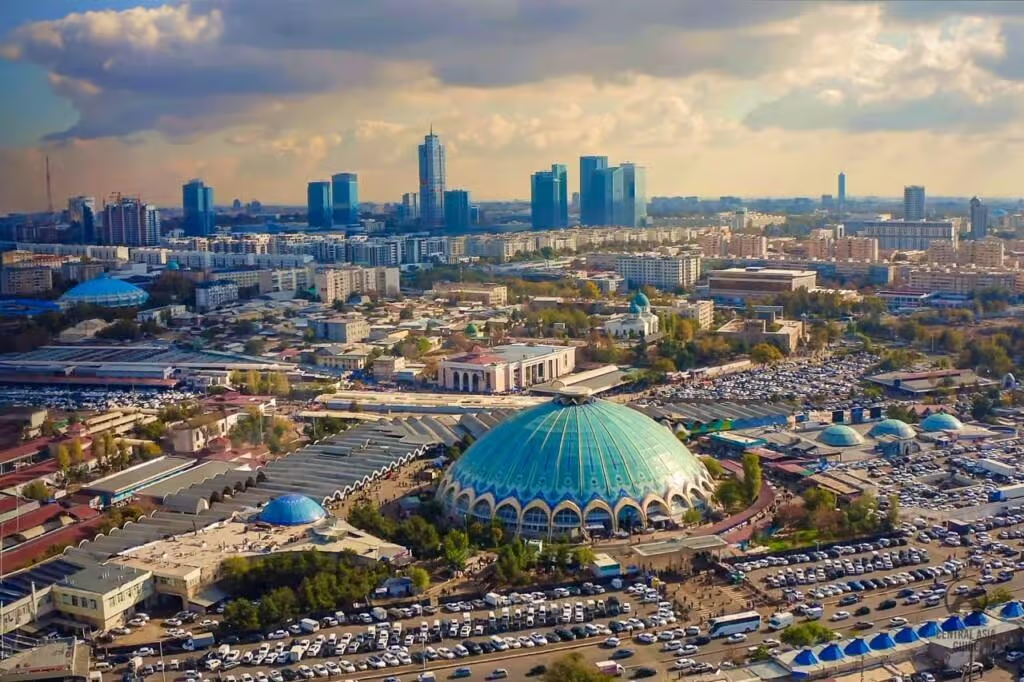
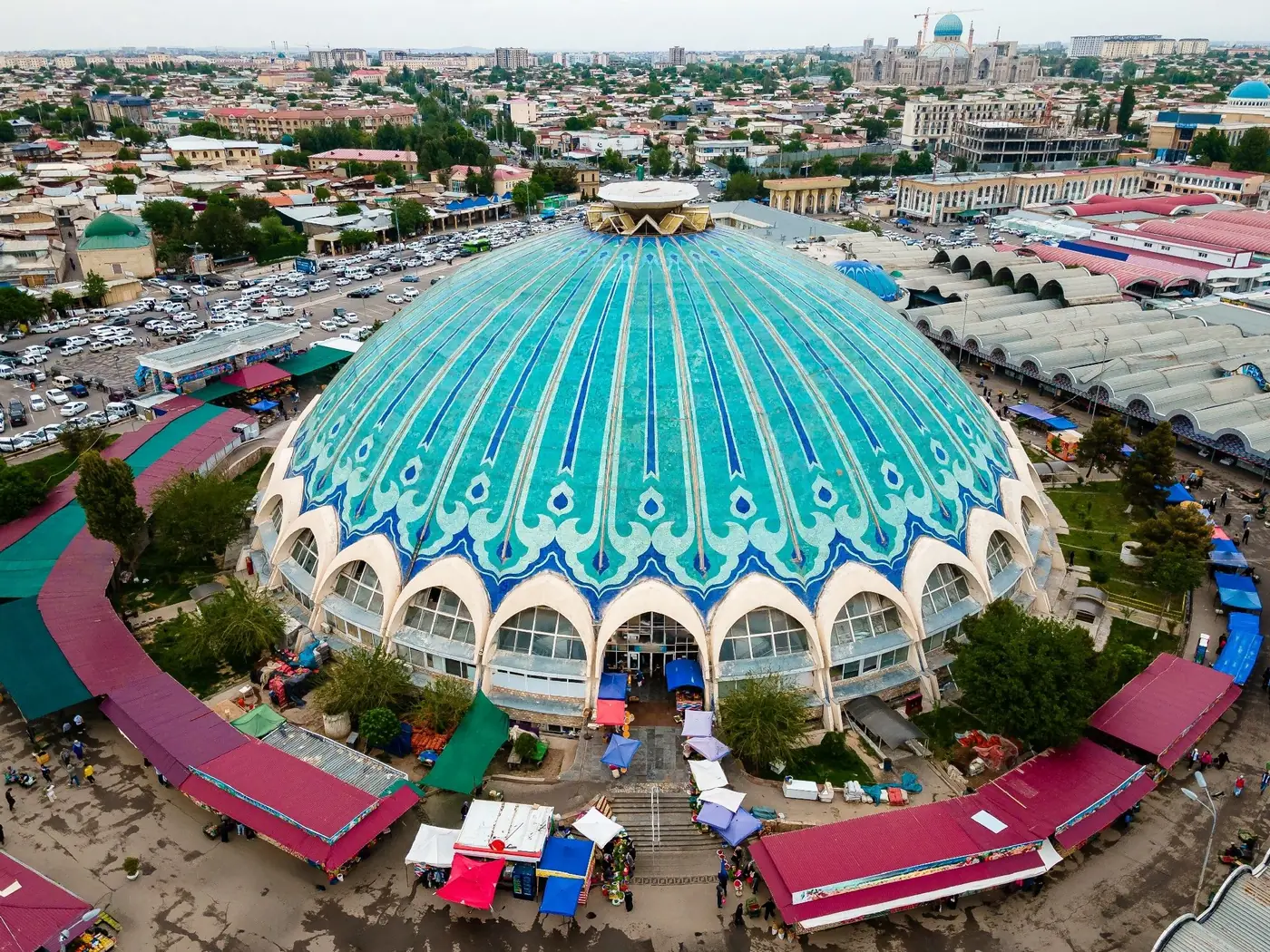
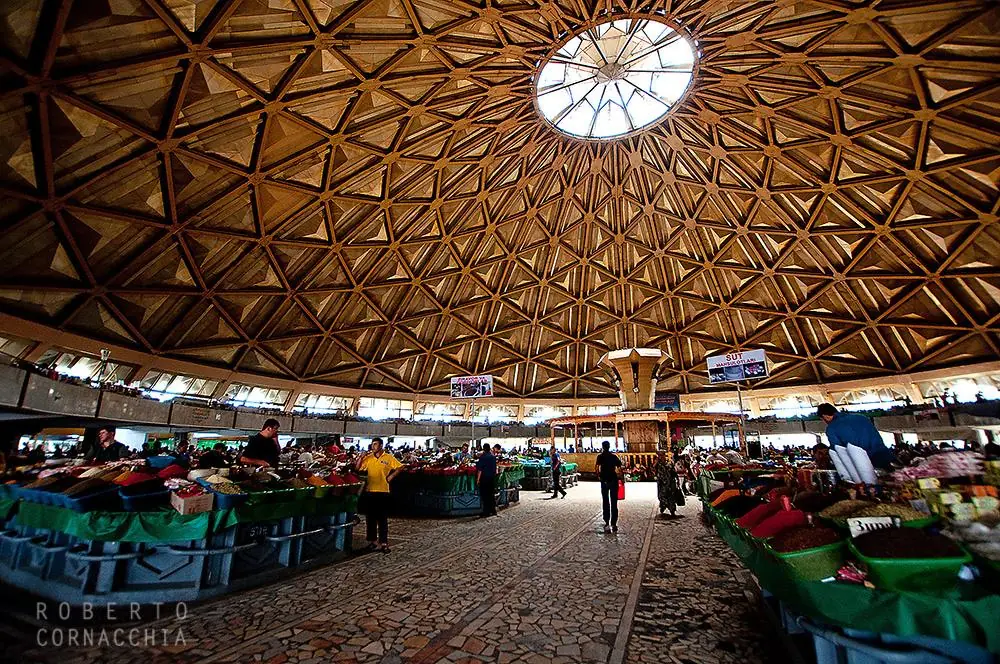
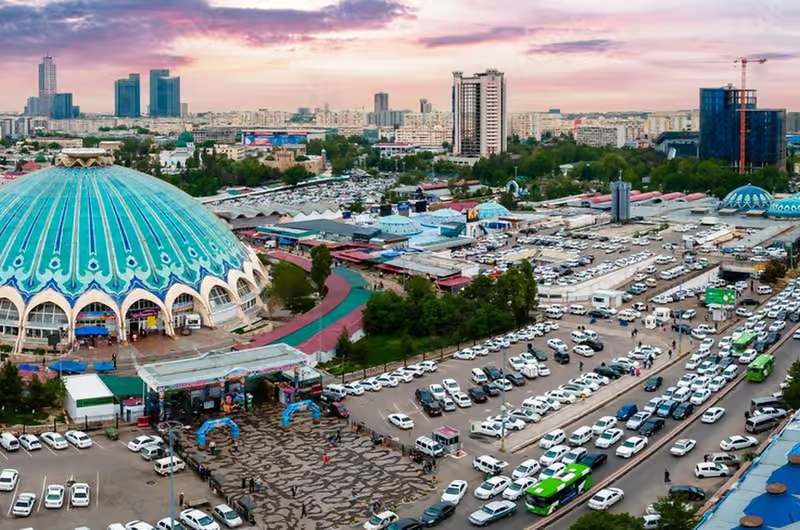
Today's bazaar is instantly recognizable by its enormous turquoise dome, a landmark visible from a good distance across the old city, sheltering rows of meat, dairy, and produce vendors beneath a single vaulted roof. Around it spreads an open-air market of spices, dried fruit, nuts, textiles, and household goods, spilling out into the surrounding lanes in a way that feels far closer to the market's medieval origins than the dome above it might suggest.
For visitors, Chorsu offers something increasingly hard to find in a fast-modernizing capital: a place where daily commerce, not tourism, still sets the pace, and where the sounds, smells, and bargaining of an Uzbek market carry on much as they always have.
A Market Older Than the City Around It
Chorsu's history as a trading site reaches back to Tashkent's earliest days as a Silk Road oasis city, when the crossing of major roads made this spot a natural place for merchants, caravans, and craftsmen to gather. Long before any permanent structure stood here, Chorsu functioned as the informal commercial heart of old Tashkent, a role tied directly to its position at the crossroads the name still describes.
Through the Russian imperial period and into the Soviet era, the market continued to operate in roughly the same location, even as the rest of the city around it was reshaped by new administrative districts, rail lines, and eventually the wide boulevards built after the 1966 earthquake. Chorsu remained one of the clearest surviving threads connecting the old Uzbek city to whatever version of Tashkent was being built around it at any given time.
The market's now-iconic domed pavilion dates to the Soviet period, built in the 1980s to bring the meat, dairy, and produce trade under a single covered roof rather than leaving vendors exposed to Tashkent's harsh summers and occasional winter cold. The dome's scale and turquoise tiling were a deliberate nod to the region's older architectural traditions, even though the structure itself is a distinctly modern addition to a very old market.
Since Uzbekistan's independence, Chorsu has been renovated and expanded further, with additional covered sections and reorganized stalls added around the original dome, while the surrounding open-air lanes have kept much of their older, less formal character.
Inside the Bazaar
The Domed Pavilion
Beneath Chorsu's turquoise dome, tightly packed stalls sell meat, dairy, and fresh produce arranged by trade around a central open floor. The scale of the space is genuinely striking from inside, with light filtering down through the dome onto rows of vendors calling out prices and inviting samples, especially around the dried fruit and nut sellers.
Spices, Dried Fruit, and Nuts
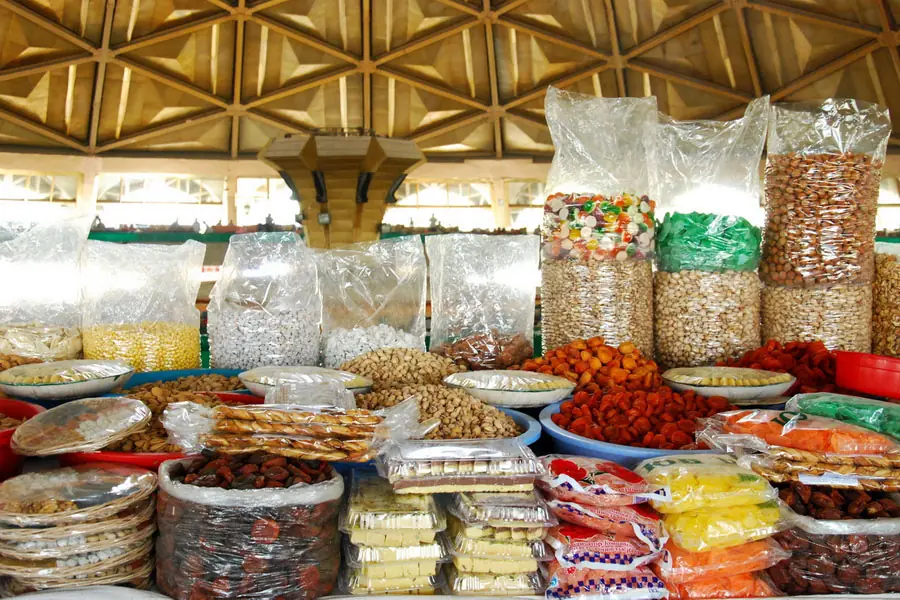
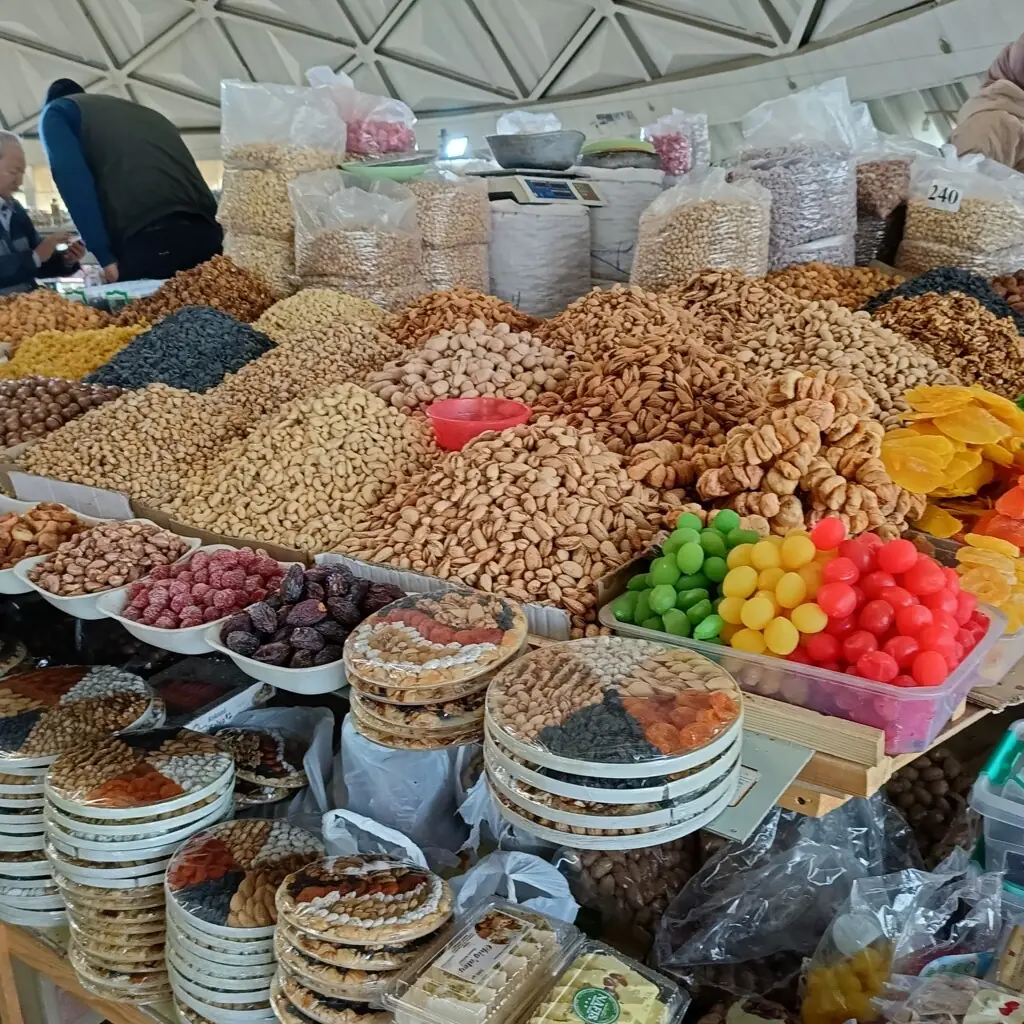
Some of Chorsu's most photographed stalls belong to the spice and dried fruit traders, their tables piled high with cumin, dried barberries, raisins, dried apricots, almonds, and pistachios in loose, colorful mounds. Vendors here are used to offering tastes before a purchase, and bargaining over price is a normal, expected part of the exchange.
Textiles and Household Goods
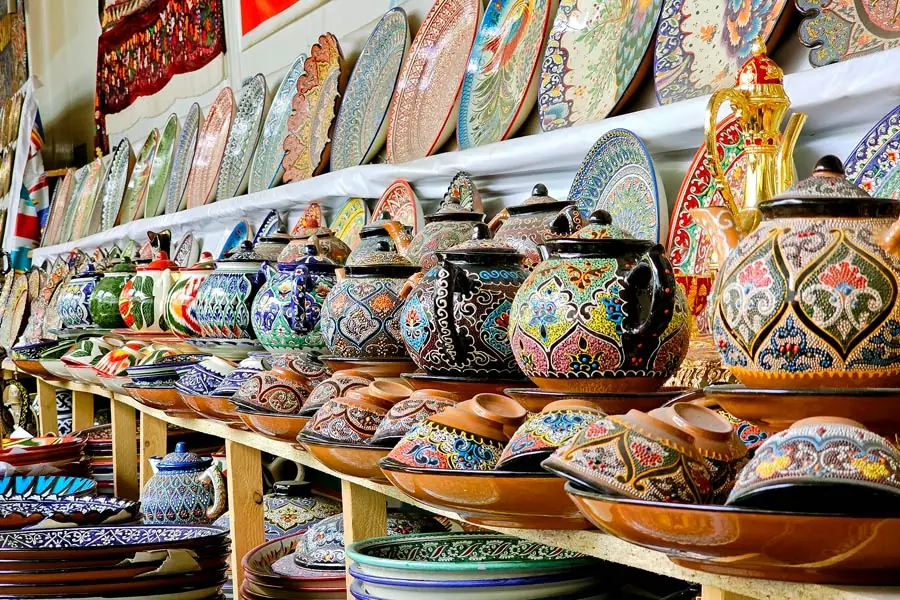
Beyond the food stalls, sections of the bazaar are given over to textiles, clothing, kitchenware, and household items, spreading into the surrounding streets and smaller side markets. This part of Chorsu leans more toward everyday shopping for local residents than tourist souvenirs, though traditional fabrics and ceramics can still be found among the more practical goods.
Street Food and Bread Stalls
Around the edges of the bazaar, small stalls and stands sell fresh non straight from tandoor ovens, samsa, and other quick bites, giving visitors an easy way to eat like a local without sitting down for a full meal. The smell of fresh bread and grilled meat is often the first thing that greets visitors approaching from any of the surrounding streets.
Why Visit Chorsu Bazaar?
Few places in Tashkent offer such a direct, unfiltered look at everyday Uzbek life, all gathered under one striking dome and spilling out into the surrounding lanes of the old city.
During your visit, you can:
Walk beneath Chorsu's landmark turquoise dome and take in the scale of the covered market.
Sample and buy dried fruit, nuts, and spices straight from local traders.
Try fresh non and samsa from the bazaar's bread and street food stalls.
Practice friendly bargaining, an everyday part of shopping at Chorsu.
Browse textiles, ceramics, and household goods in the surrounding market lanes.
Combine your visit with nearby Khast Imam Complex for a full morning in Tashkent's old quarter.
Best Time to Visit
Chorsu is at its liveliest and most photogenic in the morning, when stalls are freshly restocked and the market hasn't yet reached its midday peak crowds and heat.
The most recommended seasons are:
Spring (April–May): Comfortable temperatures and a wide range of fresh seasonal produce on display.
Autumn (September–October): Harvest season brings some of the year's best fruit and produce to the stalls.
Arriving soon after the market opens tends to offer a quieter, more relaxed visit before tour groups and the midday rush arrive.
Interesting Facts
The name Chorsu comes from Persian and roughly means "four streams" or "four roads."
The site has functioned as a trading center since Tashkent's early days as a Silk Road city.
The bazaar's iconic domed pavilion was built in the 1980s during the Soviet period.
Chorsu sits within Tashkent's historic Sebzar quarter, close to Khast Imam Complex.
The market has been renovated and expanded several times since Uzbekistan's independence.
Chorsu remains one of the largest and most active traditional markets in Uzbekistan.
Travel Tips
Bring small denominations of cash, as most stalls don't accept cards.
Bargain politely, since negotiating price is a normal and expected part of shopping here.
Ask before photographing individual vendors, as a courtesy while shopping around their stalls.
Keep an eye on your belongings, as with any busy, crowded market.
Pair your visit with Khast Imam Complex, just a short walk away, for a fuller morning in the old city.
The Timeless Legacy of a Crossroads Market
Long before Tashkent had a name recognized beyond Central Asia, merchants were already gathering at this crossing of roads to trade, bargain, and exchange news along with goods. Chorsu has outlasted empires, earthquakes, and complete redesigns of the city around it, adapting its form without ever losing its basic purpose.
Standing beneath its turquoise dome today, surrounded by the calls of vendors and the smell of fresh bread, visitors get a rare, still-living connection to the market that has anchored this corner of Tashkent for longer than almost anything else in the city.
📞 Phone: +998 97 397 37 73
📧 Email: lapislazulitours@gmail.com
Tashkent's Grand Civic Heart, Renamed for a New Nation
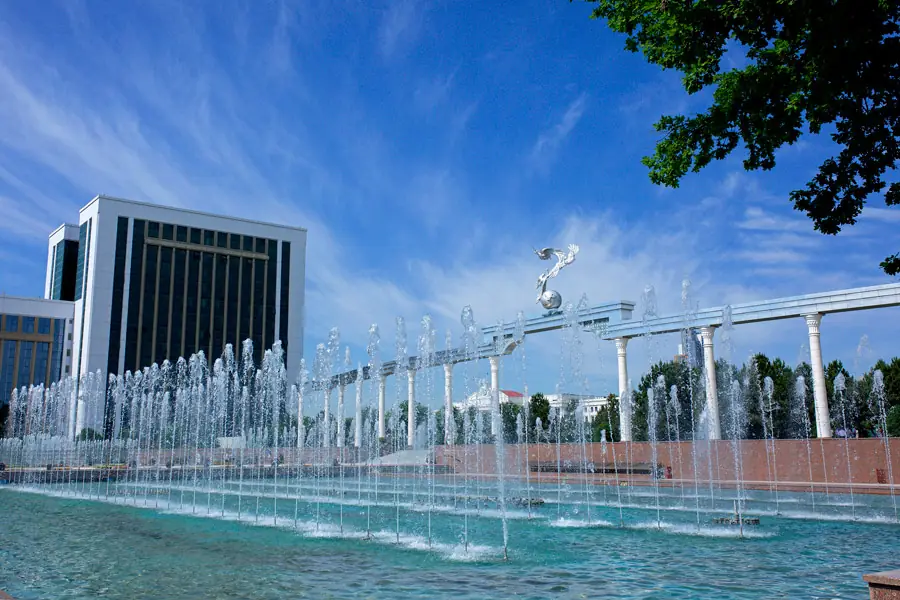
At the center of modern Tashkent lies a space that has carried more names, and witnessed more political change, than almost any other public square in Central Asia. Independence Square — known locally as Mustaqillik Maydoni — spreads out less like a conventional plaza and more like an open city park, its avenues of plane trees, fountains, and flower beds framing the monuments that now mark Uzbekistan's passage from Soviet republic to sovereign state.
What makes the square worth lingering in isn't a single standout structure but the accumulated layers beneath it — a site that has served as military headquarters, cathedral square, Soviet parade ground, and now national symbol, each phase leaving a visible trace on the landscape that visitors walk through today.
For travelers exploring Tashkent, the square works as both a monument in its own right and a starting point, sitting within easy reach of the city's main government buildings, museums, and metro stations, and offering a genuinely pleasant place to slow down between the more demanding stops on a Tashkent itinerary.
A Square That Changed Names With Every Regime
The story of this ground begins in 1865, when Tashkent fell to Russian imperial forces following the collapse of the Kokand Khanate. Rather than demolish the existing old city, Russian planners laid out an entirely new European-style district nearby, and the freshly cleared land where the square now stands became the site of the Governor-General's residence — a building locals came to call the "White House," reflecting its role as the seat of Turkestan's colonial administration.
Under Tsarist rule the space was known as Sobornaya, or Cathedral Square, named for a nearby Orthodox church. After the 1917 revolution and the consolidation of Soviet power, the square was renamed Red Square in the 1930s, before taking the name most older residents still remember — Lenin Square — from 1956 onward, complete with a large statue of the Soviet leader at its center.
From 1974, the space also functioned as the city's Avenue of Parades, hosting Soviet military processions and workers' demonstrations on holidays such as International Workers' Day and Victory Day — a use that shaped much of the square's open, ceremonial layout still visible today.
Everything changed after Uzbekistan declared independence on September 1, 1991. The Lenin statue was dismantled, and in 1992 the square was formally renamed Mustaqillik Maydoni — Independence Square — marking not just a change of name but a complete reorientation of what the space was meant to represent, from Soviet power to national sovereignty.
What Stands on the Square Today
The Arch of Independence and Good Spirit
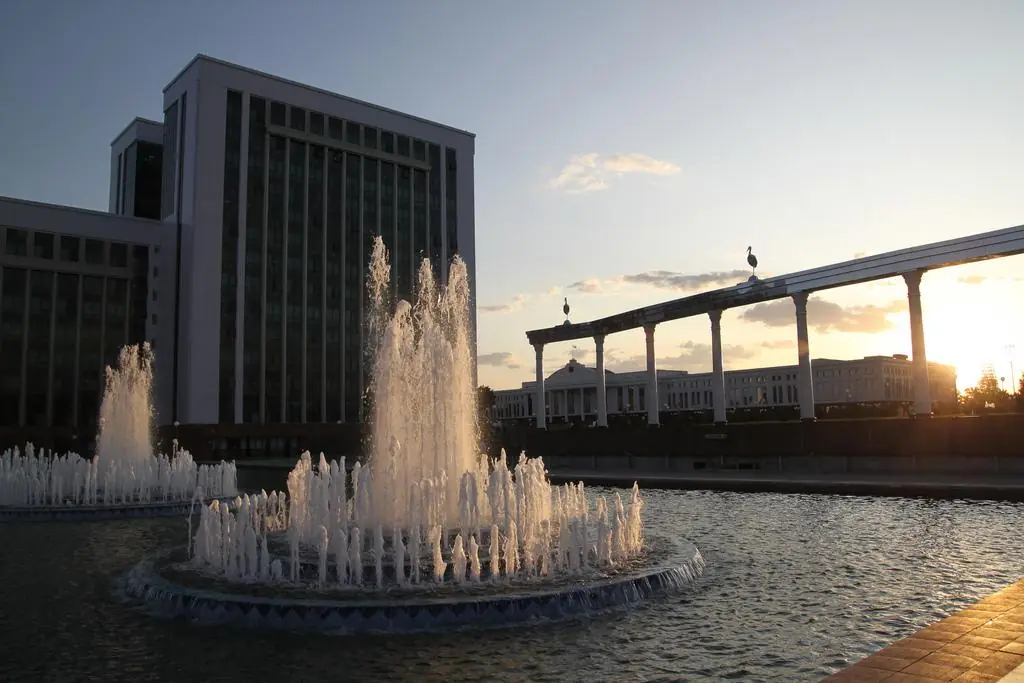
Approaching from the south, visitors first pass beneath a broad ceremonial arch topped with storks in flight, a design intended to symbolize peace, freedom, and the arrival of good fortune. The arch frames the long approach to the square's central monuments, setting a deliberately open, welcoming tone before the more solemn memorials further ahead.
The Independence Monument
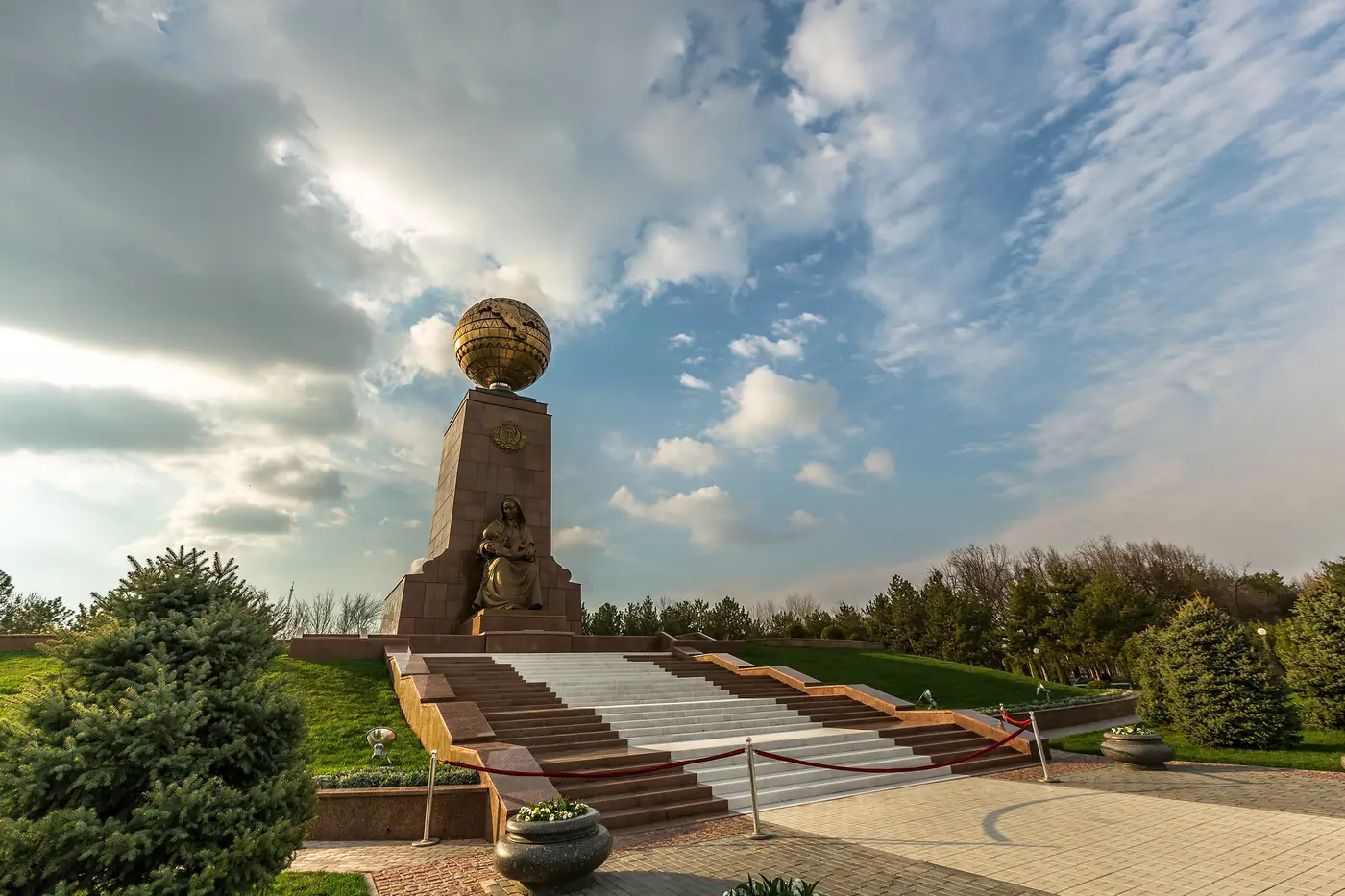
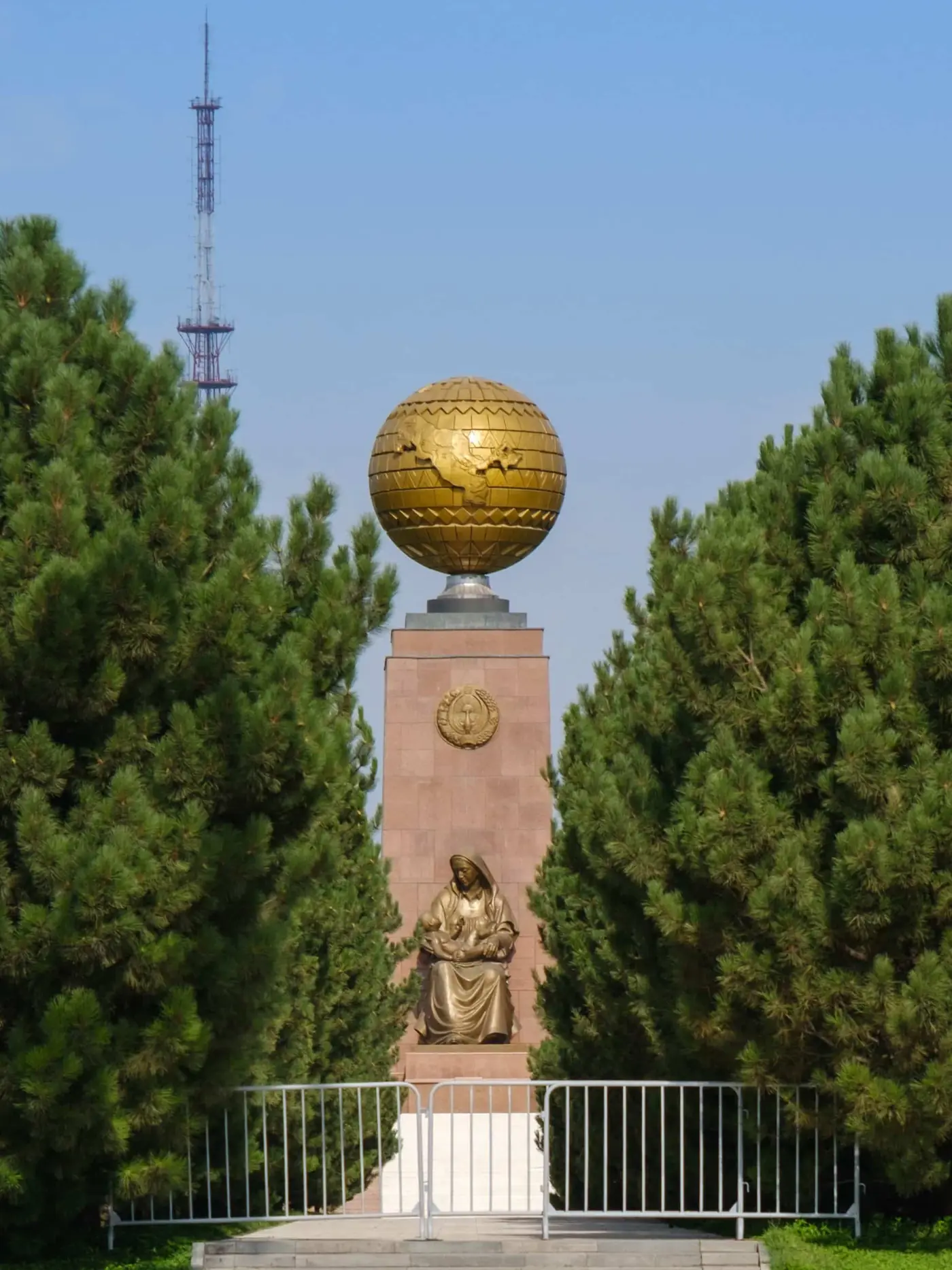
At the heart of the square stands the Independence Monument, a tall column crowned with a bronze globe on which an enlarged outline of Uzbekistan's borders is cast in relief — a deliberately oversized rendering meant to place the new nation, quite literally, at the center of the world. The monument occupies the same pedestal that once held the statue of Lenin, a detail that gives the site much of its symbolic weight.
The Motherland Statue
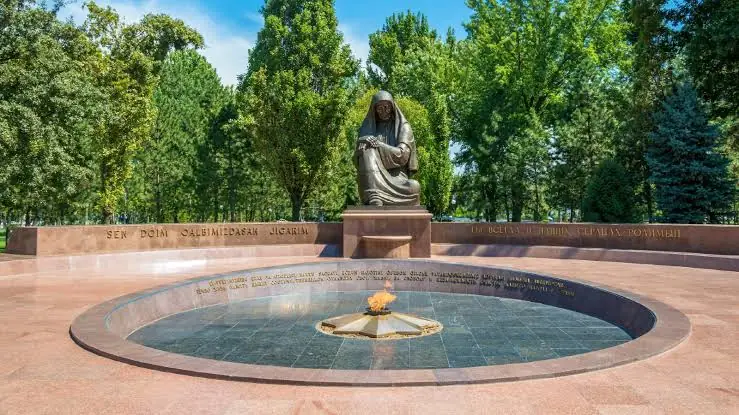
In front of the pedestal stands a bronze figure of a woman, generally understood to represent the Motherland, gazing toward the globe above her. Positioned as a companion piece to the monument rather than a separate work, the statue is one of the square's most photographed features and a common gathering point during official ceremonies and holiday events.
The Happy Family Monument
Elsewhere in the square, a bronze sculpture of a family — parents and children together — reflects a recurring theme in Uzbekistan's post-independence public art, celebrating domestic life and continuity alongside the more overtly political monuments nearby. Together with the surrounding fountains and flower beds, it softens the square's otherwise formal, ceremonial character.
More Park Than Plaza
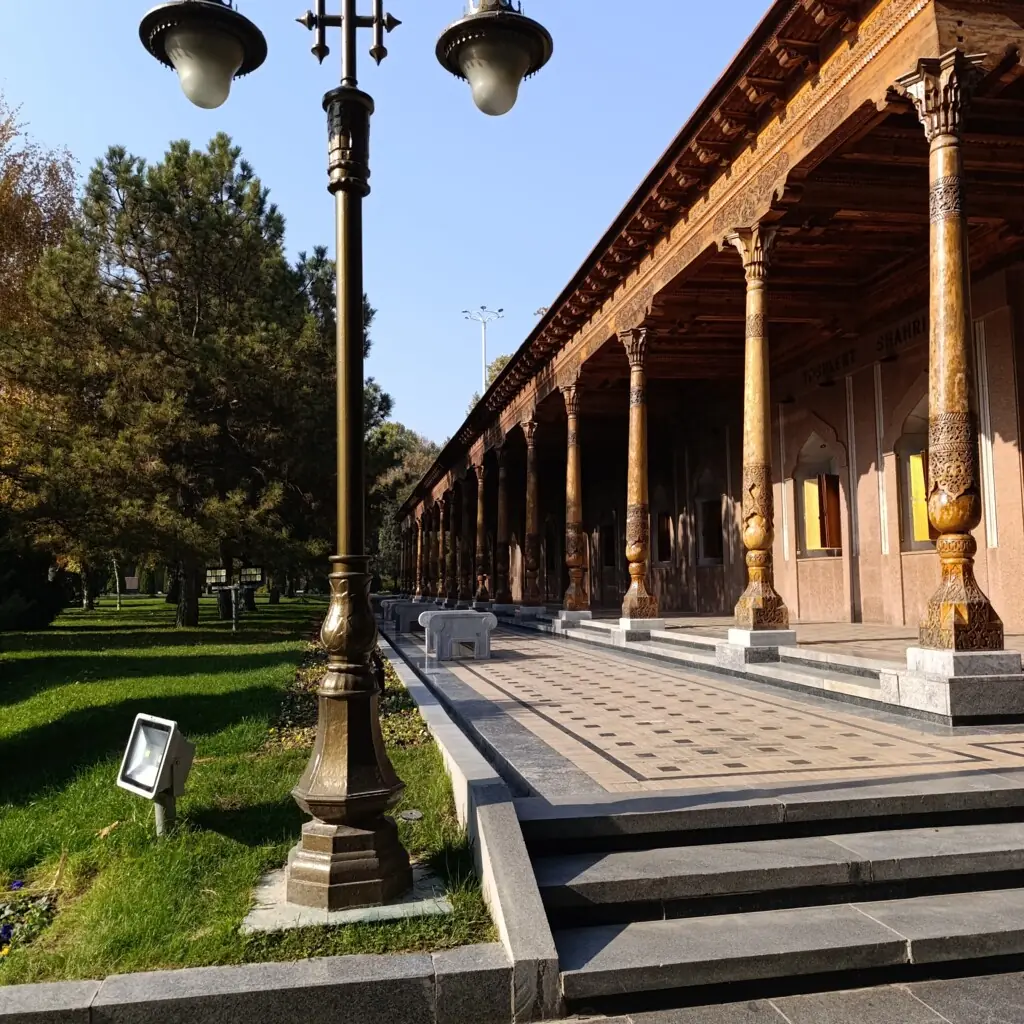
Despite its name, Independence Square feels less like a hard-paved public square and more like a sprawling formal park, threaded with wide pedestrian avenues, rows of mature trees, and a series of fountains that offer welcome relief during Tashkent's hot summer months. Locals use the grounds for evening walks and quiet recreation as much as for the occasional official gathering, giving the space a dual identity as both national symbol and neighborhood park.
Surrounding the square are several of Tashkent's key institutions, including government administrative buildings, the Senate, and cultural venues within easy walking distance — a concentration that makes the area a practical anchor point for organizing a day of sightseeing in the capital.
Why Visit Independence Square?
Few places in Tashkent condense the country's twentieth-century political history as visibly as this square, where a single pedestal has carried the weight of empire, revolution, and independence in turn.
During your visit, you can:
Walk beneath the Arch of Independence and Good Spirit toward the square's central monuments.
See the Independence Monument standing on the very pedestal once occupied by a statue of Lenin.
Photograph the bronze Motherland statue, one of the most recognized public artworks in the capital.
Relax among fountains and tree-lined avenues in what functions as much as a city park as a monument.
Combine your visit with nearby government buildings, museums, and the Alley of Memory war memorial.
Best Time to Visit
Independence Square can be visited comfortably throughout the year, but its open layout and lack of shade in places make spring and autumn the most pleasant seasons for a longer, unhurried walk through the grounds.
The most recommended times are:
Spring (April–May): Mild temperatures and blooming flower beds make for especially pleasant walking conditions.
Early evening, year-round: Softer light for photography and cooler temperatures after the heat of the day.
If your visit coincides with Independence Day on September 1, expect a livelier, more crowded square, with wreath-laying ceremonies and festivities that bring the site's symbolism fully to life.
Interesting Facts
The square has carried at least five different names over the past century and a half.
Its present name was adopted in 1992, following Uzbekistan's declaration of independence on September 1, 1991.
The Independence Monument stands on the same pedestal that once held a statue of Lenin.
The globe atop the monument shows an enlarged, symbolic outline of Uzbekistan's national borders.
From 1974 to 1991, the site served as the city's official Avenue of Parades for Soviet military and civic processions.
Wreath-laying ceremonies still take place at the monument during national holidays and official state visits.
Travel Tips
Allow around 45 minutes to an hour to walk the full grounds without rushing.
Stick to the paved paths, as walking on the grass is generally discouraged and monitored.
Visit in the early evening for softer light and a noticeably cooler, more relaxed atmosphere.
Combine your visit with the nearby Alley of Memory and Broadway pedestrian street for a fuller afternoon.
Expect tighter security near the surrounding government buildings, including areas close to the presidential offices.
A Square That Still Carries the Weight of Its Names
Independence Square is less a single monument than a record of successive political eras, each one clearing away the last and building something new on the same ground — imperial residence, cathedral square, revolutionary plaza, parade ground, and finally, a monument to a nation's own sovereignty.
Walking its avenues today, past fountains, flower beds, and a globe bearing the outline of modern Uzbekistan, offers a quieter but no less telling counterpart to the country's older Silk Road monuments — proof that history in Tashkent is written just as much in twentieth-century stone as in the tilework of Samarkand or Bukhara.
📞 Phone: +998 97 397 37 73
📧 Email: lapislazulitours@gmail.com
A Blue-Domed Tribute to Uzbekistan's Founding Figure
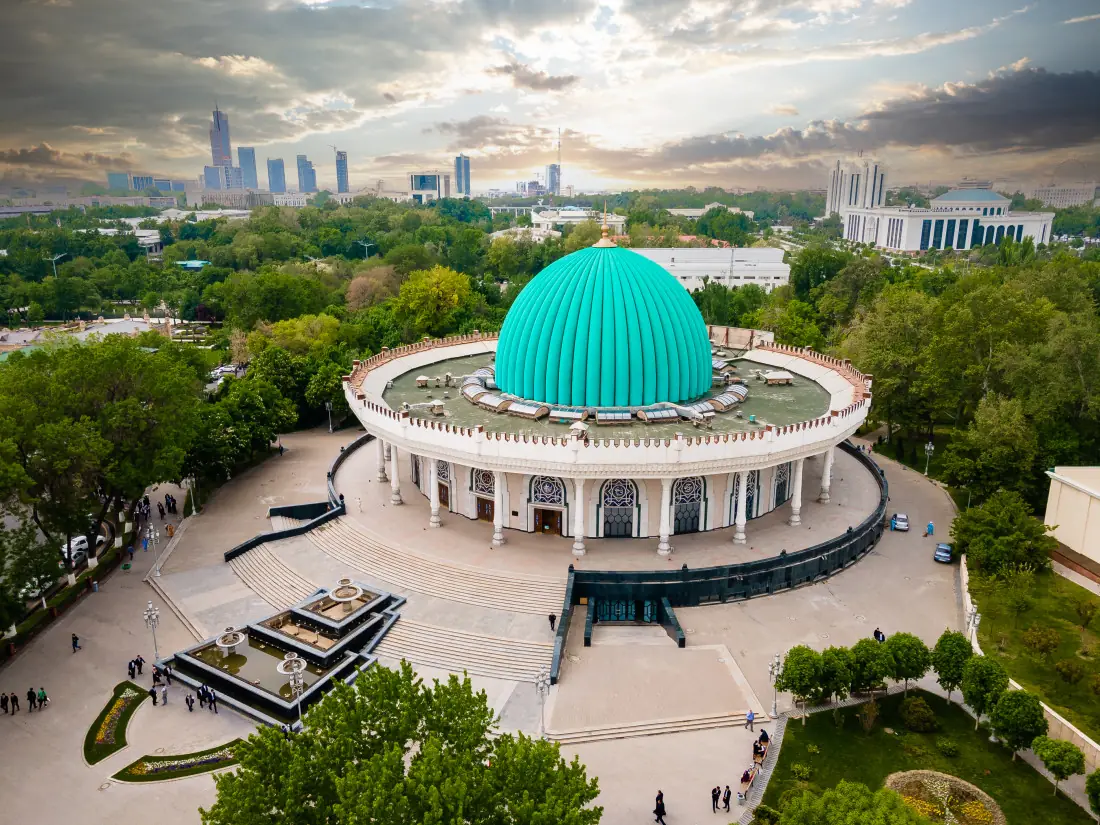
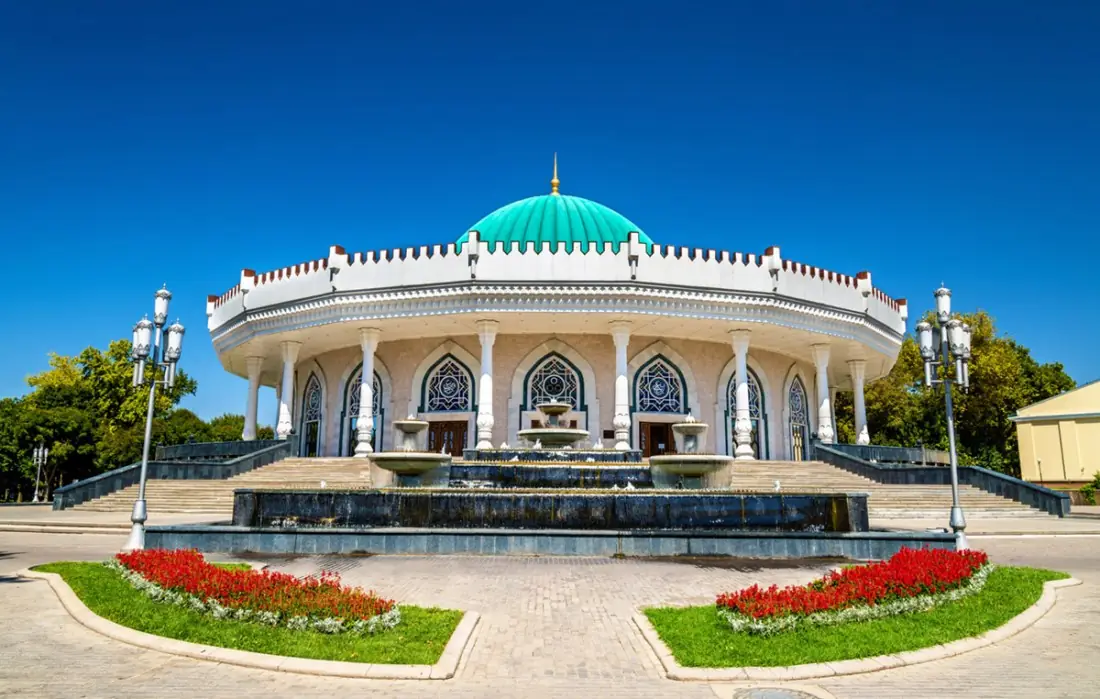
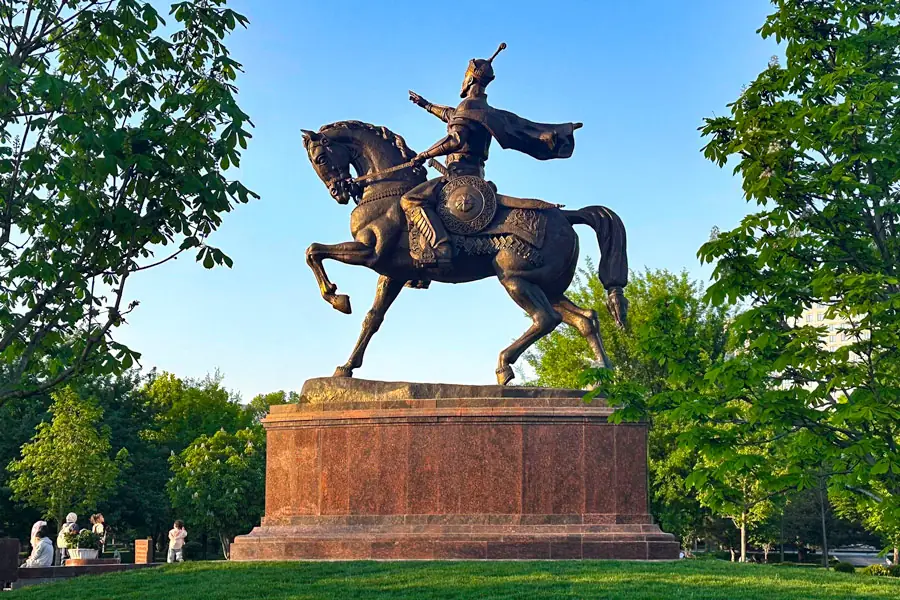
Standing at the very center of Tashkent, its ribbed blue dome visible long before the entrance comes into view, the Amir Timur Museum was built to answer a question a newly independent Uzbekistan found itself asking in the 1990s: whose history should a brand-new nation tell? The answer, worked out in stone, marble, and gold leaf, was Amir Timur — the fourteenth-century conqueror better known internationally as Tamerlane, and reimagined here less as a distant medieval warlord than as the founding father of a modern national identity.
Unlike Uzbekistan's older monuments, shaped gradually over centuries by shifting dynasties and patrons, this museum was conceived and built in a single deliberate push, timed to coincide with the 660th anniversary of Timur's birth and opened with considerable ceremony in October 1996. Its circular form and teal-blue cupola were designed to echo the Gur-e-Amir mausoleum in Samarkand, Timur's actual resting place, linking the new capital's museum visually to the historic seat of his empire.
Today, the museum functions as both an exhibition space and something closer to a national statement — a place where visitors encounter not just artifacts from the Timurid era, but a carefully constructed narrative about where modern Uzbekistan believes its story truly begins.
Built to Give a New Nation an Old Hero
After the Soviet Union dissolved and Uzbekistan declared independence in 1991, the country's leadership faced a genuine challenge: constructing a unifying national identity for a population whose historical narrative had, for decades, been filtered through a Soviet lens. The government turned to Amir Timur — a fourteenth-century Turco-Mongol ruler born near Shahrisabz — reframing him not as a distant, foreign conqueror but as a distinctly local figure whose empire, patronage of the arts and sciences, and reputation for statecraft could anchor a new sense of Uzbek identity.
President Islam Karimov declared 1996 the "Year of Amir Temur," and the 660th anniversary of Timur's birth became the occasion for a nationwide celebration, with the newly built museum in Tashkent as its centerpiece. The museum's ceremonial opening took place on October 18, 1996, drawing prominent guests from within Uzbekistan and abroad, and marking the formal beginning of what would become one of the most visited cultural institutions in the capital.
In the years since, the museum has grown into more than a simple historical exhibit. Its collection and presentation reflect a broader post-independence project — one that links the Timurid era's architecture, learning, and craftsmanship directly to the identity of contemporary Uzbekistan, positioning the modern nation as heir to a golden age of Central Asian civilization.
Scholars visiting the museum have noted that its presentation leans heavily toward Timur's achievements as a patron of science, trade, and culture, while giving comparatively little space to the more brutal aspects of his military campaigns — a curatorial choice that says as much about how modern Uzbekistan wishes to be seen as it does about the historical figure himself.
A Building Designed to Echo Samarkand
The museum's most recognizable feature is visible from a considerable distance: a large, ribbed dome finished in blue majolica tile, deliberately designed to recall the dome of the Gur-e-Amir mausoleum in Samarkand, where Timur himself is buried. The reference is intentional and unmistakable, tying the new Tashkent building to the historic heart of the Timurid Empire even though the museum itself is a thoroughly modern construction.
The three-story building takes a circular form, its perimeter ringed by rows of slender columns that appear to support the roofline, with tall, arched window niches breaking up the facade at regular intervals. Open-sided galleries and decorative parapets along the roof add further texture, blending elements drawn from medieval Timurid design with the more restrained lines of late-twentieth-century architecture.
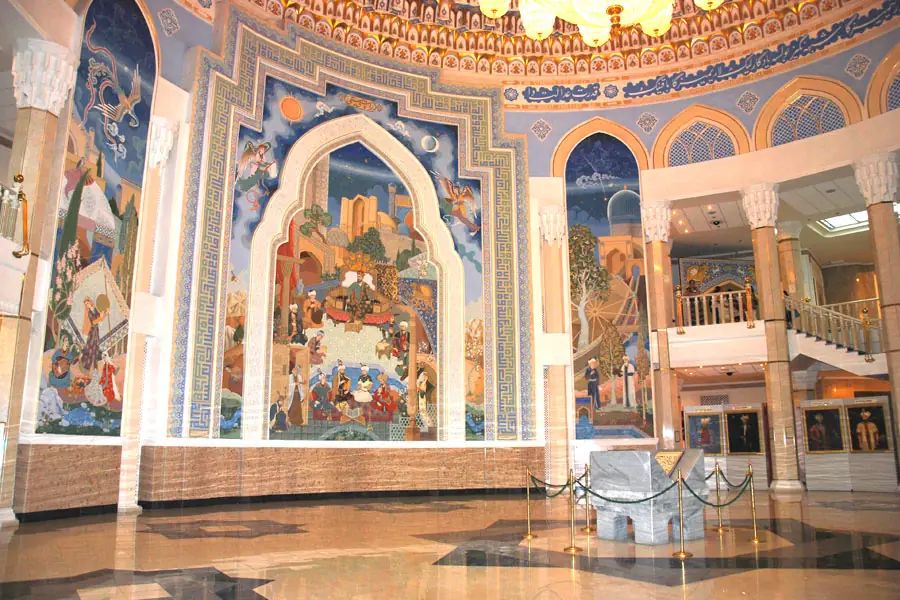
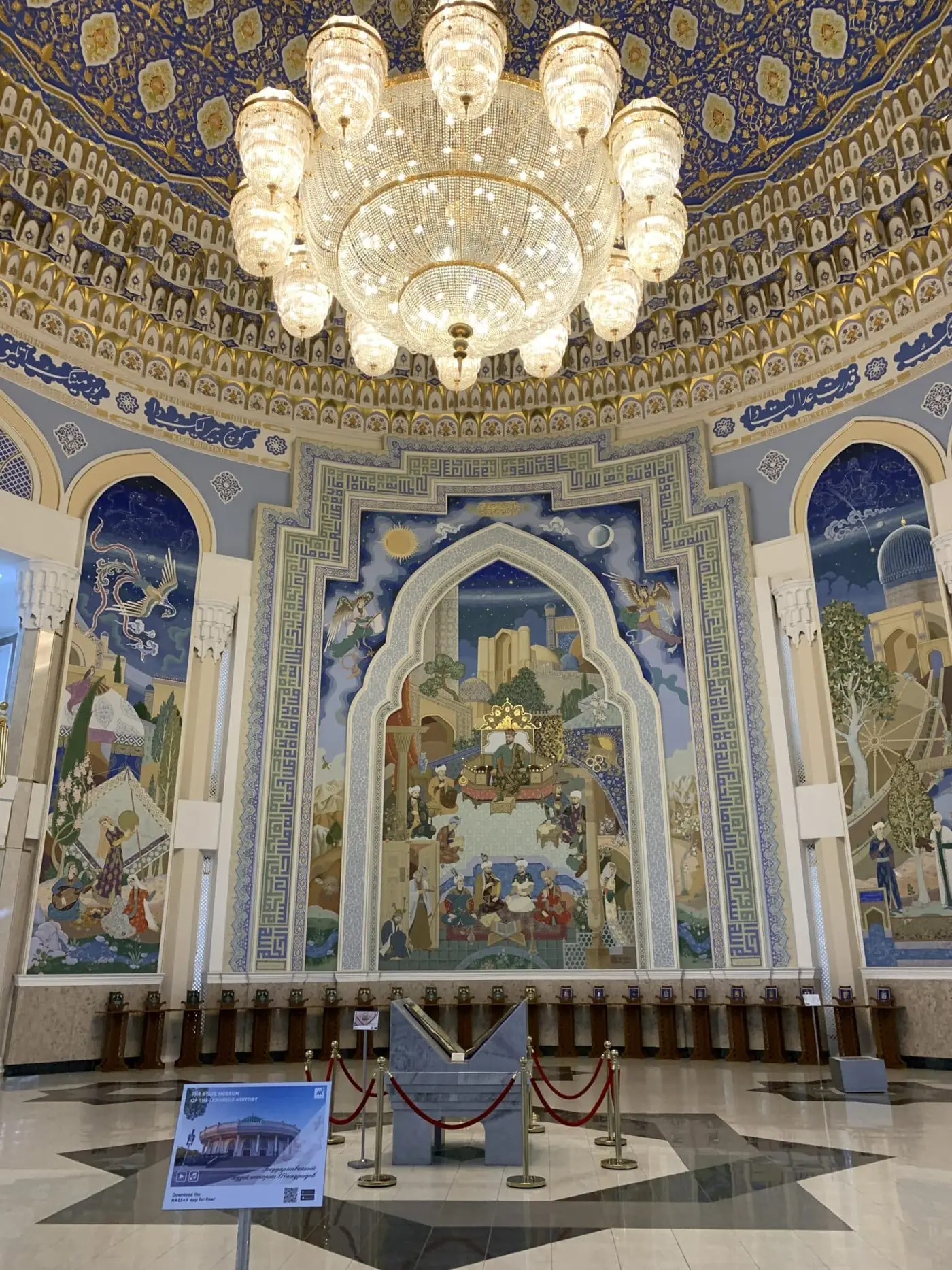
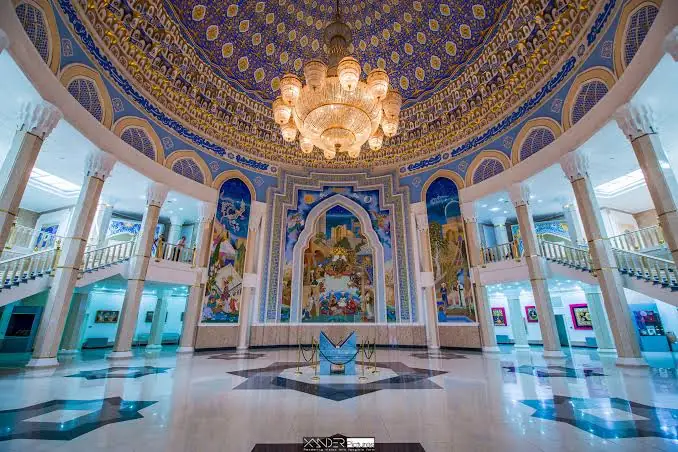
Inside, the decoration shifts from architectural restraint to genuine opulence: walls and ceilings finished in marble and gold leaf, painted murals tracing episodes from Timur's life, and — as the museum's signature interior feature — a crystal chandelier rising some 8.5 meters and composed of well over one hundred thousand individual pendants, suspended beneath the central dome.
Surrounding the building, a series of fountains and landscaped grounds complete the setting, drawing the eye toward the richly decorated facade from every approach and making the museum one of the more photographed landmarks in central Tashkent.
Inside the Collection
Manuscripts and Personal Artifacts
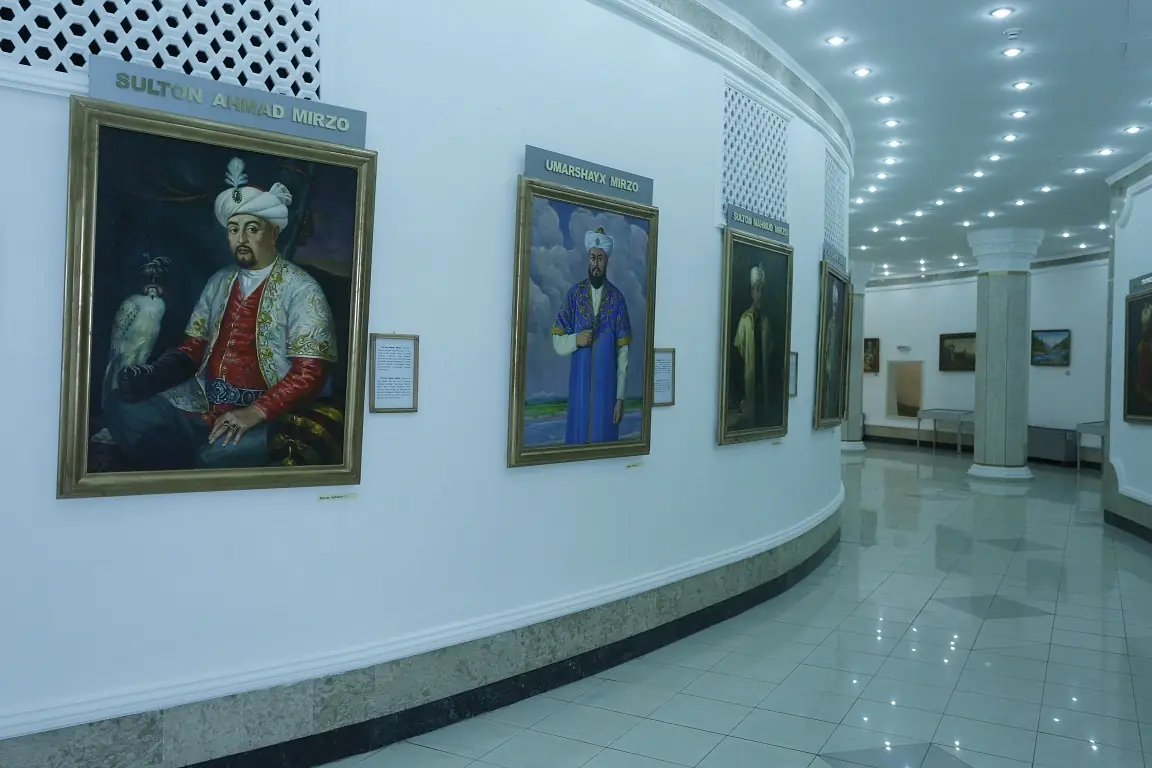
Among the museum's holdings are historical manuscripts, miniature paintings, and personal effects connected to Timur and later Timurid rulers, including Babur, founder of the Mughal Empire, and the astronomer-king Ulugh Beg. These items help trace the intellectual and artistic legacy the Timurid dynasty left behind well beyond the borders of Timur's own empire.
Weaponry and Military Regalia
A significant portion of the collection is devoted to arms and armor from the period, including chain mail, helmets, maces, pole axes, and a wide range of arrowheads, offering visitors a tangible sense of the military technology that underpinned Timur's fourteenth-century campaigns.
Metalwork, Ceramics, and Jewelry
Gold, silver, and bronze objects, along with ceramics and jewelry, round out a display intended to illustrate the sophistication of Timurid craftsmanship. Among the most notable archaeological metal pieces is an inscribed bronze jar dated to Timur's own era, alongside coinage bearing the images and titles of Timurid rulers.
Astronomical Instruments
Reflecting the Timurid dynasty's contributions to science as much as conquest, the collection also includes astronomical instruments associated with Ulugh Beg, Timur's grandson, whose observatory in Samarkand produced some of the most accurate astronomical measurements of the pre-modern world.
Why Visit the Amir Timur Museum?
Beyond its striking architecture, the museum offers a useful starting point for understanding how modern Uzbekistan constructs its own national narrative — reason enough to visit even before considering the more than three thousand artifacts on display inside.
During your visit, you can:
Admire a blue-domed building deliberately designed to echo Samarkand's Gur-e-Amir mausoleum.
See the museum's signature 8.5-meter crystal chandelier beneath the central dome.
Explore manuscripts, weaponry, and personal items connected to Timur and his Timurid successors.
View astronomical instruments linked to Ulugh Beg's pioneering observatory in Samarkand.
Combine your visit with the nearby Amir Timur Square, an easy walk from the museum entrance.
Best Time to Visit
As an indoor museum, the Amir Timur Museum can be comfortably visited at any time of year, making it a reliable option regardless of Tashkent's often extreme summer or winter temperatures.
A few practical notes worth keeping in mind:
Weekday mornings tend to be quieter, allowing more space to appreciate the interior details and chandelier.
Late afternoon light outside is especially flattering for photographing the exterior dome and fountains.
Because the museum sits at the center of Tashkent, it's easy to fold into a single day of sightseeing alongside Independence Square and Amir Timur Square without much extra travel time.
Interesting Facts
The museum officially opened on October 18, 1996, to mark the 660th anniversary of Timur's birth.
Its blue dome was deliberately designed to echo the Gur-e-Amir mausoleum in Samarkand, Timur's actual burial site.
The interior's crystal chandelier stands roughly 8.5 meters tall and is made up of over 100,000 pendants.
The collection includes more than three thousand exhibits, with some sources citing figures well beyond that.
Timur himself was born in 1336 near Shahrisabz, in what is now southern Uzbekistan.
The museum sits within easy walking distance of Amir Timur Square in central Tashkent.
Travel Tips
Allow around an hour to explore the collection at a comfortable pace, longer if you enjoy reading exhibit descriptions.
Look up as soon as you enter — the central chandelier and dome interior are best appreciated from directly beneath them.
Consider reading a short background on Timur's life beforehand, as the museum's exhibits assume some familiarity with the period.
Photograph the exterior facade and fountains from across the surrounding plaza for the best full view of the dome.
Combine your visit with a walk through nearby Amir Timur Square and Independence Square for a full central Tashkent afternoon.
Location
The Amir Timur Museum sits at the center of Tashkent, within easy walking distance of Amir Timur Square, making it a natural stop on any tour of the capital's core.
A Museum That Tells Two Stories at Once
On its surface, the Amir Timur Museum tells the story of a fourteenth-century empire — its conquests, its scholars, its craftsmen, and the golden age it briefly created across Central Asia. Beneath that surface runs a second story: that of a young nation, freshly independent in 1991, reaching back across six centuries to find a figure large enough to anchor a new sense of shared identity.
Visiting today means engaging with both stories at once — admiring genuine Timurid-era artifacts and craftsmanship while also recognizing the museum itself as a piece of modern Uzbek nation-building, a blue-domed monument built not in the fourteenth century, but very much for the twenty-first.
📞 Phone: +998 97 397 37 73
📧 Email: lapislazulitours@gmail.com
The Underground Museum of Central Asia
Long before anyone talked about Tashkent as a travel destination in its own right, the city already had something no other capital in Central Asia could claim: a metro. It opened in November 1977, making Tashkent the first city in the region — and one of the few outside Russia in the whole Soviet Union — to build an underground railway. More than four decades later, it's still doing the job it was built for, moving hundreds of thousands of Tashkent residents to work and school every day, but it has also quietly become one of the more unusual tourist stops in the city.
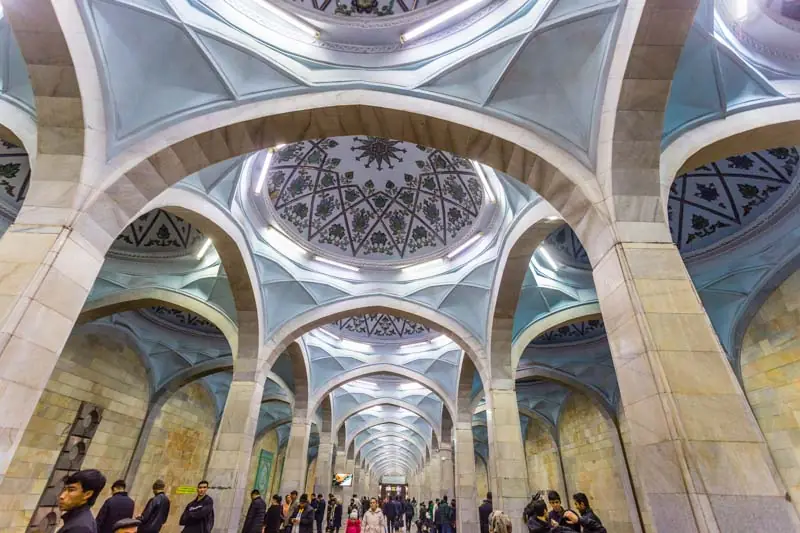
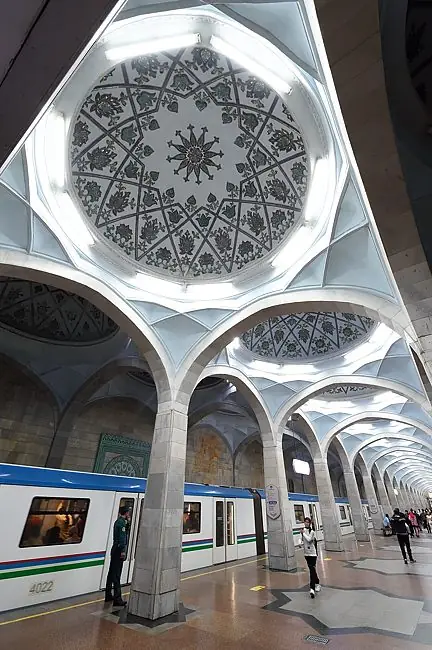
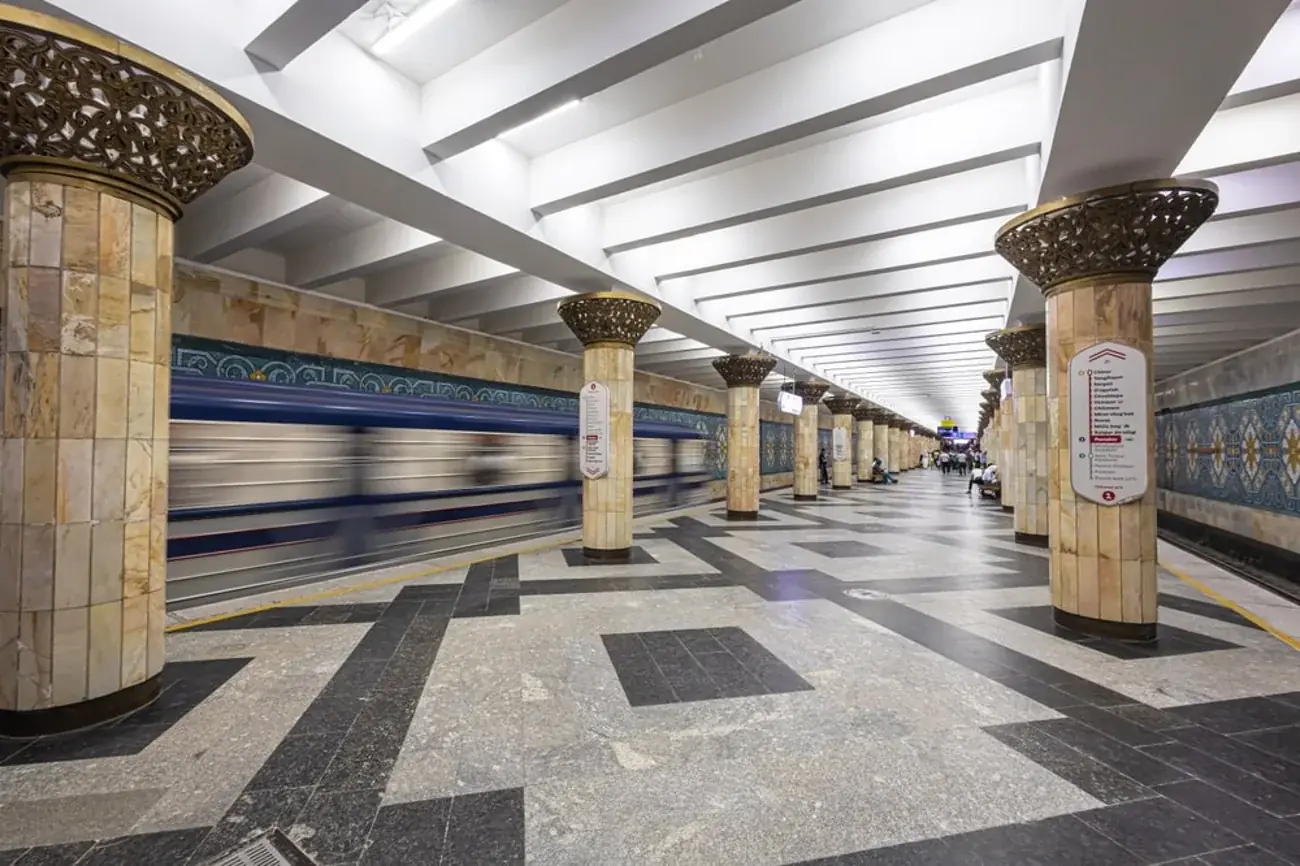
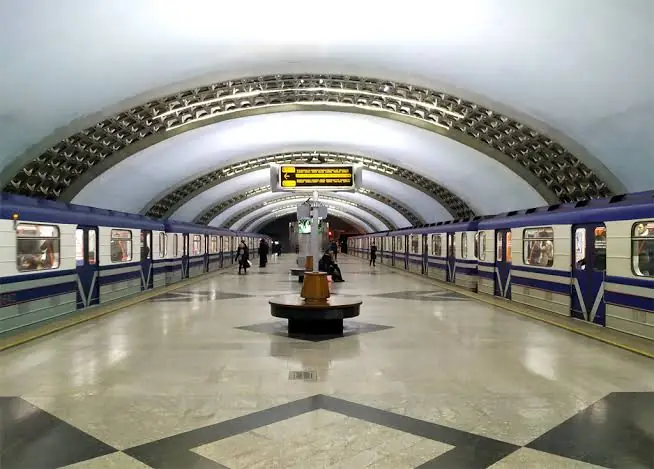
What makes it worth visiting isn't speed or size, since plenty of newer systems move more people over longer distances. It's the stations themselves. Where most metros settle for tiled walls and fluorescent light, Tashkent's older stations were designed like small halls — marble columns, chandeliers, carved alabaster panels, mosaics telling stories about cosmonauts or poets or cotton harvests. Soviet planners wanted the metro to say something about the city above it, and in Tashkent's case that meant leaning into local craftsmanship and imagery rather than copying Moscow wholesale.
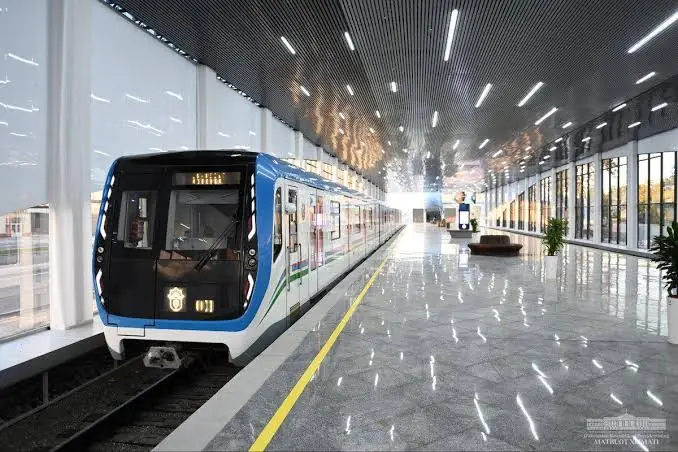
The network has changed a lot since those first years, and especially in the last decade. What began as a single line connecting the working-class Chilonzor district to downtown has grown into four lines covering roughly 70 kilometres and around 50 stations, with a new elevated Circle Line still being extended piece by piece through the 2020s. So a visit today gives you two different metros in one system: the ornate underground halls built during Soviet rule, and the plainer, faster above-ground line built for a growing, modern city.
From a Post-Earthquake Rebuild to a Modern Transit Network
The story of the metro is tied to a disaster. In April 1966, a major earthquake flattened large parts of central Tashkent, killing a small number of people directly but leaving tens of thousands without homes. The Soviet government responded with an enormous reconstruction campaign, rebuilding the city almost from scratch and turning it into a kind of architectural flagship — a modern socialist capital that other Central Asian cities were meant to look up to. A metro system fit naturally into that ambition.
Construction started in the early 1970s, and the first stretch of track opened on 6 November 1977, one day before the 60th anniversary of the October Revolution — the timing was not a coincidence. That first line ran from Chilonzor in the southwest into the city centre, and it was extended further over the following years. A second line followed in the 1980s and kept growing until 1991, the same year the Soviet Union itself came apart and Uzbekistan became independent.
For a while after independence, expansion slowed. The third line, running north to the Yunusobod district, only opened in 2001, a full decade after Uzbekistan gained sovereignty. It took until the 2010s and 2020s for the pace to pick back up in a serious way, driven by a government push to modernise Tashkent's infrastructure and ease the traffic that had built up as the city's population kept climbing.
That renewed push is what gave Tashkent its fourth line — the Circle Line — along with an extension of the original Chilonzor line into the populous Sergeli district. Unlike the earlier lines, which were bored underground in the classic Soviet style, the Circle Line runs mostly above ground on elevated viaducts, a cheaper and faster way to build that has let the network grow quickly, even if the new stations trade the marble-and-mosaic look for something far more functional.
The Four Lines
Chilonzor Line (Red)
The original line and still, for many locals, simply "the metro." It runs from the Chilonzor residential district in the southwest through the historic centre and, since a 2020 extension, out to Sergeli in the south. This is where you'll find some of the network's oldest and most photographed stations, built when the whole system was still a novelty and no expense was spared on making each stop look distinct.
Oʻzbekiston Line (Blue)
Opened in stages through the 1980s, this line cuts roughly east–west and links the railway station area with the eastern edges of the city. It carries some of the metro's most recognisable stations, including ones built around themes of science and space exploration, reflecting the Soviet fascination with the cosmos during that decade.
Yunusobod Line (Green)
The newest of the three classic underground lines, opened in 2001 after independence. It heads north into Yunusobod, a district that grew rapidly in the late twentieth century and needed a direct link to the centre. Its stations are calmer and less theatrical than the older ones, but they mark an important transition point in the network's history — the first line built by Uzbekistan rather than the USSR.
Circle Line (Yellow/Gold)
The most recent addition and the one still under construction. It opened in phases — a first stretch of seven stations in August 2020, five more in April 2023, and two further stations, Turon and Qipchoq, in March 2024 — bringing it to fourteen stations and roughly 22 kilometres so far. Running mostly on elevated track through the city's southeast, it's built for connectivity rather than architecture, tying the older radial lines together into something closer to a proper network.
Why the Stations Look the Way They Do
Every station on the three original lines was designed by a different team of architects and artists, with instructions to give it its own identity rather than repeat a standard template. The materials read like a list of what Uzbekistan had to offer at the time: marble and granite from local quarries, hand-carved ganch plasterwork, glazed ceramics, coloured glass and smalt mosaics, aluminium and brass fittings. The stations also sit unusually close to the surface compared with most metros, which is partly a response to Tashkent's seismic risk and partly what allowed for such elaborate, hall-like interiors.
The themes vary station by station but tend to follow the name. Kosmonavtlar station, unsurprisingly, is built around space travel, with deep blue tones, medallion portraits of cosmonauts, and a ceiling meant to evoke the night sky. Alisher Navoiy station honours the fifteenth-century poet with intricate geometric tilework drawn from classical Central Asian design. Paxtakor turns cotton, the crop that underpinned the Uzbek economy for generations, into decorative motifs across its columns and ceiling. Mustaqillik Maydoni, serving Independence Square, takes a more restrained, formal approach that fits its role as a civic gateway.
A UNESCO World Heritage Station
In July 2026, Kosmonavtlar became something no metro station in Central Asia had been before: a UNESCO World Heritage Site. It was inscribed as one of ten structures making up "Tashkent Modernist Architecture: Modernity and Tradition in Central Asia," a listing that also includes the Alisher Navoi Cinema Palace, Chorsu Market, the Peoples' Friendship Palace and several other landmarks built during the city's post-earthquake rebuild between the 1960s and early 1990s. It's a rare case of a working, everyday transit station being recognised alongside museums and monuments — a reminder that the people who designed the Tashkent metro were thinking about more than just moving passengers from A to B.
Riding the Metro: The Practical Details
The system runs on a flat-fare model, so it doesn't matter how far you're travelling or how many lines you switch between — you pay once to enter and can ride anywhere the network reaches. Payment is by contactless bank card, a rechargeable Tashkent transport card, or a token bought at station counters and vending machines for those who'd rather deal in cash. Trains run from early morning until around midnight, with services roughly every few minutes during peak hours and a bit less frequently outside them.
Photography, once restricted for security reasons, has been allowed for years now, and the older stations in particular draw a steady stream of visitors with cameras during quieter daytime hours. Security checks with metal detectors and bag scanners are standard at station entrances, a holdover from a period of tighter controls, but they move quickly and rarely cause delays. Announcements and signage are in Uzbek, with Russian and, on newer signage, English becoming more common as the system modernises.
Why Ride the Tashkent Metro?
Most visitors come to Tashkent for the Registan-adjacent grandeur of Samarkand or Bukhara, and the metro rarely makes it onto a first-draft itinerary. That's a mistake, because it's one of the few places in the city where Soviet-era ambition, post-independence change and genuine everyday life all sit on top of each other in the space of a single afternoon.
A ride through the system lets you:
Walk through underground halls that look more like small museums than transit stops.
See Kosmonavtlar, the only UNESCO-listed metro station in Central Asia.
Compare four decades of design in a single trip, from ornate Soviet stations to the plain, elevated Circle Line.
Get a cheap, fast, air-conditioned way to move between the old city, the centre and the newer districts.
Watch ordinary Tashkent life happen around you, rather than a scene staged for tourists.
Escape the summer heat for a stretch, since the older stations sit well below street level and stay noticeably cool.
Best Time to Visit
The metro runs year-round regardless of season, so timing matters less for whether you can visit and more for how comfortable and photogenic the experience is.
A few things worth keeping in mind:
Mid-morning on a weekday: stations are calmer than during the morning and evening rush, giving you more room to look around and take photos without holding up commuters.
Spring or autumn: pleasant weather above ground makes it easy to pair a metro ride with walking between stations and nearby sights, rather than rushing from one air-conditioned space to another.
If you're specifically chasing good photos, avoid the 8–9am and 6–7pm rush windows, when platforms fill up and lingering with a camera becomes awkward for everyone involved.
Interesting Facts
Tashkent was the first city in Central Asia, and one of the very few outside Russia in the Soviet Union, to build a metro system.
The first line opened on 6 November 1977, one day before the 60th anniversary of the October Revolution.
The network now runs four lines covering roughly 70 kilometres with around 50 stations in total.
In July 2026, Kosmonavtlar station was inscribed on the UNESCO World Heritage List as part of the "Tashkent Modernist Architecture" listing.
Unlike most metro systems, Tashkent's stations sit relatively close to the surface, a design choice linked to the region's earthquake risk.
The newest line, the elevated Circle Line, opened in phases between 2020 and 2024 and is still being extended.
Travel Tips
Get a rechargeable transport card if you're staying more than a day or two; it works across metro, bus and tram lines and saves you from queuing at token counters each trip.
Prioritise the older Chilonzor, Oʻzbekiston and Yunusobod line stations if architecture is what you're after — the Circle Line is useful for getting around but has little to look at.
Photography is generally fine, but be considerate around security staff and avoid blocking platforms during busy periods.
Pair a metro visit with nearby sights above ground — Chorsu Market sits close to a station on the Chilonzor line, and several stations open directly onto major streets worth walking.
Carry a little cash for token machines as a backup, in case your card reader at a particular station is out of service.
Finding the Metro on the Map
Stations are spread across the city centre and the surrounding residential districts, with interchange points where the lines cross. The map below shows the network's general area within Tashkent — useful for getting your bearings before you head down to platform level.
A Transit System That Became a Landmark
Most cities build a metro to solve a traffic problem and leave it at that. Tashkent's became something more, almost by accident — an underground record of what the city's architects and artists were trying to say about Uzbekistan at a particular moment, first under Soviet rule and now, with the Circle Line, under an independent government pushing to modernise.
The UNESCO listing of Kosmonavtlar in 2026 only confirmed what regular riders already knew: this isn't just a way to get across town. It's one of the clearest places in Tashkent to see how the city has understood itself across nearly fifty years, one station at a time.
📞 Phone: +998 97 397 37 73
📧 Email: lapislazulitours@gmail.com